Stop scrolling and start visiting

Villages Built From Stone | Matera, Alberobello & Southern Italy’s Fairytale Towns
Discover southern Italy’s most beautiful stone villages and towns, from Matera’s cave dwellings and Alberobello’s trulli to Lecce’s golden Baroque, whitewashed Puglia towns, and cave hotel stays.
FAIRYTALE PLACES
Sarah Melland
6/9/202612 min read
Villages Built From Stone
Southern Italy’s Limestone Lanes, Cave Rooms & Quiet Fairytale Towns
Some places are built on the land. Others feel carved from it.
In southern Italy, stone does not just hold up houses. It becomes memory. It becomes shelter. It becomes streets, staircases, cave rooms, church facades, whitewashed walls, conical roofs, hidden courtyards, olive-press rooms, rooftop terraces, and entire towns glowing softly under the afternoon sun.
This is not the glossy Italy of grand boulevards and dramatic city squares. This is Italy in limestone.
Pale, warm, porous, ancient, and alive with quiet details. A doorway worn smooth by centuries of hands. A cave room turned into a candlelit hotel suite. A trullo roof stacked stone by stone without mortar. A Baroque balcony carved so delicately it looks like lace. A white village rising from olive groves. A canyon town clinging to rock. A street so narrow and bright it feels like walking through a dream someone built by hand.
The magic here is not loud.
It is slow. It is golden. It is sun on stone. It is laundry moving between white walls. It is espresso in a small piazza. It is the hush of old cave churches, the curve of a trullo roof, the cool air inside a room cut from rock, and the strange feeling that these places were not designed, but uncovered.
For travelers who love fairytale places but want something quieter than castles and alpine lakes, southern Italy’s stone towns offer a different kind of enchantment.
Less princess tower.
More ancient village at golden hour.
Less sparkle.
More silence.
Less fantasy in costume.
More real places that somehow feel impossible.
These are the villages built from stone. And they may be some of the most beautiful places in Italy to wander slowly.
1. Matera, Basilicata
The Cave City That Glows Like A Memory
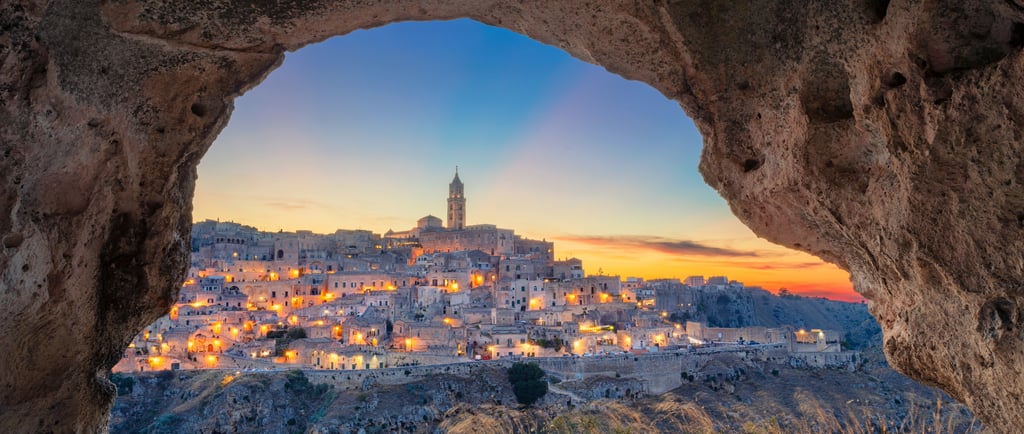
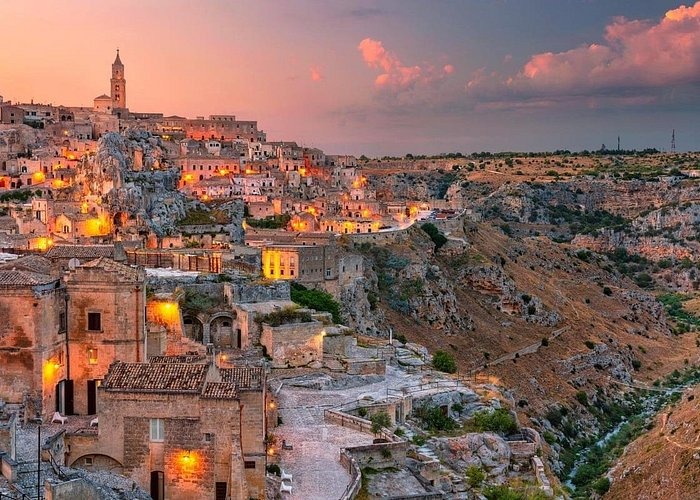
Matera does not feel built. It feels excavated from time. The city rises along the edge of a ravine in Basilicata, its ancient Sassi districts forming a labyrinth of stone houses, cave dwellings, staircases, terraces, rock churches, hidden courtyards, and arched doorways. From a distance, Matera looks almost impossible, as if the whole city was carved from one piece of limestone and left to glow under the sun.
This is not a polished fairytale village. It is older, stranger, and more powerful than that. Matera’s beauty comes from layers. Caves became homes. Rooftops became streets. Churches were carved into rock. People lived inside the stone, above the stone, below the stone, around the stone. The whole place feels vertical and secretive, like a city that refuses to reveal itself from one angle.
Walk through the Sassi in the early morning, when the lanes are quiet and the pale buildings hold the first light. Return at dusk, when lamps begin to glow from cave restaurants and hotel rooms, and the city turns amber. That is when Matera becomes almost unreal. Not because it is perfect. Because it feels ancient and alive at the same time.
Matera is the kind of place where you do not need to chase attractions every hour. The city itself is the experience. The stairs, the views, the cave churches, the silence across the ravine, the feeling of sleeping in a room cut from stone. Everything asks you to slow down and notice texture.
Go here for: cave dwellings, rock churches, golden views, ancient lanes, cave hotels, and one of the most atmospheric stone cities in Europe.
Best slow moment: Watch sunset from a viewpoint across the Sassi and stay until the city lights begin to glow.
2. Alberobello, Puglia
The Trulli Town That Looks Like It Belongs In A Storybook
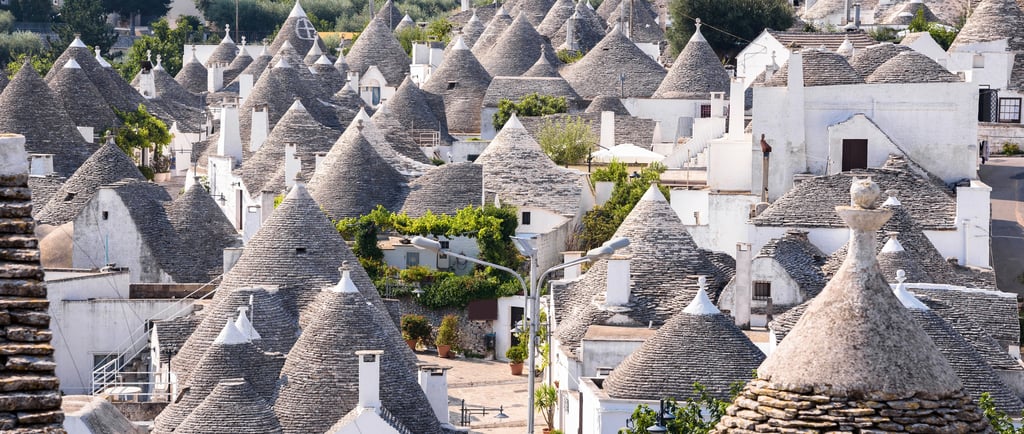
Alberobello is the obvious one, but it still belongs here because it is obvious for a reason. The town is famous for its trulli: whitewashed limestone houses topped with gray conical roofs, often marked with painted symbols and finished with tiny pinnacles. Together, they create a landscape unlike almost anywhere else in Italy. A neighborhood of little stone cones. A village of round white houses. A place that looks half agricultural, half magical, and completely committed to its own strangeness.
The trulli were built using dry-stone techniques, with limestone gathered from the surrounding fields. That matters because Alberobello is not just cute. It is architecture shaped by landscape, labor, practicality, and local material.
Of course, Alberobello can get busy. This is not a hidden secret. But the trick is to experience it softly. Go early. Stay overnight if you can. Walk away from the most crowded lanes. Let the white walls and stone roofs become more than a photo backdrop.
In the quiet hours, Alberobello changes. The shops close. The crowds thin. The trulli become homes again. The roofs catch the last light. The village feels less like a novelty and more like a place that grew from the fields around it. That is when the fairytale returns.
Go here for: trulli houses, whitewashed lanes, conical stone roofs, local craftsmanship, and one of Italy’s most unusual village landscapes.
Best slow moment: Stay after the day-trip crowds leave and walk the trulli lanes at blue hour.
3. Locorotondo, Puglia
The Round White Village Above The Valle d’Itria
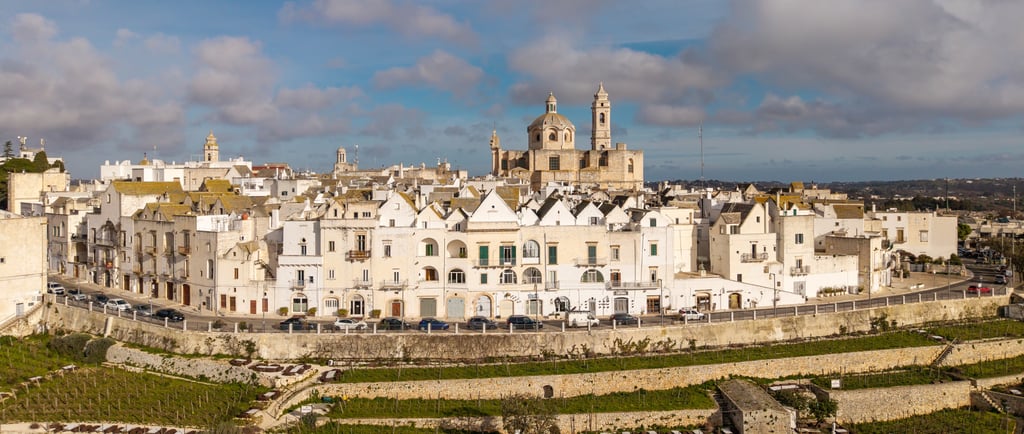
Locorotondo looks like it was arranged by someone who understood the emotional power of a curve. Its name means “round place,” and the old town follows a circular plan, winding around itself in bright white lanes, arched passages, flowered balconies, little staircases, and quiet corners that seem made for wandering without direction.
Unlike Alberobello, Locorotondo does not rely on one famous architectural icon. Its beauty is gentler. It is the rhythm of the streets. The whiteness of the walls. The way the town sits above the Valle d’Itria, looking out over olive groves, vineyards, and trulli scattered across the countryside.
This is a village for travelers who like slow beauty. Not every corner shouts. Some simply wait. A doorway with plants. A stone step. A cat in the shade. A church wall glowing in late light. A tiny lane that seems to turn because it feels like it. Locorotondo is a perfect counterpoint to Alberobello: quieter, more elegant, less theatrical, but deeply charming. If Alberobello is the storybook illustration, Locorotondo is the blank page around the poem.
Go here for: white lanes, flowered balconies, valley views, slow wandering, local wine, and a softer side of Puglia’s stone towns.
Best slow moment: Walk the old town near sunset, then linger for dinner as the lanes turn warm and quiet.
4. Cisternino, Puglia
The Whitewashed Maze Where Time Softens
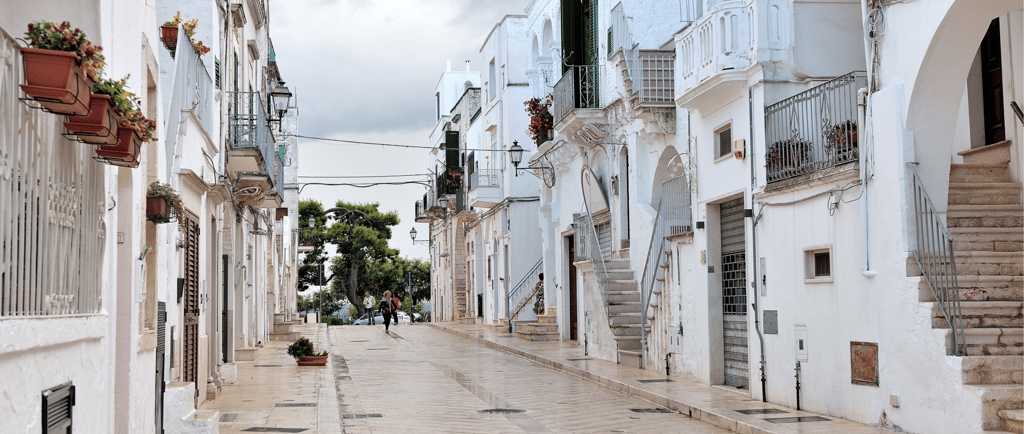
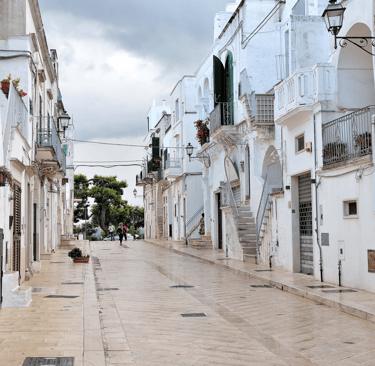
Cisternino is one of those villages that rewards people who do not need a packed itinerary. Set in the Valle d’Itria, it has whitewashed houses, stone arches, narrow lanes, little piazzas, staircases, plants spilling from balconies, and views across the countryside. It feels smaller and more intimate than many of Puglia’s better-known stops, which is exactly why it belongs on this list.
The old town is made for getting pleasantly turned around. You follow a lane because it looks pretty. Then another. Then a staircase. Then a small courtyard. Then suddenly you are looking over the valley, wondering how a place can feel this calm when the rest of the world is so committed to making everything complicated.
Cisternino is not about one grand monument. It is about atmosphere. The stone here is domestic, lived-in, and warm. It feels less like a museum and more like a village that has quietly mastered the art of existing beautifully. Come hungry, because Cisternino is also known for meat cooked in traditional local butcher-restaurants. But come slowly, too. Let the village work at its own pace.
Go here for: quiet lanes, whitewashed stone, countryside views, traditional food, and a village that feels beautifully unbothered.
Best slow moment: Wander without a map before dinner, then let the evening unfold around a small piazza.
5. Ostuni, Puglia
The White City Rising From Olive Groves
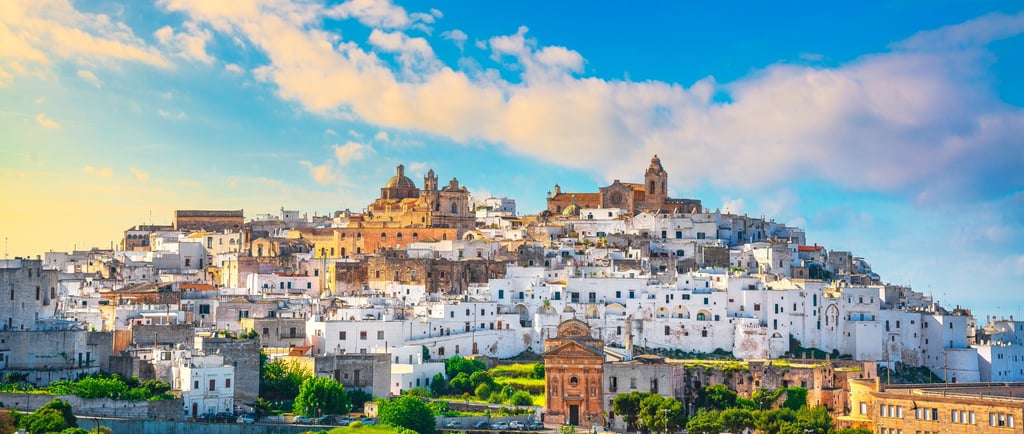
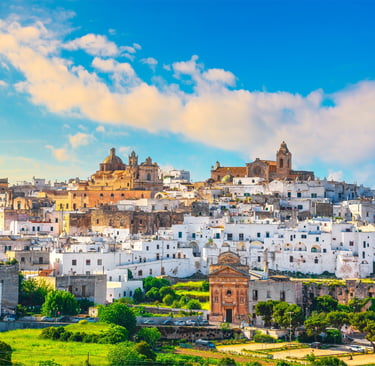
Ostuni looks like a white ship rising above a sea of olive trees. Set on a hill in Puglia, it is often called the White City, and the name makes sense the moment you see its old town from a distance. Whitewashed buildings climb the slope in layers, catching the sun so brightly they almost seem to glow. Above the surrounding countryside, Ostuni feels lifted, luminous, and slightly untouchable.
Inside the old town, the mood becomes more intimate. Lanes twist between white walls. Staircases climb toward the cathedral. Archways frame little views. Doors appear in shades of blue, green, and wood. The Adriatic is not far away, and on clear days the whole place carries a faint sense of sea light.
Ostuni is more famous than some places on this list, but it still fits the stone fairytale beautifully because it is a town built from brightness. It is not delicate. It is sun-bleached, layered, and alive. The white walls were practical once, helping reflect heat and light, but the result is pure visual magic.
The best way to see Ostuni is not to rush through the center taking the same view everyone else takes. Stay long enough to watch the white city change color: bright at noon, creamy in late afternoon, amber at dusk.
Go here for: whitewashed lanes, hilltop views, cathedral streets, olive groves, Adriatic light, and one of Puglia’s most radiant stone towns.
Best slow moment: Find a rooftop or viewpoint at golden hour and watch the town soften from white to honey.
6. Lecce, Puglia
The Golden Stone City Carved Like Lace
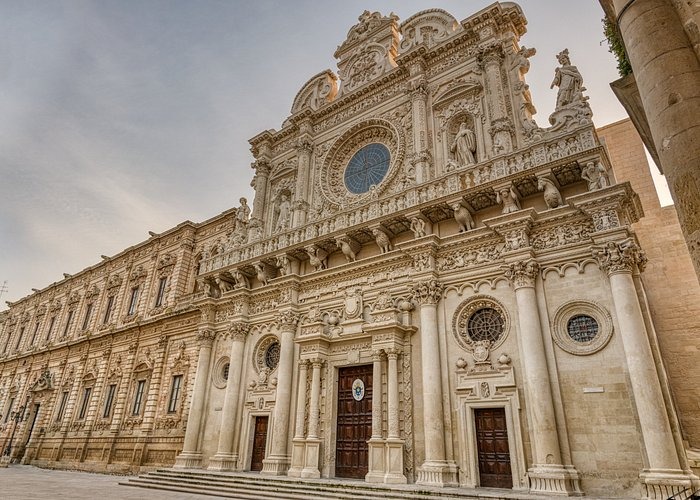
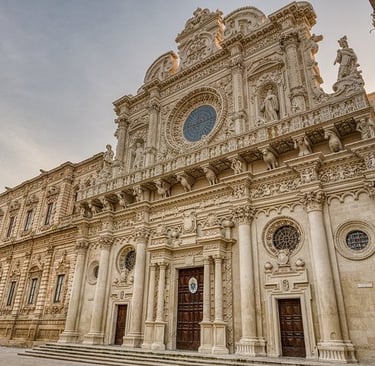
Lecce is not a village. But it belongs in this story because if southern Italy has a capital of carved stone, this is it. Known for its Baroque architecture, Lecce is built from pietra leccese, a local limestone that can be carved into extraordinary detail. The result is a city of facades, balconies, portals, churches, columns, cherubs, flowers, saints, and stone ornament that seems almost too delicate to survive in the open air.
Lecce does not feel rustic like Matera or Alberobello. It feels golden. The stone has a warm, honeyed tone, especially late in the day, when the churches and palazzi begin to glow. Stand in Piazza del Duomo or in front of the Basilica di Santa Croce and you understand why Lecce is often called the Florence of the South. But the comparison is not quite fair. Lecce is its own thing: softer, warmer, less crowded, more southern, and more theatrical in the way its stone seems to bloom. This is the place where limestone becomes lace.
For a tranquil version of Lecce, walk early in the morning before the heat arrives. Let the streets open slowly. Have coffee. Look up often. The details are everywhere, and the city becomes more beautiful when you stop treating it like a checklist.
Go here for: Baroque stonework, golden limestone, quiet piazzas, carved churches, southern elegance, and a city that proves stone can feel weightless.
Best slow moment: Walk Lecce at sunset, when the pietra leccese turns warm and the facades look almost lit from within.
7. Gravina in Puglia
The Canyon Town Of Bridges, Caves And Rock-Cut Secrets
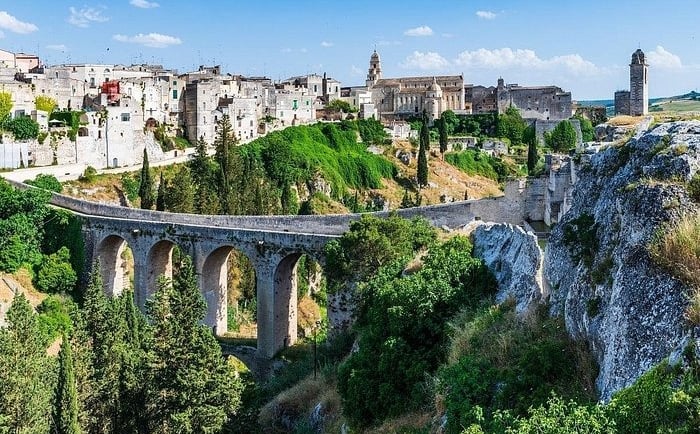
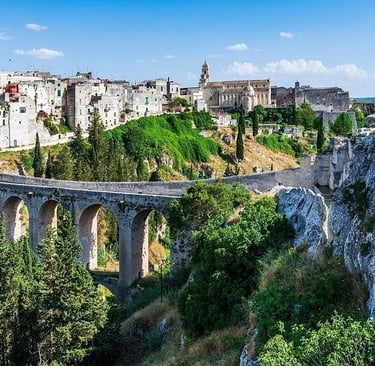
Gravina in Puglia feels like a secret cousin of Matera. Set on the edge of a ravine, this town has stone houses, cave dwellings, rock churches, underground spaces, an ancient bridge, and views that make the town feel suspended between earth and air. It is less famous than Matera, which gives it a different kind of magic: quieter, rougher, less polished, and full of discovery.
The name Gravina comes from the ravine itself, and that geography shapes everything. This is a town where stone is not only architecture. It is depth. It is cliffs, caves, foundations, underground chambers, sanctuaries, and ledges. The old bridge crossing the ravine gives the whole scene a cinematic feeling, especially when you look back toward the town and see how closely the buildings cling to the rock.
Gravina is not as instantly polished as some Puglia towns, but that is part of why it is fascinating. It feels less arranged for visitors and more like a place with layers waiting beneath the surface. For travelers who love Matera but want somewhere less expected, Gravina belongs high on the list.
Go here for: ravine views, cave churches, underground history, stone bridges, and a quieter rock-cut town with serious hidden-history energy.
Best slow moment: Cross the bridge near golden hour and look back at the town rising from the ravine.
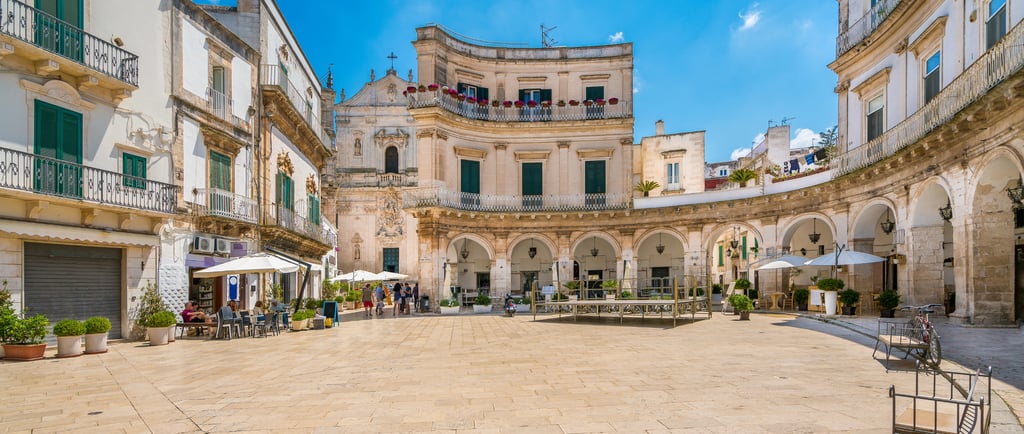
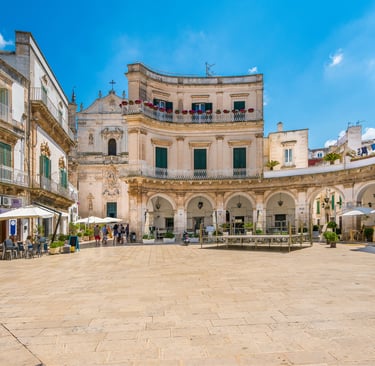
8. Martina Franca, Puglia
The Elegant Stone Town Of Baroque Balconies And Quiet Corners
Martina Franca is graceful in a way that sneaks up on you. Set in the Valle d’Itria, it has a historic center of pale stone, Baroque balconies, arched lanes, noble palaces, quiet courtyards, and one beautiful corner after another. It feels more refined than some of the smaller white villages nearby, but still deeply walkable and atmospheric.
The stone here is not cave-like or rustic. It is elegant. You notice it in the facades, the staircases, the doorways, the church fronts, and the way the old town seems to balance grandeur with intimacy. One street may feel noble and ceremonial. The next may feel domestic, shaded, and still.
Martina Franca is a lovely stop for travelers who want the stone-town feeling with a little more architectural drama. It is also a strong base for exploring the trulli countryside, Locorotondo, Cisternino, Alberobello, and the wider Itria Valley. Come here without rushing. The town is best discovered by drifting from piazza to lane to courtyard, letting the details add up slowly.
Go here for: Baroque balconies, pale stone lanes, elegant churches, quiet courtyards, and a refined Valle d’Itria base.
Best slow moment: Walk the old town after lunch, when the streets are quieter and the stone absorbs the afternoon light.
9. Cave Hotels And Trulli Stays
Sleeping Inside The Stone
The most beautiful thing about this region is that the stone is not only something you look at. It is something you can sleep inside.
In Matera, cave hotels have transformed ancient spaces into some of Italy’s most atmospheric stays. Rooms carved from rock now hold linen beds, candlelit corners, stone bathtubs, terraces, and windows looking over the Sassi. The experience is not just luxurious. It is sensory. The air is cooler. The walls are uneven. The room feels quiet in a way modern hotels rarely do.
Sleeping in Matera is different from visiting Matera. At night, when the tour groups disappear and the cave rooms glow from within, the city becomes deeply still. You step outside your room and the Sassi are not a sight anymore. They are where you are.
In Puglia, trulli stays offer another kind of stone fantasy. Instead of cave rooms, you sleep beneath conical roofs, surrounded by white walls, thick limestone, olive trees, and countryside silence. Some trulli are rustic and traditional. Others have been restored into dreamlike boutique stays with pools, gardens, and outdoor dining under the stars.
Then there are masserie, historic farmhouse estates built from local stone, often set among olive groves and fields. They are not villages exactly, but they carry the same feeling: old materials, slow mornings, quiet courtyards, and a deep connection to southern Italy’s rural landscape.
Choose a cave hotel in Matera if you want ancient, moody, unforgettable atmosphere. Choose a trullo stay in the Itria Valley if you want whitewashed magic and countryside calm. Choose a masseria if you want food, olive groves, stone courtyards, and slower luxury.
Stay here for: cave rooms, trulli roofs, countryside silence, stone interiors, candlelit evenings, and the feeling of living inside the landscape.
Best slow moment: Wake up inside a cave room or trullo before the day begins, when the stone is cool and the world is quiet.
How To Plan A Stone Village Escape
The best way to experience these places is slowly.
Do not try to squeeze Matera, Alberobello, Lecce, Ostuni, Locorotondo, Cisternino, Gravina, and every pretty village into one frantic day. That turns stone into scenery and magic into logistics.
Give Matera at least one night. Two is better. Let it change from sunrise to sunset. Stay in or near the Sassi if you can handle stairs and uneven lanes.
Use the Valle d’Itria as a slow base for Alberobello, Locorotondo, Cisternino, Martina Franca, and Ostuni. Rent a car if possible, because the countryside between the towns is part of the beauty: olive groves, trulli, low stone walls, vineyards, and fields that make the whole region feel stitched together by hand.
Save Lecce for a slower city stay. It is too beautiful to treat like an afterthought. Walk it early, then again at sunset, when the carved stone turns golden.
Add Gravina if you want the quieter, more mysterious side of rock-cut southern Italy, especially if Matera leaves you wanting more cave-and-ravine atmosphere.
Above all, build room into the trip.
Room for long lunches.
Room for getting lost.
Room for a quiet terrace.
Room for a slow road between villages.
Room for doing nothing except watching stone change color in the sun.
That is the whole point.
The Fairytale Is In The Stone
Not every fairytale place needs towers, forests, or castles.
Some are made of limestone.
Some are carved into ravines.
Some are built from dry-stone roofs.
Some are whitewashed against the heat.
Some are golden with Baroque detail.
Some hide beds inside caves.
Some rise from olive groves like something remembered rather than built.
These villages and towns do not feel magical because they are untouched by reality. They feel magical because they have survived so much of it. Poverty, weather, abandonment, reinvention, heat, erosion, faith, labor, tradition, tourism, restoration, and time itself. The stone holds all of it.
That is why southern Italy’s stone places feel different from ordinary pretty towns. They are beautiful, yes, but they are also grounded. Their magic is not fragile. It has weight. It has dust in it. It has hands, tools, footsteps, bread ovens, church bells, cave walls, and sunlight stored in every surface.
Come here for beauty. But stay long enough to feel the quiet. Because the most unforgettable fairytales are not always the ones that glitter. Sometimes they glow.
Explore
Discover hidden gems in small cities worldwide.
© 2025. All rights reserved. Ripe Melland Media