Stop scrolling and start visiting

Underwater Creatures That Look Alien
Discover underwater creatures that look alien, from transparent-headed fish and vampire squid to glowing comb jellies, goblin sharks, sea angels, and deep-sea mysteries.
WILD ENCOUNTERS
Sarah Melland
6/9/202614 min read
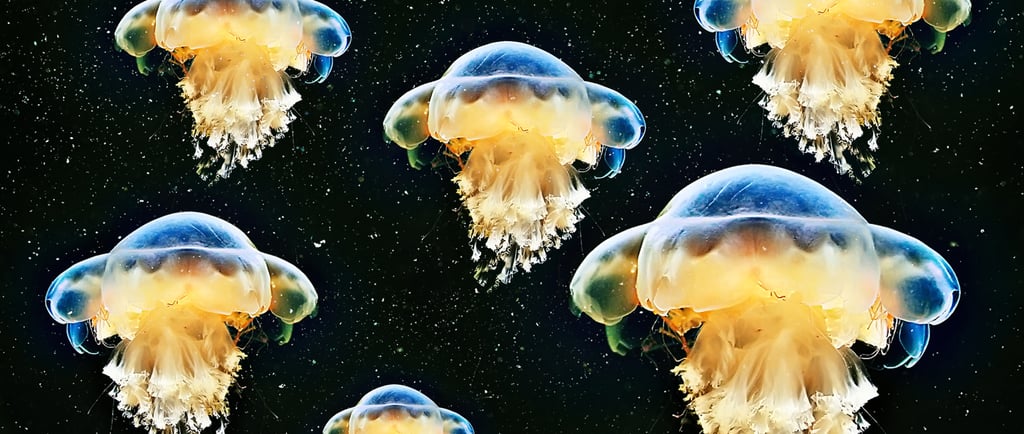
Underwater Creatures That Look Alien
The Ocean Has Been Hiding Its Own Disclosure Files This Whole Time
Everyone keeps looking up.
Every time the word “disclosure” starts trending, people turn their eyes toward the sky, waiting for something strange to appear above the clouds. Lights. Craft. Beings. Signals. Something not quite explainable.
But honestly? The ocean has been quietly embarrassing outer space this entire time.
Beneath the surface, in the black, cold, pressurized places humans rarely reach, there are creatures with transparent heads, glowing organs, glass bodies, living chains, umbrella arms, retractable jaws, vampire capes, floating ribbons, and faces that look like they were designed during a fever dream at an alien costume department.
Some of them shimmer like spacecraft.
Some look like ghosts.
Some look like plants until they move.
Some look like they arrived millions of years ago and simply decided not to evolve into anything normal.
And the wildest part is not that they exist.
The wildest part is that they exist here.
On Earth.
These underwater creatures are not science fiction. They are not concept art. They are not rejected monsters from a deep-space thriller. They are real animals, living in reefs, trenches, twilight zones, abyssal plains, volcanic seamounts, and open oceans we still barely understand.
So while the world debates what might be out there, maybe the better question is this:
What has been down here all along?
1. The Barreleye Fish
The Transparent-Headed Deep-Sea Surveillance System
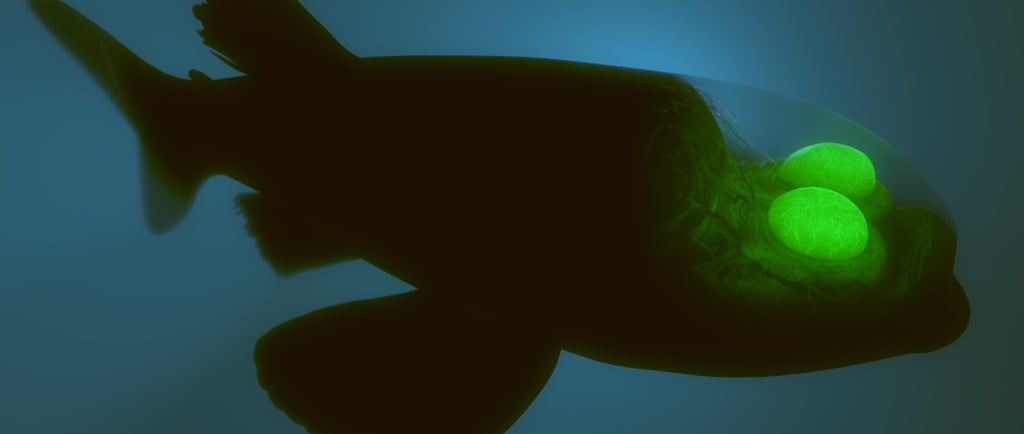
The barreleye fish looks like something that should require a security clearance.
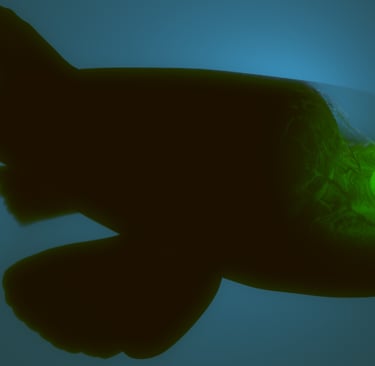
At first glance, it seems to have a normal fish face, if normal means “deep-sea creature who has seen too much.” But then you notice the dome. The top of its head is transparent, like a glass cockpit, and inside are two glowing green, barrel-shaped eyes pointing upward through its own skull. Yes. Through its own skull.
Those bright green orbs are not nostrils. They are eyes, tucked inside a clear dome and designed to scan the darkness above for silhouettes of prey. When it needs to, the barreleye can rotate those eyes forward, which makes it somehow even stranger and even more impressive.
It lives in the twilight zone, where sunlight fades but does not fully disappear. Down there, vision becomes survival. The barreleye does not chase the world. It waits, looks up, and watches shadows pass overhead. It is not just alien-looking. It is alien-functioning.
Alien rating: Full underwater UFO pilot.
Where you might encounter the vibe: You are extremely unlikely to see one in the wild unless you are inside a deep-sea research program, but you can find footage from ocean research institutes and sometimes deep-sea exhibits or educational aquariums feature its story.
2. The Vampire Squid
The Dramatic Goth Of The Deep Sea
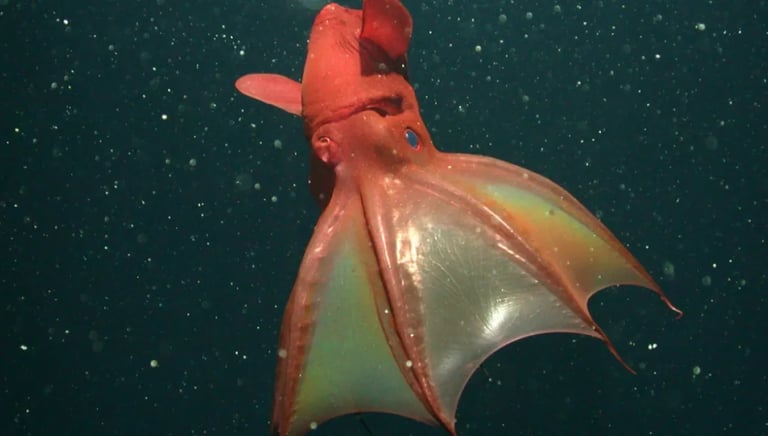
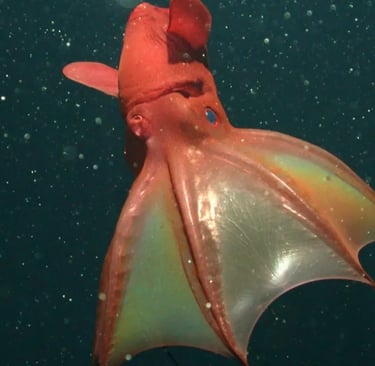
The vampire squid has the name, the outfit, and the lighting. Its scientific name translates to “vampire squid from hell,” which is honestly the kind of branding most creatures can only dream of. It has dark red skin, glowing blue eyes, webbed arms that unfold like a cape, and little fleshy spines called cirri that make it look like it belongs in an underwater haunted cathedral.
But despite its demonic entrance, the vampire squid is not terrorizing the deep. It is mostly floating around eating marine snow, which is a poetic name for drifting organic particles, bits of dead plankton, mucus, and other tiny leftovers falling through the water column. Basically, the vampire squid looks like a villain but lives like a very tired introvert catching snacks from the darkness.
When threatened, it can turn its webbed arms inside out over its body, creating a spiky cloak that looks terrifying enough to make predators reconsider their choices.
Alien rating: Gothic space monk with a snack filter.
Where you might encounter the vibe: Deep-sea footage, research videos, ocean museums, and the part of your brain that loves spooky animals with unfairly good names.
3. The Giant Siphonophore
The Creature That Is Actually A Colony Pretending To Be One Animal
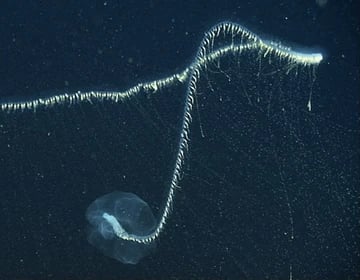
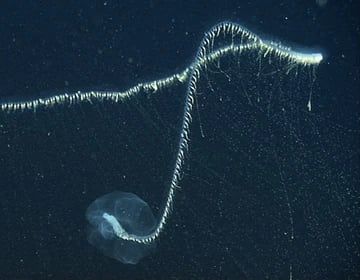
A giant siphonophore looks less like an animal and more like a living signal. Long, glowing, delicate, and almost impossible to process at first glance, it can stretch through the water like a bioluminescent chain from another dimension. But the strangest thing about it is not its length. It is what it actually is.
A siphonophore is not one simple animal in the way most of us think of animals. It is a colony of specialized individuals called zooids, all connected and working together as one drifting organism. Some parts help it swim. Some parts feed. Some parts reproduce. Together, they become something that looks like a single creature but behaves like a living network.
That is alien enough before you even get to the fact that some giant siphonophores can grow longer than a blue whale. Imagine seeing a glowing, living chain disappearing into the dark water, and then imagine someone calmly explaining, “Actually, that is many animals cooperating so perfectly that they appear to be one.”
No thank you, but also absolutely yes.
Alien rating: Deep-sea mothership made of teamwork.
Where you might encounter the vibe: Rarely in person. Siphonophores are best experienced through deep-sea exploration footage, though their surface cousin, the Portuguese man o’ war, sometimes appears in warmer ocean waters. Do not touch it.
4. The Bloody-Belly Comb Jelly
The Floating Rainbow Organism That Looks Too Beautiful To Be Legal
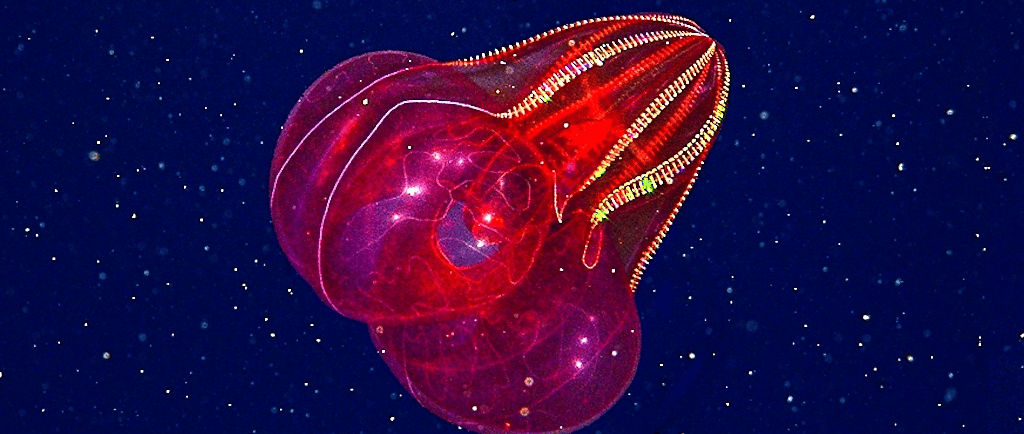
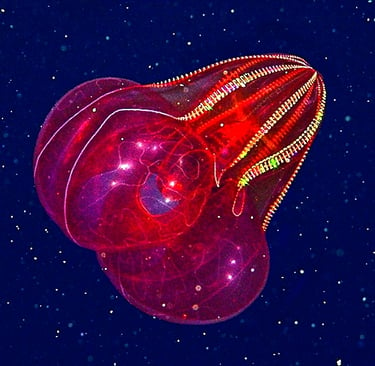
The bloody-belly comb jelly sounds terrifying, then looks magical, then becomes terrifying again once you realize how strange it really is. Its body glows deep red in the darkness, while rows of tiny hairlike cilia scatter light into rainbow pulses as it moves. It does not swim like a fish. It ripples. It pulses. It drifts like a tiny living spacecraft made of stained glass and secrets. The red color may help camouflage it in deep water, where red light disappears quickly. That means, to animals living in the darkness, this jewel-toned creature may be nearly invisible.
Which is rude, frankly. Imagine looking like a disco chandelier and still being stealthy. Comb jellies are ancient, gelatinous, and otherworldly, but the bloody-belly comb jelly takes the category personally. It is not just weird. It is glamorous weird.
Alien rating: Luxury UFO jellybean.
Where you might encounter the vibe: Deep-sea footage from research vessels. Some aquariums showcase comb jellies, though the deep-sea species are much harder to keep and see.
5. The Sea Angel
The Tiny Swimming Snail That Looks Like A Spirit Leaving The Body
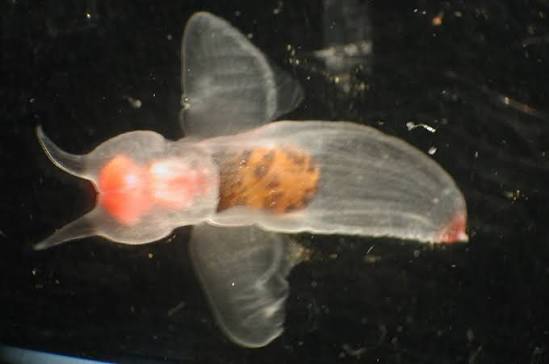
Sea angels look like something you would see in a dream right before waking up with a new personality. They are tiny, transparent, winged creatures that flutter through the open ocean like little glass spirits. And here is the twist: they are snails.
Not metaphorically. Not poetically. Actual swimming sea snails.
Over time, their snail “foot” evolved into winglike structures called parapodia, which they use to move through the water. Many have no shell, giving them a fragile, ghostly shape that looks more celestial than biological. They are called angels, but do not let the name fool you. Some sea angels are predators that hunt other floating snails. So yes, they look like delicate little cherubs, but they are also out here committing tiny ocean crimes.
Alien rating: Transparent fairy assassin.
Where you might encounter the vibe: Cold and temperate seas, plankton samples, science footage, and occasionally in polar or open-ocean education displays.
6. The Dumbo Octopus
The Deep-Sea Umbrella With Ears
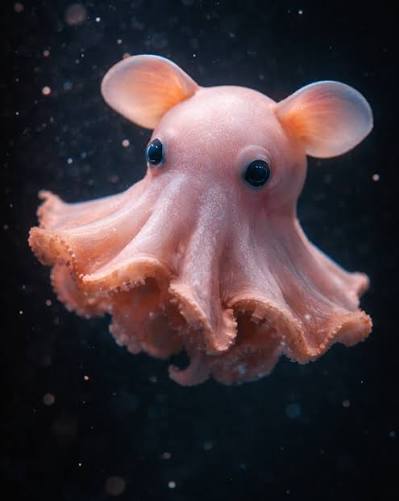
The dumbo octopus is what happens when the deep sea decides to make something cute and unsettling at the same time.
It has ear-like fins on its body, webbing between its arms, and a soft, drifting shape that makes it look like a tiny umbrella ghost. Instead of jetting around like some shallow-water octopuses, it often hovers above the seafloor, flapping its fins and floating through the dark like it has nowhere urgent to be.
There is something deeply calming about the dumbo octopus. It is not built for drama. It is built for depth, cold, pressure, and quiet survival. Its whole existence feels like a reminder that even in the darkest zones of the ocean, some creatures choose softness.
But do not get too cozy. It still lives in one of the most extreme environments on Earth, far below sunlight, where pressure would turn the average human into a cautionary tale.
Alien rating: Baby ghost umbrella from Neptune.
Where you might encounter the vibe: Deep-sea research videos. These animals live far too deep for casual encounters, which honestly makes them even more mythical.
7. The Blanket Octopus
The Floating Superhero Cape With Tentacles
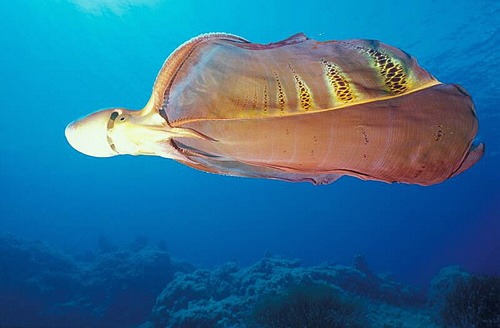
The female blanket octopus is one of the most dramatic animals in the ocean, and she knows it. She can unfurl a long, flowing web between her arms that looks like a cape, a sail, a battle flag, or a piece of alien couture. When stretched out, it makes her appear much larger and more intimidating to predators. When folded in, she becomes a creature of mystery again.
The males are dramatically smaller, which feels like nature gossip we absolutely do not have time to unpack, except yes we do. Female blanket octopuses can be huge compared with males, making this one of the most extreme size differences in the animal world.
As if that were not enough, blanket octopuses have been known to use broken tentacles from Portuguese man o’ war as weapons, because apparently they looked at an already dangerous floating animal and thought, “I can work with that.”
Alien rating: Intergalactic fashion assassin.
Where you might encounter the vibe: Rarely, but possible in warm open oceans. Divers and snorkelers have reported sightings in places like the Philippines, Indonesia, Australia, and tropical waters, though seeing one is a major stroke of luck.
8. The Mimic Octopus
The Shape-Shifting Genius That Said “Identity Is Optional”
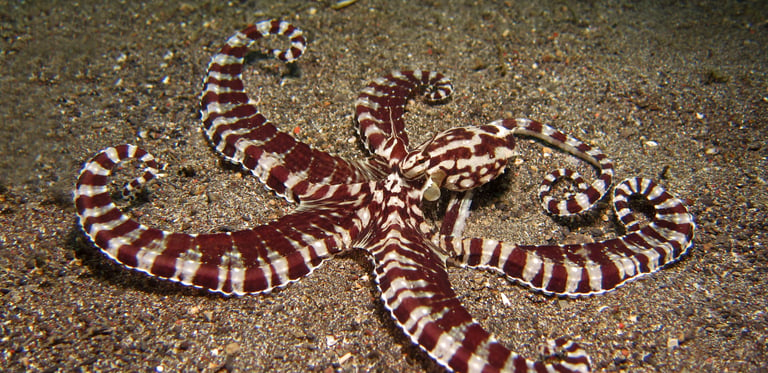
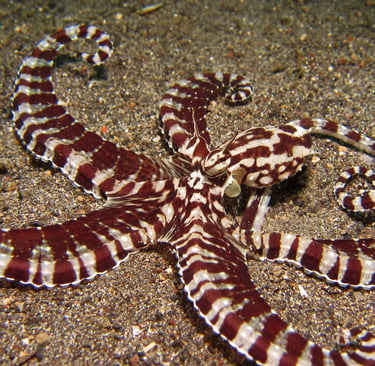
The mimic octopus does not simply camouflage. It performs.
Found in shallow Indo-Pacific waters, this astonishing cephalopod can change its shape, color, posture, and movement to resemble other marine animals. It can impersonate creatures such as flatfish, lionfish, and sea snakes, shifting its act depending on the threat around it.
That is not just weird. That is strategy.
Most animal mimics specialize in one disguise. The mimic octopus is a full theater department with arms. It does not just hide from the world. It edits itself. This is one of those animals that makes humans look less special in the most beautiful way. We think we invented reinvention. The mimic octopus has been down there saying, “New scene, new character,” for ages.
Alien rating: Aquatic shapeshifter with excellent range.
Where you might encounter the vibe: Lembeh Strait in Indonesia is one of the legendary places for muck diving and strange marine life, including mimic octopus sightings. Always go with ethical dive operators who do not harass or manipulate wildlife.
9. The Goblin Shark
The Ancient Jaw Launcher Nobody Asked For
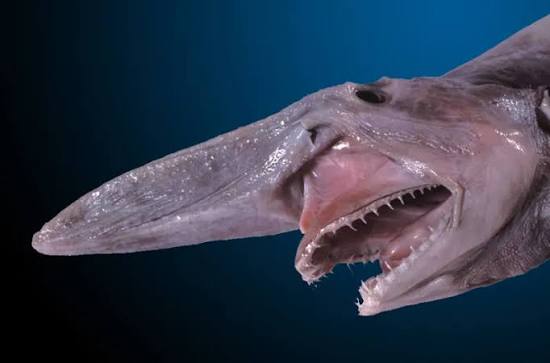
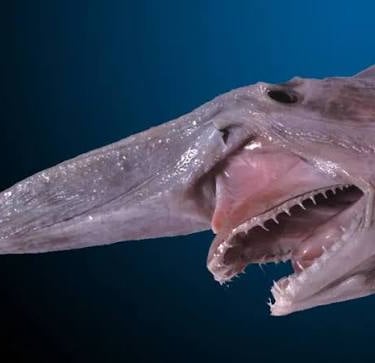
The goblin shark looks like a nightmare that got halfway through loading. It has a long, flattened snout, pale skin, strange teeth, and jaws that can shoot forward to snatch prey. Not open wide. Not lunge a little. Actually project forward in a way that feels physically rude. This deep-sea shark is sometimes called a living fossil because it belongs to a very old lineage. Its appearance is so unusual that even people who love sharks tend to look at it and quietly whisper, “What was the plan here?”
For a long time, most knowledge came from specimens caught by fishers or found outside their natural context. Seeing one alive in the deep is extremely rare, which only adds to the myth. It feels less like a shark and more like a message from a prehistoric ocean that forgot to update its software.
Alien rating: Fossil goblin with a mechanical jaw trap.
Where you might encounter the vibe: Almost never in the wild. Your best bet is research footage, museum exhibits, and being grateful you are not a small fish in the deep sea.
10. The Frilled Shark
The Eel-Shaped Relic That Looks Like It Escaped Evolution’s Basement
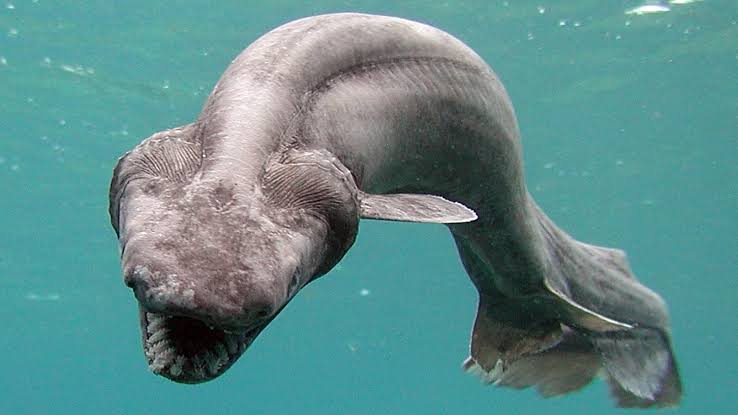
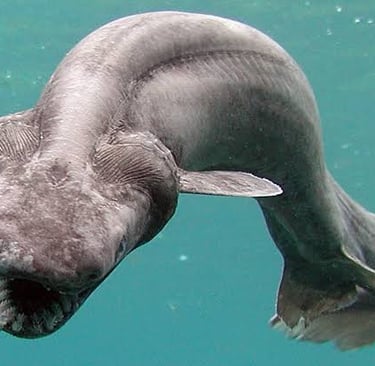
The frilled shark looks ancient in a way that makes you speak more softly. Long, dark, eel-like, and lined with frilly gill slits near its throat, it does not have the sleek, familiar shark silhouette most people expect. Instead, it looks like something drawn from a sea monster map, then accidentally found alive.
Its teeth are especially unsettling: rows of needle-like points that look designed to make prey regret every decision. It moves through deep waters with a serpentine shape, more dragon than shark, more fossil than fish. Calling it alien almost feels wrong because it is so old-Earth. It is not from another planet. It is from this planet before we got comfortable here.
Alien rating: Prehistoric sea serpent with legal documentation.
Where you might encounter the vibe: Very rarely. It lives in deep waters and is not a normal wildlife encounter animal, which is probably best for everyone emotionally.
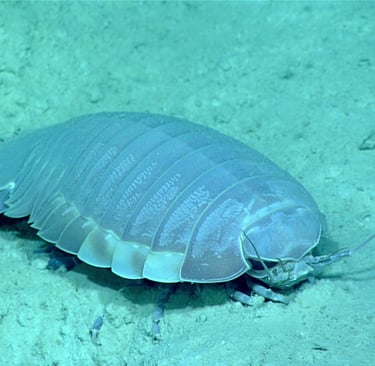
11. The Giant Isopod
The Armored Deep-Sea Couch Bug
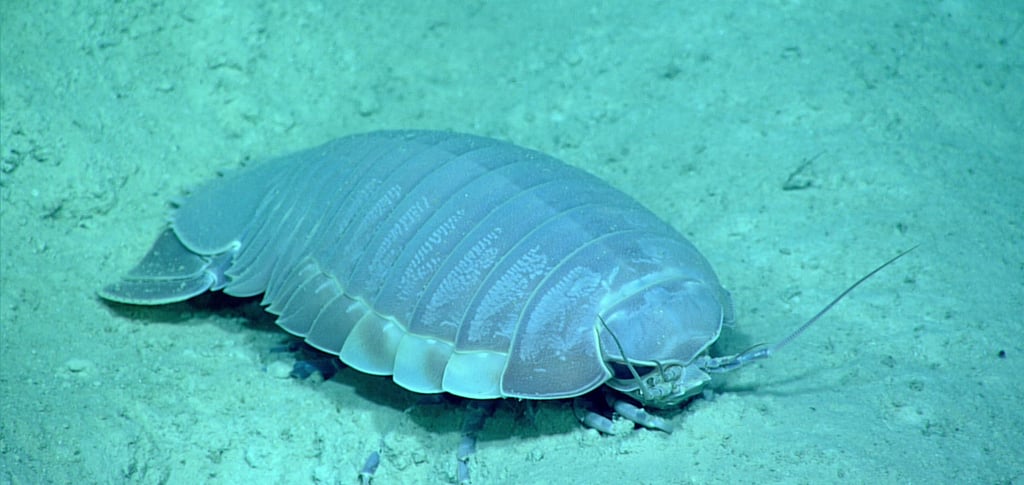
The giant isopod looks like a pill bug that found the wrong gym. It has a segmented armored body, many legs, large eyes, and a face that seems both ancient and mildly disappointed in you. These deep-sea scavengers crawl along the seafloor looking for food, including fallen organic material from above.
Because meals can be rare in the deep sea, giant isopods are adapted to a slow, opportunistic lifestyle. They are not out here rushing. They are waiting. Existing. Conserving energy. Being extremely weird about it. There is something both adorable and horrifying about them. They look like they should be tiny and under a rock in your garden, but instead they are the size of a nightmare small dog and living in the abyss.
Alien rating: Armored alien potato.
Where you might encounter the vibe: Some aquariums display giant isopods, making them one of the more seeable creatures on this list. In the wild, they are deep-sea animals and not casual snorkel buddies.
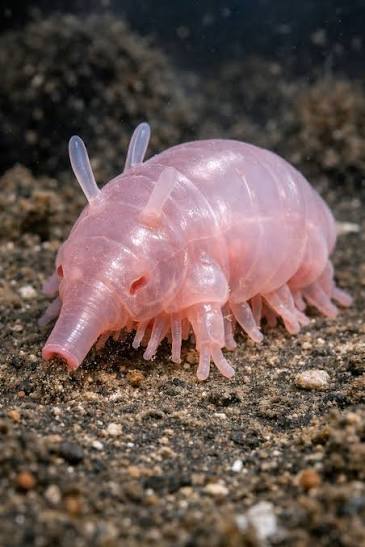
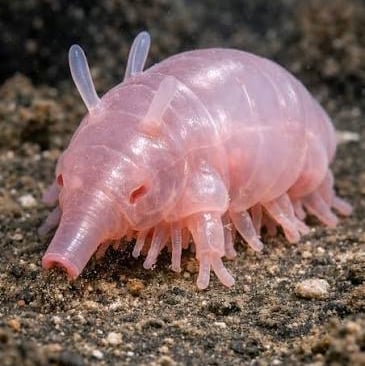
12. The Sea Pig
The Walking Deep-Sea Blob With Tiny Tube Feet
The sea pig is not glamorous. It is not elegant. It is not trying to be mysterious. It is a translucent, pinkish, deep-sea cucumber that walks around the seafloor on long tube feet, snuffling through mud for organic leftovers. And somehow, it is perfect.
Sea pigs live in deep, soft sediments, where they probe the seafloor for bits of dead animals, mucus, and other detritus. They can gather in large groups when there is food, looking like a herd of tiny alien vacuum cleaners moving across the abyssal plain. If the barreleye is the UFO pilot and the vampire squid is the goth monk, the sea pig is the maintenance crew. Someone has to clean the deep sea, and apparently that someone looks like a semi-transparent balloon with legs.
Alien rating: Abyssal Roomba with feelings.
Where you might encounter the vibe: Deep-sea research footage. Sea pigs are common in some abyssal habitats but not something travelers can casually see without serious expedition-level access.
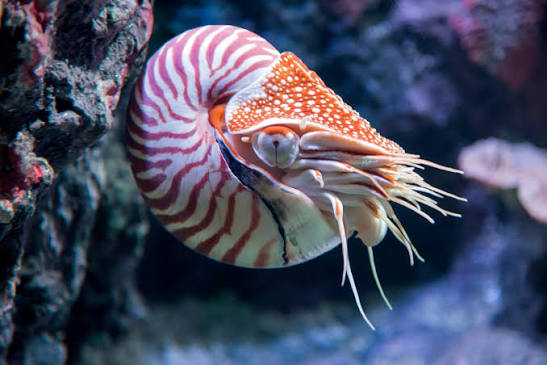
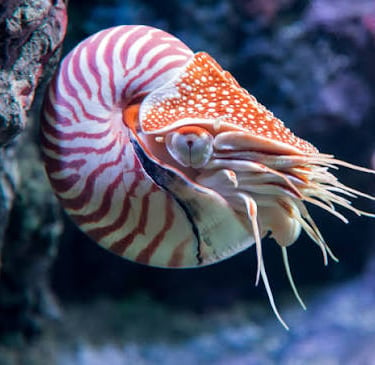
13. The Nautilus
The Ancient Spiral That Looks Like A Living Fossil Spaceship
The nautilus looks like it should be floating through a marble temple in Atlantis. Its shell is a perfect spiral, patterned and chambered, while dozens of soft tentacles emerge from the opening like the creature is piloting its own tiny submarine. Unlike octopuses and squid, nautiluses keep an external shell, giving them an ancient, architectural beauty. They have been around in some form for hundreds of millions of years, which makes them feel less like animals and more like time travelers.
Unlike many of the deep-sea creatures on this list, nautiluses can be seen in some aquariums, and in the wild they inhabit deeper reef slopes in the Indo-Pacific. They rise and descend through the water column, using gas-filled chambers in their shell to help control buoyancy. Basically, it is a living spiral elevator.
Alien rating: Ancient biological spacecraft.
Where you might encounter the vibe: Some aquariums, educational marine centers, and responsible dive regions in the Indo-Pacific. Wild encounters should never involve collecting, handling, or disturbing them.
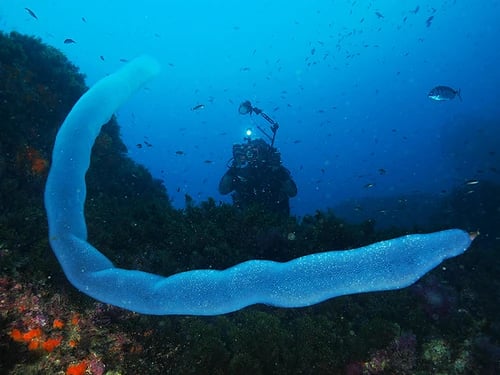
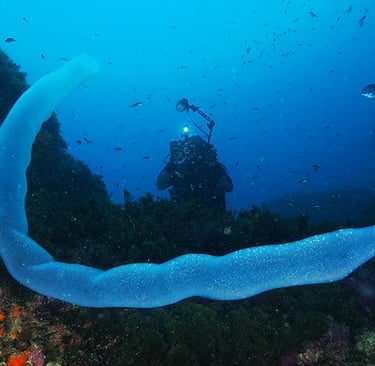
14. The Pyrosome
The Glowing Tube Colony That Looks Like A Portal
A pyrosome can look like a transparent glowing tube drifting through the ocean, which is not a normal thing to see unless your life has taken a very strange turn.
Like siphonophores, pyrosomes are colonial animals. They are made of many tiny zooids working together in a shared gelatinous structure. Some are small. Others form long, hollow tubes that divers have compared to floating windsocks or alien tunnels.
Their name comes from Greek words connected to fire and body, because many pyrosomes can produce bioluminescent light. A glowing tube of living animals drifting through the sea is already a lot, but the fact that it is a colony makes it even more surreal. It is not a creature you meet. It is a hallway of creatures.
Alien rating: Ocean portal with tenants.
Where you might encounter the vibe: Open-ocean diving, blackwater diving, and occasional blooms, depending on conditions. Never enter or disturb a pyrosome, no matter how portal-like it looks.
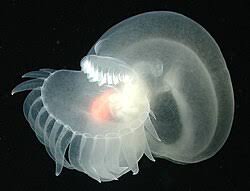
15. The Mystery Mollusk
The Newly Named Deep-Sea Creature That Looks Like It Was Designed By A Dream
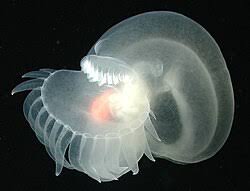
Every once in a while, scientists find an animal that feels like a reminder that the ocean is not done shocking us. One of the newest examples is a deep-sea nudibranch called Bathydevius caudactylus, sometimes described as a mystery mollusk. It lives in the midnight zone, far below sunlight, and has a gelatinous, transparent body with a hood-like structure and bioluminescent glow.
It does not look like a typical sea slug. It looks like a floating phantom with a trap door. That is the magic of deep-sea discovery. Just when you think you have seen the strangest creature possible, the ocean opens another file.
Alien rating: Freshly declassified ghost slug.
Where you might encounter the vibe: Research footage only for now. This is not a tourist encounter, but it is exactly why deep-sea exploration matters.
Why So Many Ocean Creatures Look Alien
The deeper you go, the less Earth behaves like the Earth we know. Sunlight disappears. Pressure increases. Temperatures drop. Food becomes scarce. Space becomes vast. Communication, camouflage, hunting, mating, and movement all require different strategies. That is why deep-sea animals often look so strange to us. Their bodies are not designed for our world. They are designed for darkness, pressure, patience, and survival in places where almost nothing is easy.
Transparency helps some animals hide.
Bioluminescence helps others lure, warn, confuse, or communicate.
Huge eyes gather faint light.
Soft bodies withstand pressure.
Slow metabolisms conserve energy.
Strange mouths help catch rare meals when they appear.
They do not look alien because they failed at being normal. They look alien because “normal” is a shallow-water concept.
Can Travelers Actually See Alien-Looking Sea Creatures?
Yes, but with a reality check.Many of the most alien-looking creatures live too deep for ordinary travelers to encounter safely. You are not casually meeting a barreleye fish or giant siphonophore on a snorkel trip unless something has gone deeply wrong with the laws of physics.
But there are still ways to experience the alien ocean responsibly. Look for aquariums with strong marine science programs, deep-sea exhibits, jelly displays, nautilus habitats, or research partnerships. Watch live ROV dives from ocean exploration organizations. Try blackwater diving with ethical operators in places known for strange pelagic life, such as Hawaii, the Philippines, Indonesia, or parts of the Caribbean. Explore muck diving destinations like Lembeh Strait for mimic octopus and other bizarre shallow-water species.
And most importantly, do not touch, chase, prod, collect, corner, lure, or manipulate wildlife for a better photo. The ocean is not a petting zoo. It is a planet-sized mystery with boundaries.
The Real Disclosure Is Underwater
Maybe aliens exist somewhere beyond us. Maybe they do not. But the truth is, Earth has never needed help being strange.
We already live on a planet where fish can see through their own heads, squid wear vampire capes, snails grow wings, sharks launch their jaws, colonies pretend to be single animals, and glowing tubes drift through the dark like portals. That is enough wonder for several lifetimes.
The next time someone asks whether there is intelligent, bizarre, impossible-looking life somewhere out there, you can point toward the ocean and say: Start here.
The deep has been trying to tell us something for a long time.
Explore
Discover hidden gems in small cities worldwide.
© 2025. All rights reserved. Ripe Melland Media