Stop scrolling and start visiting

The Most Beautiful Seas You've Probably Never Heard Of
Discover 10 breathtaking waterfalls that feel like fantasy, from Croatia's turquoise Plitvice Lakes and Laos' Kuang Si Falls to the surreal beauty of Havasu Falls, Iguazú Falls, and Iceland's Seljalandsfoss. These magical destinations look too incredible to be real.
LIQUID LANDSCAPES
Sarah Melland
6/9/202612 min read
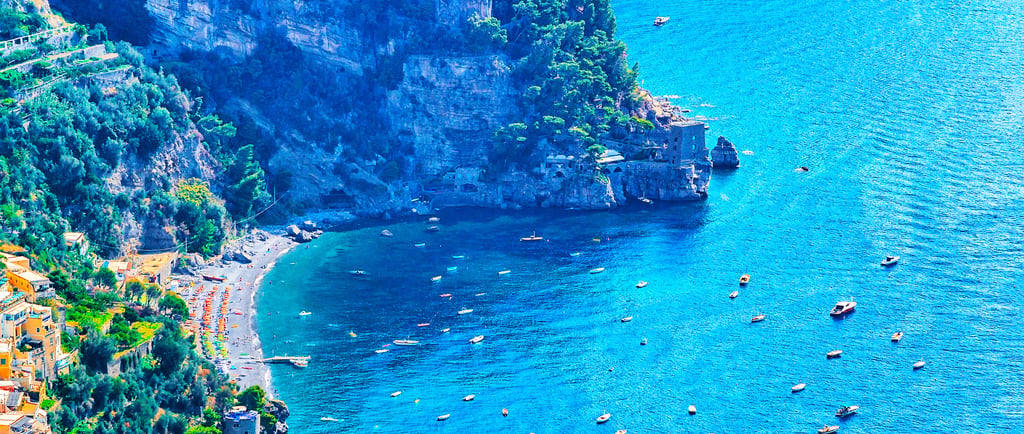
The Most Beautiful Seas You’ve Probably Never Heard Of
Hidden Blue Worlds Beyond The Famous Coastlines
Some places become famous before we ever learn the name of the water around them.
We know Capri.
We know Cinque Terre.
We know Mallorca.
We know Corfu.
We know the San Juan Islands, the Scottish Hebrides, the beaches of Thailand, the desert islands of Mexico, and the wild coastlines of Indonesia.
But the seas themselves?
They slip quietly into the background.
They become “the Mediterranean,” “the coast,” “the ocean,” “that gorgeous blue water,” as if they do not have names, moods, histories, storms, islands, legends, and entire worlds moving beneath them.
And that is the magic of this list.
These are not necessarily secret places. Some of them touch famous coastlines, beloved islands, ancient ports, and bucket-list beaches. But their names are often overlooked by travelers who fall in love with the scenery without realizing the water itself has a story.
The Tyrrhenian.
The Ligurian.
The Balearic.
The Alboran.
The Ionian.
The Salish.
The Banda.
The Flores.
They sound like forgotten kingdoms. Like words printed on an old map. Like blue doors into places that feel more romantic once you know what to call them.
Because sometimes naming a landscape changes how you see it. And these seas deserve to be seen.
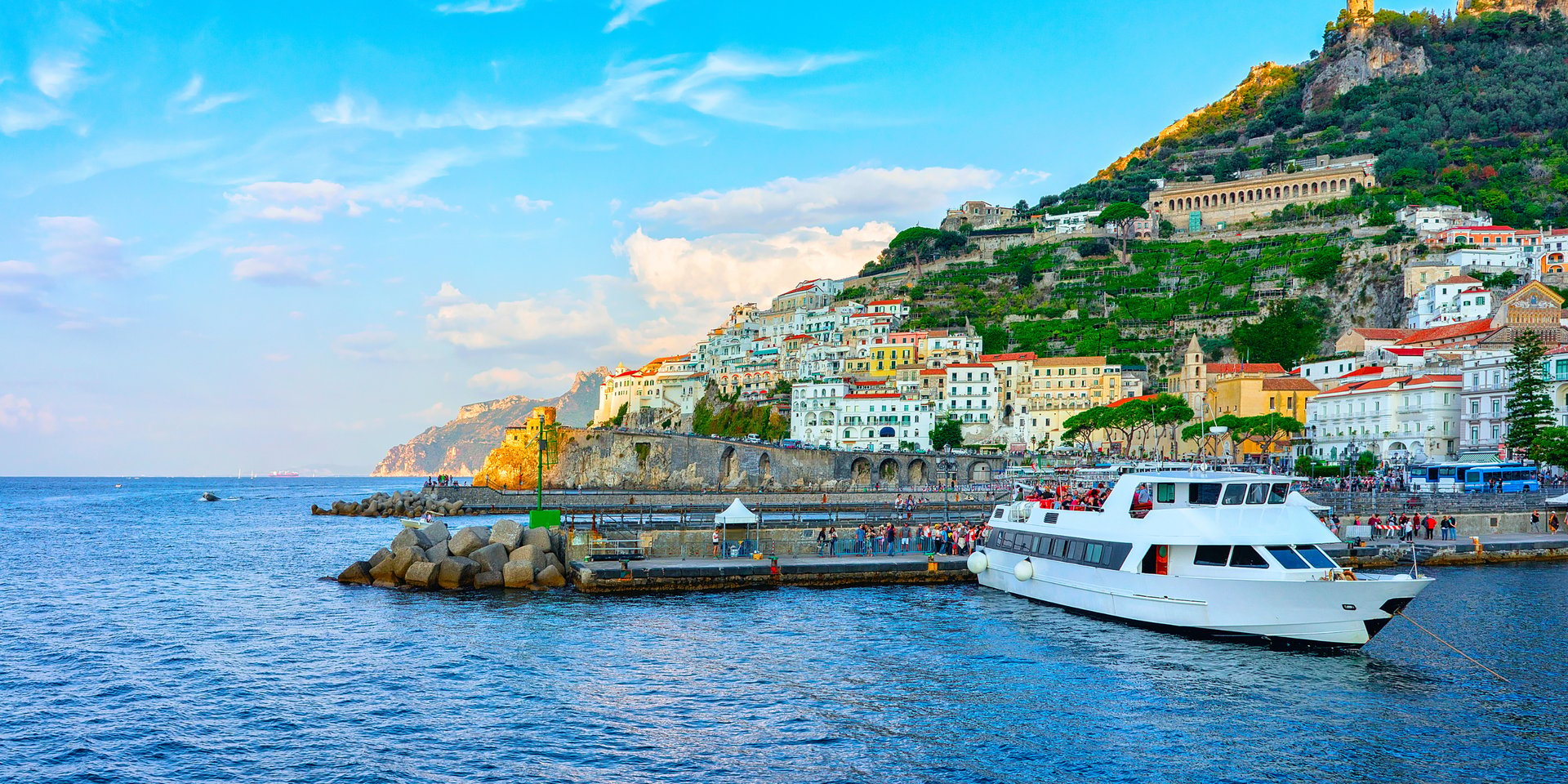
1. The Tyrrhenian Sea
Italy’s Cinematic Blue Between Volcanoes, Islands, And Myth
The Tyrrhenian Sea is one of those names that feels like it should be more famous than it is. It lies along Italy’s western coast, touching places travelers already dream about: Capri, Ischia, the Amalfi Coast, Naples, Sicily, Sardinia, Corsica, the Aeolian Islands, and the Pontine Islands. You may have stared at it from a cliffside restaurant, crossed it on a ferry, or seen it glowing in a film and never realized it had a name this beautiful.
The Tyrrhenian is not a shy sea.
It is volcanic, glamorous, ancient, and dramatic. It wraps around islands that steam, erupt, shimmer, and seduce. In the Aeolian Islands, black beaches and volcanic cones rise from blue water. Around Capri, sea caves, limestone cliffs, and polished boats make the coastline feel like old cinema. Near Ischia, thermal springs remind you that the earth beneath all that beauty is still alive.
This is water with stage presence.
The Tyrrhenian Sea feels like Sophia Loren in sunglasses, a Roman myth retold at sunset, and a boat captain who knows every hidden cove but refuses to tell you too quickly.
Best places to feel it: Capri, Ischia, Procida, the Aeolian Islands, Ponza, Sardinia, northern Sicily.
Go for: volcanic islands, old-world glamour, blue grottoes, ferry rides, sunset swims, and the feeling that Italy has been keeping a secret in plain sight.
2. The Ligurian Sea
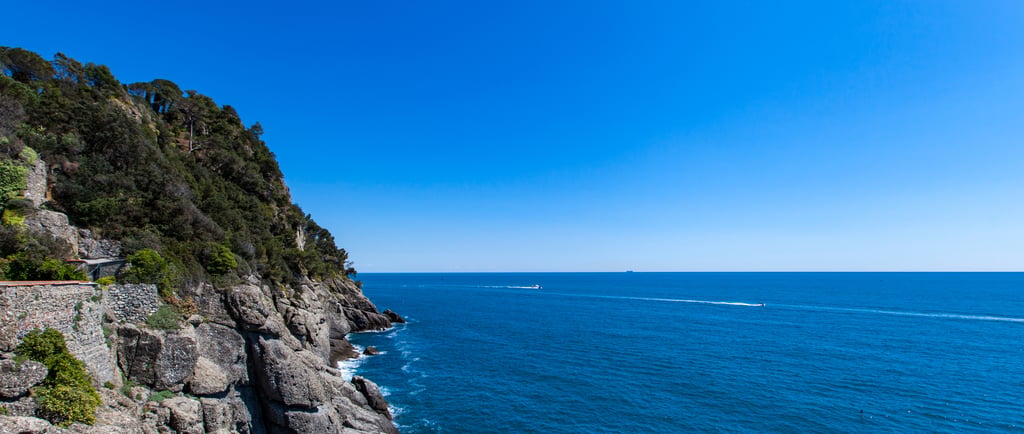
The Sea Behind Cinque Terre, Portofino, And The Italian Riviera
The Ligurian Sea is proof that a small sea can have enormous main-character energy.
This is the water behind some of the most photographed coastlines in Italy: Cinque Terre’s pastel villages, Portofino’s elegant harbor, Camogli’s painted facades, Genoa’s maritime history, and the cliffside trails of the Italian Riviera. People come for the villages, the pesto, the boats, the hiking paths, and the painted houses stacked like theater scenery above the water.
But the Ligurian Sea is the thing holding it all together.
It is sharper and more vertical than the lazy fantasy of the Mediterranean. The land seems to fall into it dramatically, like it lost its balance. Villages cling to cliffs. Boats rock below pastel walls. Trails turn corners and suddenly the whole sea opens beneath you like a blue curtain being pulled back.
The Ligurian does not feel tropical. It feels cultivated, artistic, salty, and old. It is the sea of fishermen, poets, grand hotels, rail tunnels, lemon trees, church bells, and dinner tables set too close to the harbor to feel real.
Best places to feel it: Cinque Terre, Portofino, Camogli, Santa Margherita Ligure, Genoa, Porto Venere.
Go for: cliff villages, colorful harbors, coastal hikes, seafood, pesto, boat trips, and that particular Italian Riviera light that makes every window look romantic.
3. The Balearic Sea
Spain’s Island Water Of Coves, Caves, And Slow Mediterranean Days
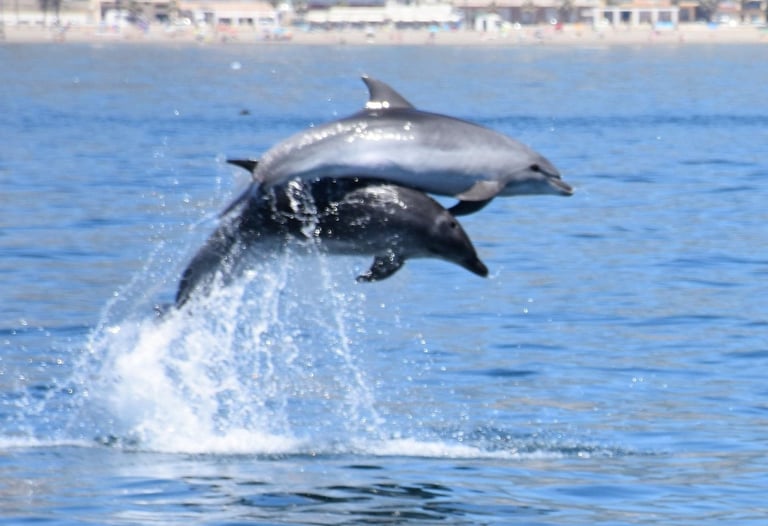
The Balearic Sea sounds like a place from a sailor’s journal, but most travelers know it through its islands: Mallorca, Menorca, Ibiza, and Formentera.
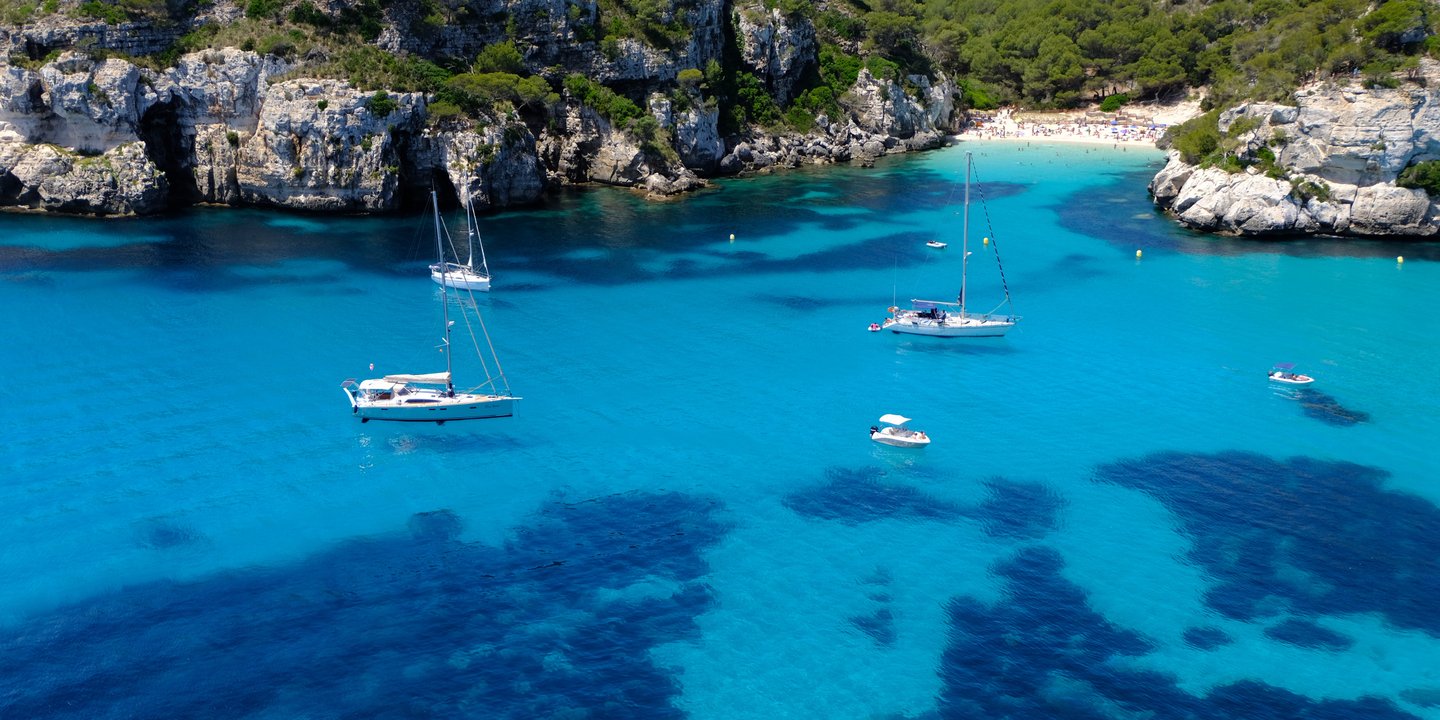
This is the water of bright coves, limestone cliffs, old ports, white villages, sea caves, and beaches so blue they look almost artificially enhanced. It can be glamorous, wild, quiet, loud, expensive, barefoot, ancient, and bohemian, depending on which island you choose and how far you wander from the obvious places.
Mallorca gives it mountains and honey-colored villages. Menorca gives it soft beaches, prehistoric stones, and a calmer rhythm. Ibiza gives it sunsets, music, and secret northern coves once you step away from the nightlife. Formentera gives it clarity, simplicity, and the kind of water that makes people talk about moving there after one afternoon.
The Balearic Sea is not one mood. It is a collection of sunlit personalities.
Best places to feel it: Mallorca, Menorca, Ibiza, Formentera, Cabrera.
Go for: island-hopping, turquoise coves, sea caves, sailing, quiet beaches, old ports, and the joy of realizing the Balearics are much more than party mythology.
4. The Alboran Sea
Where Europe Almost Touches Africa
The Alboran Sea sits between southern Spain and northern Morocco, and that alone makes it feel cinematic.
This is the western gateway of the Mediterranean, where Atlantic water enters through the Strait of Gibraltar and the map suddenly becomes dramatic. Spain is above. Morocco is below. The Mediterranean begins to open. Cultures, winds, migrations, histories, and sea routes have crossed here for centuries.
The Alboran does not have the household-name glamour of the Aegean or the Instagram fame of the Amalfi Coast, but it has something better: tension.
It feels like a threshold. Stand on the coast of Andalusia or northern Morocco and the water seems to carry stories in both directions. Moorish fortresses, whitewashed towns, mountain silhouettes, ferries, fishing ports, and old trade routes all belong to this sea. It is not just blue. It is borderland blue.
Best places to feel it: Málaga, Nerja, Almería, Gibraltar approaches, Melilla, northern Morocco’s Mediterranean coast.
Go for: dramatic geography, Andalusian coastlines, Moroccan sea towns, ferry crossings, desert-meets-water energy, and the thrill of being between continents.
5. The Ionian Sea
Greece’s Softer, Greener, Glassier Blue
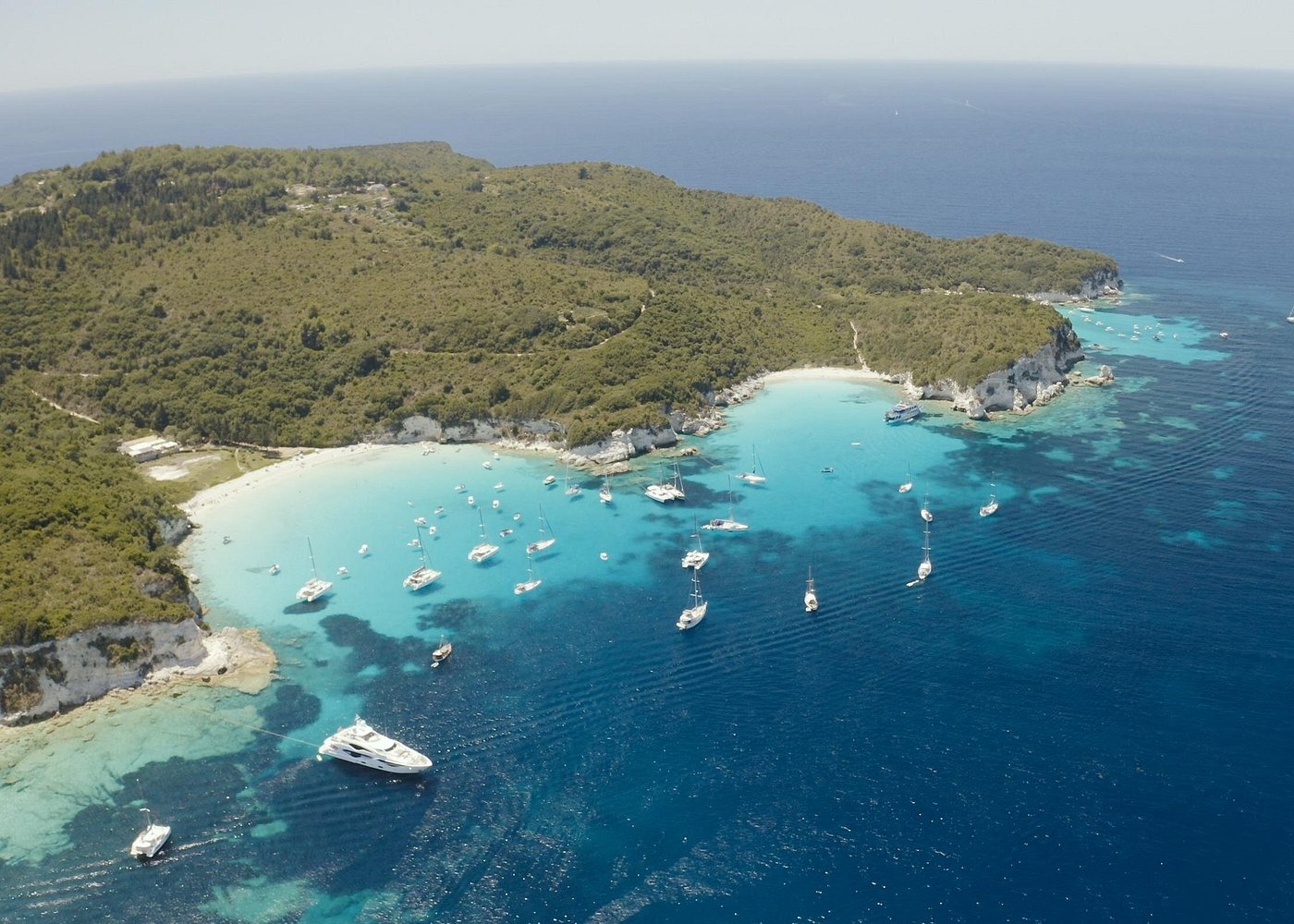
The Ionian Sea is Greece in a gentler key. While the Aegean often gets the postcard glory, the Ionian has a different beauty: greener, lusher, softer, more Venetian in places, with islands that feel shaped by olive groves, cliffs, pale beaches, blue caves, and old fortresses watching the water.
This is the sea of Corfu, Kefalonia, Zakynthos, Lefkada, Ithaca, Paxos, and Antipaxos. It touches western Greece and southern Italy, carrying centuries of crossings, conquests, myths, sailors, and songs.
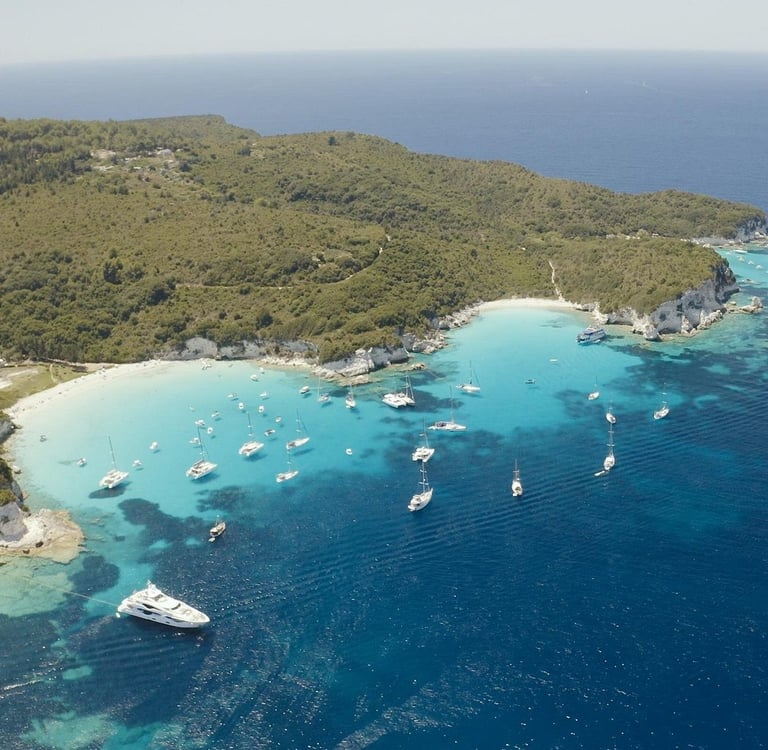
The Ionian is where you find beaches so bright they look unreal, towns with Venetian balconies, mountain roads above impossibly blue bays, and caves where the water glows electric. It feels less severe than some Greek island landscapes. More garden-like. More romantic. More secret, even when it is famous.
Corfu gives it history. Kefalonia gives it drama. Zakynthos gives it cliffs and caves. Lefkada gives it beaches that make you question every beach you have ever loved before.
Best places to feel it: Corfu, Kefalonia, Zakynthos, Lefkada, Paxos, Antipaxos, Ithaca.
Go for: turquoise bays, sea caves, green islands, old towns, olive groves, boat days, and a softer side of Greece.
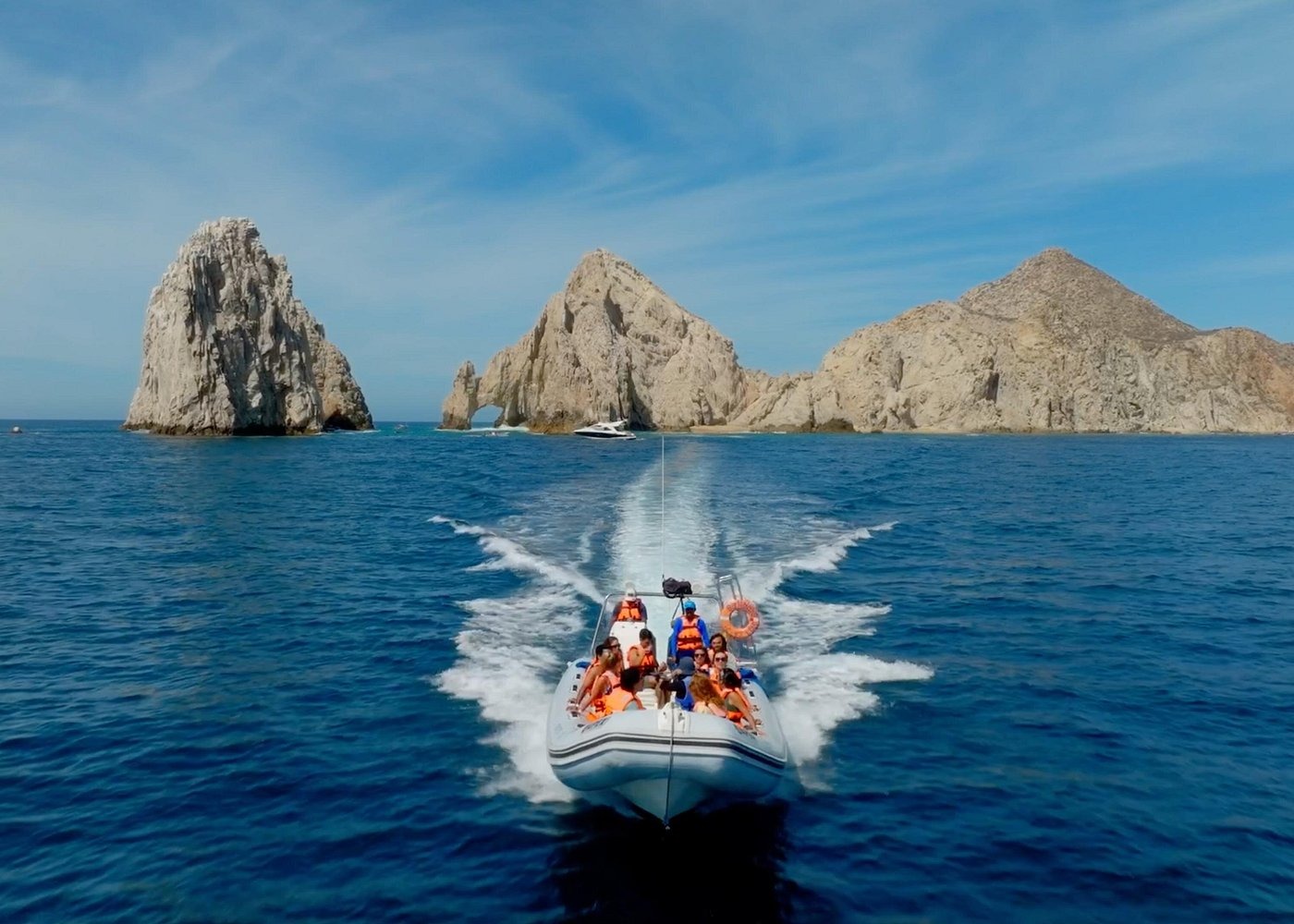
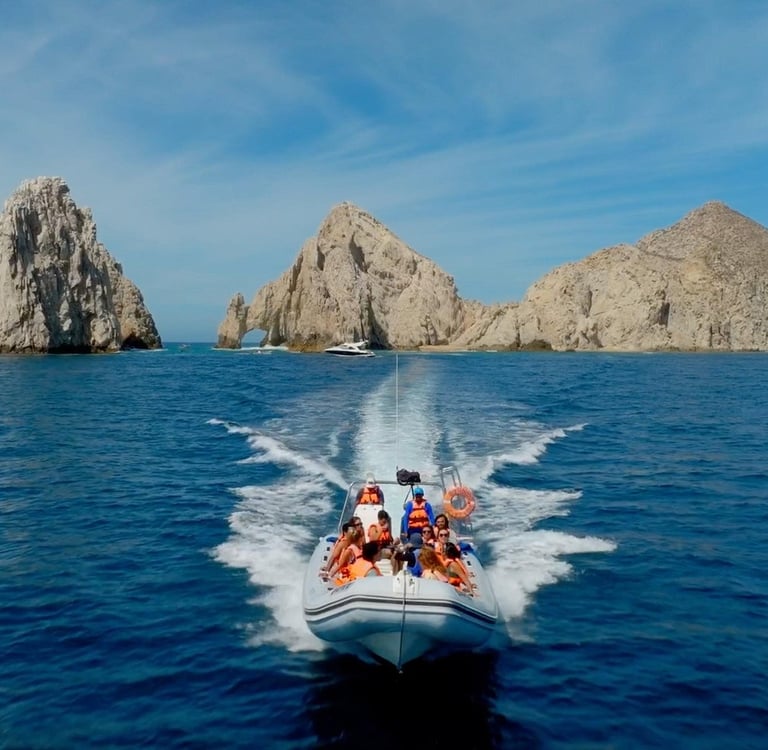
6. The Sea Of Cortez
Mexico’s Desert Sea Of Islands, Whales, And Impossible Blue
The Sea of Cortez, also known as the Gulf of California, feels like a miracle that happened between desert and water.
On one side, there are cactus-covered landscapes, red mountains, dusty islands, and dry cliffs. On the other, there is blue water full of marine life, whales, dolphins, sea lions, rays, fish, and reefs. It is one of the rare places where the desert does not end at the sea so much as lean over it and stare.
The contrast is what makes it unforgettable. This is not a lush tropical fantasy. It is sharper, more elemental, more surprising. You can kayak beside rugged islands, snorkel with sea lions, watch whales in season, and see sunsets turn the whole coastline copper and rose.
The Sea of Cortez feels ancient and alive at the same time. It is a place where the land looks almost empty until the water reveals how much life has been hiding there.
Best places to feel it: La Paz, Loreto, Espiritu Santo, Baja California Sur, Gulf islands.
Go for: marine wildlife, desert islands, kayaking, snorkeling, whale watching, quiet bays, and one of the most striking land-and-sea contrasts on Earth.
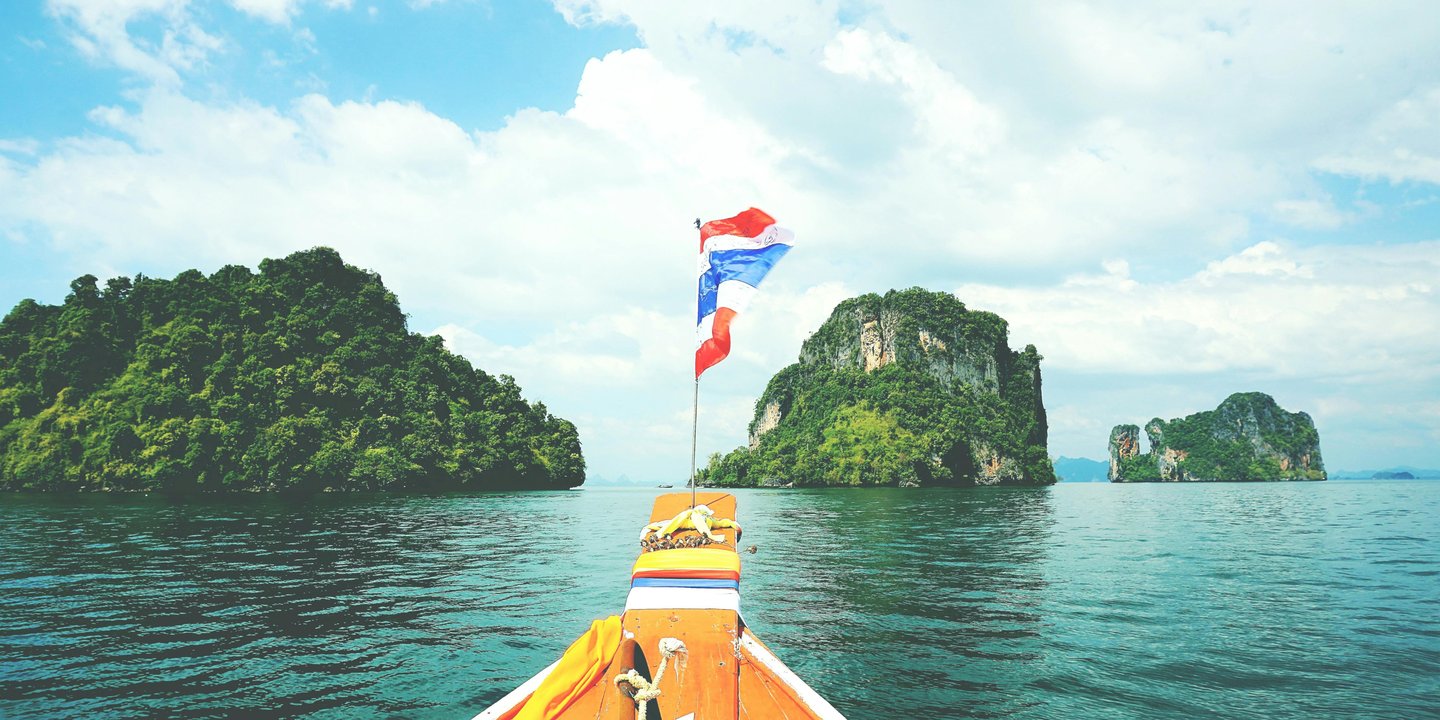
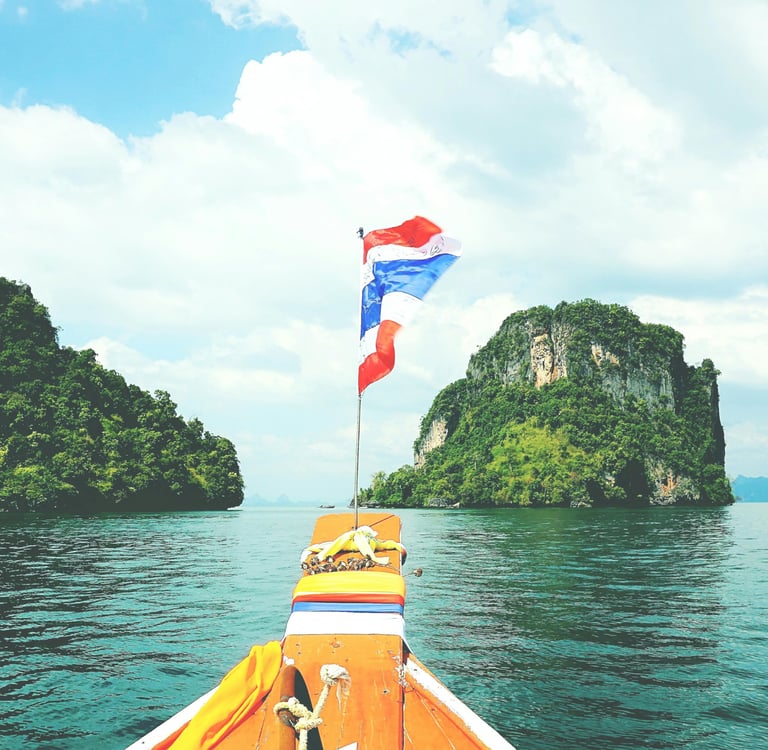
7. The Andaman Sea
Tropical Water With Limestone Cliffs, Coral Reefs, And Island Legends
The Andaman Sea is the kind of name that already sounds like a journey. It stretches along parts of Southeast Asia and the eastern Indian Ocean, touching Thailand, Myanmar, Malaysia, and the Andaman and Nicobar Islands of India. Many travelers know pieces of it without naming it: Phuket, Krabi, the Phi Phi Islands, Langkawi, the Mergui Archipelago, and the remote Indian islands where beaches, forests, coral reefs, and turquoise water create an almost cinematic tropical world.
The Andaman Sea is not just pretty. It is textured. Limestone cliffs rise from the water like ancient towers. Longtail boats cut through quiet bays. Mangroves lace the coast. Coral gardens shimmer below the surface. Some islands feel lively and easy. Others feel remote enough to make the rest of the world seem like a rumor.
There is softness here, but also mystery. The kind of blue that makes you want to disappear for a week and come back with salt in your hair and no desire to explain yourself.
Best places to feel it: Krabi, Phuket, Phi Phi Islands, Koh Lanta, Langkawi, Andaman and Nicobar Islands, Mergui Archipelago.
Go for: limestone cliffs, island-hopping, snorkeling, coral reefs, jungle coastlines, longtail boats, and dreamy tropical water with a wild edge.
8. The Salish Sea
Misty Pacific Water Of Islands, Ferries, Forests, And Orcas
The Salish Sea does not shimmer like the Mediterranean. It breathes.
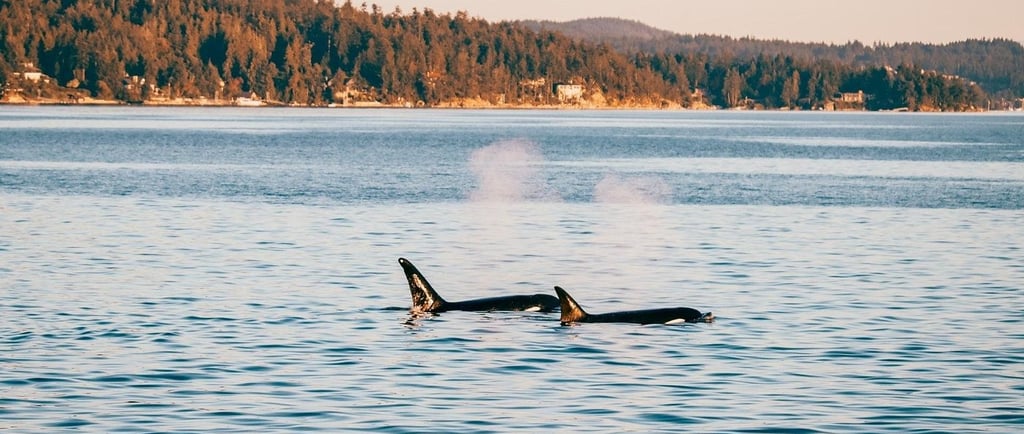
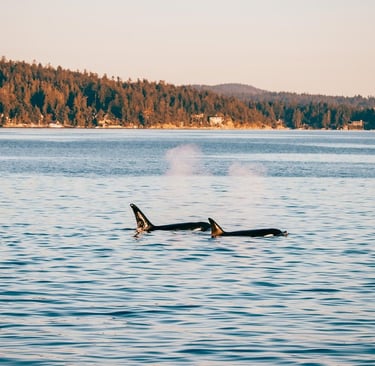
This inland sea connects parts of Washington State and British Columbia, wrapping around Puget Sound, the San Juan Islands, the Gulf Islands, and the waters near Vancouver. It is a sea of ferries, cedar forests, rocky shorelines, low clouds, glassy mornings, tide pools, harbor towns, seals, eagles, and orcas moving through gray-blue water like living myths.
The beauty here is not loud. It is moody, quiet, and deeply Pacific Northwest. The water can look silver one moment and slate the next. Islands appear and disappear in fog. A ferry horn sounds somewhere in the distance. The air smells like rain, salt, woodsmoke, and coffee.
The Salish Sea is for people who understand that not all beautiful water has to look tropical. Some water is beautiful because it makes you put on a sweater, stand very still, and listen.
Best places to feel it: San Juan Islands, Orcas Island, Friday Harbor, Whidbey Island, Vancouver Island, Gulf Islands, Seattle ferry routes.
Go for: ferries, orcas, kayaking, misty islands, forested shorelines, tide pools, and quiet coastal towns with rain in the forecast.
9. The Sea Of The Hebrides
Scotland’s Wild Western Water Of Cliffs, Whisky, Puffins, And Weather
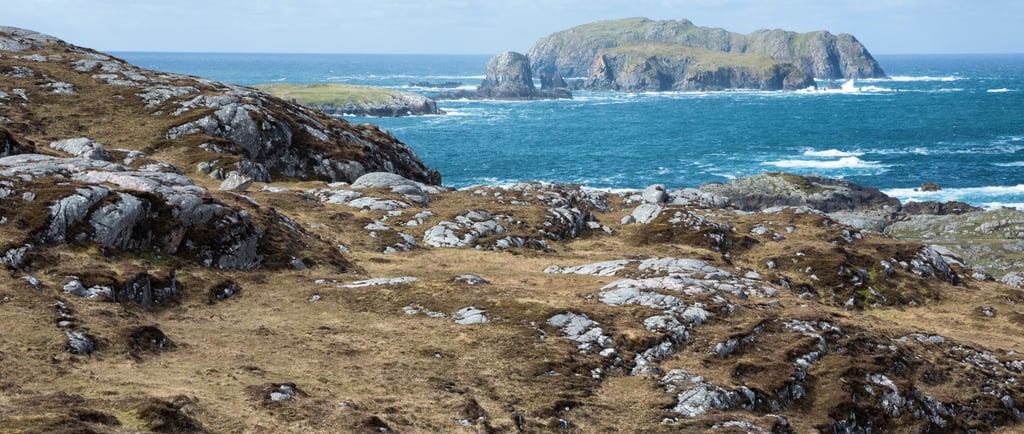
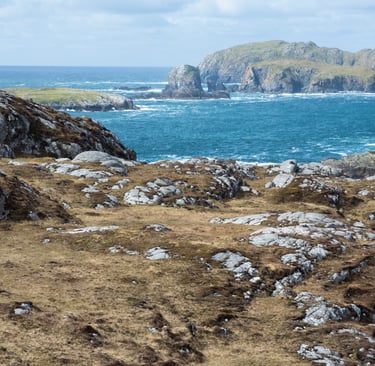
The Sea of the Hebrides sounds like something a bard would mention before ruining your emotional stability. It lies off Scotland’s west coast, near islands that feel carved from weather: Skye, Mull, Tiree, Coll, the Small Isles, and the Outer Hebrides beyond. This is not gentle water. This is Atlantic-adjacent, wind-tossed, story-soaked water, where ferries cross between islands, seabirds wheel above cliffs, and the weather changes its mind before you have finished zipping your jacket.
The color palette is different here.
Steel blue. Peat brown. Moss green. Cloud white. Sudden gold.
The Sea of the Hebrides is less about beach lounging and more about elemental beauty. You come for sea cliffs, ancient ruins, Gaelic culture, wildlife, white-sand beaches that look Caribbean until the wind reminds you where you are, and the feeling that every island has a story older than your country.
It is romantic in the wildest sense. Not candlelight romantic. Standing-on-a-cliff-while-the-wind-rearranges-your-soul romantic.
Best places to feel it: Isle of Skye, Isle of Mull, Tiree, Coll, Barra, South Uist, Harris, the Small Isles.
Go for: ferries, puffins, castles, whisky, sea kayaking, white beaches, wild weather, and island landscapes that feel half-real.
10. The Wadden Sea
The Sea That Disappears And Returns
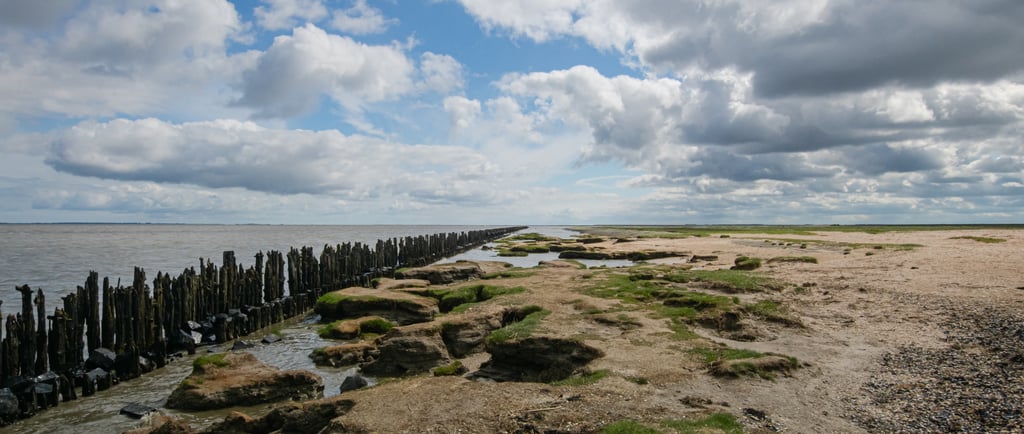
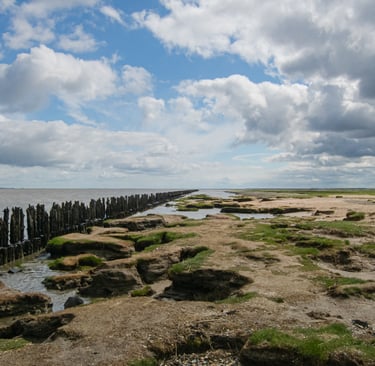
The Wadden Sea is not beautiful in the obvious way. It does not seduce you with cliffs or turquoise coves. It performs something stranger. It empties itself.
Stretching along parts of the Netherlands, Germany, and Denmark, the Wadden Sea is one of the great tidal landscapes of the world. At low tide, the water pulls back and reveals vast mudflats, sandbanks, channels, salt marshes, shells, birds, and wet earth glinting under enormous skies. Then the tide returns and the sea claims it all again.
It is a landscape of rhythm.
Arrive expecting a normal coastline and you may be confused. Stay long enough to watch the tide move, and you start to understand the beauty. The Wadden Sea is about change, migration, patience, and the strange intimacy of walking where water was, knowing it will come back.
Birds gather in staggering numbers. Islands sit low against the horizon. The sky feels bigger because the land is so flat. It is one of the rare seas where absence is part of the spectacle.
Best places to feel it: Dutch Wadden Islands, German North Sea coast, Danish Wadden Sea, Texel, Terschelling, Sylt, Fanø.
Go for: tidal flats, birdlife, island villages, mudflat walking, big skies, and the quiet miracle of a sea that keeps vanishing.
11. The Banda Sea
Indonesia’s Remote Blue Heart Of Spice Islands And Volcanoes
The Banda Sea feels like the kind of place old maps were invented for.
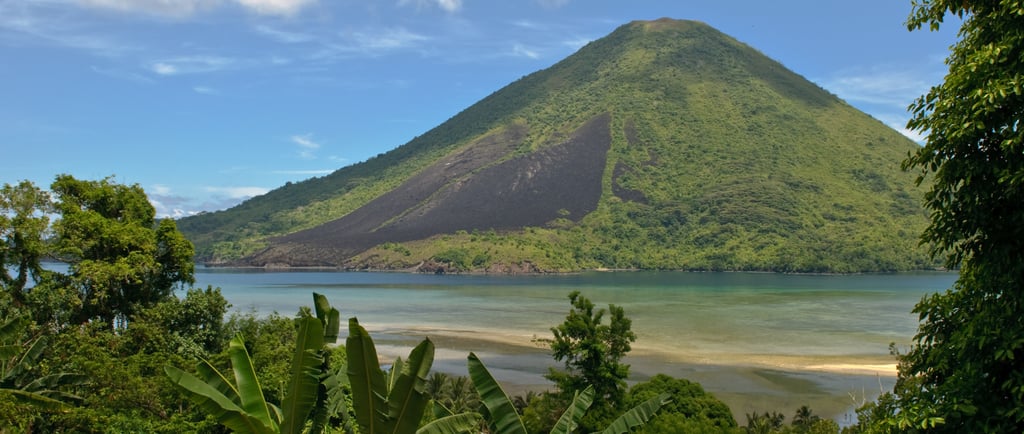
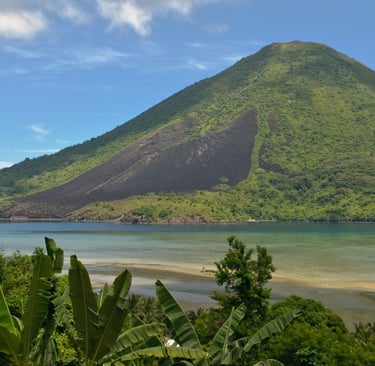
Remote, deep, volcanic, and historically tied to the spice trade, this Indonesian sea sits in the eastern part of the archipelago, far from the easier tourist paths. The Banda Islands rise from it with a strange mix of beauty and history: nutmeg, colonial forts, volcanoes, coral reefs, and water so blue it seems almost impossible.
This is not a casual beach-break sea.
The Banda Sea has depth, in every sense. It carries stories of spice wealth, conquest, trade, violence, seafaring, and isolation. Beneath the surface, it is known for remarkable diving, coral life, steep drop-offs, and marine encounters that feel genuinely expeditionary.
It is a sea for travelers who still want the map to feel mysterious. The kind of place where the journey matters, where the water looks too rich to be real, and where every island seems to have been waiting a long time for you to notice it.
Best places to feel it: Banda Neira, Banda Islands, Maluku, liveaboard routes through eastern Indonesia.
Go for: remote diving, volcanic islands, spice history, old forts, coral reefs, and lost-world atmosphere.
12. The Flores Sea
Indonesia’s Dragon-Guarded Water Of Pink Beaches And Volcanoes
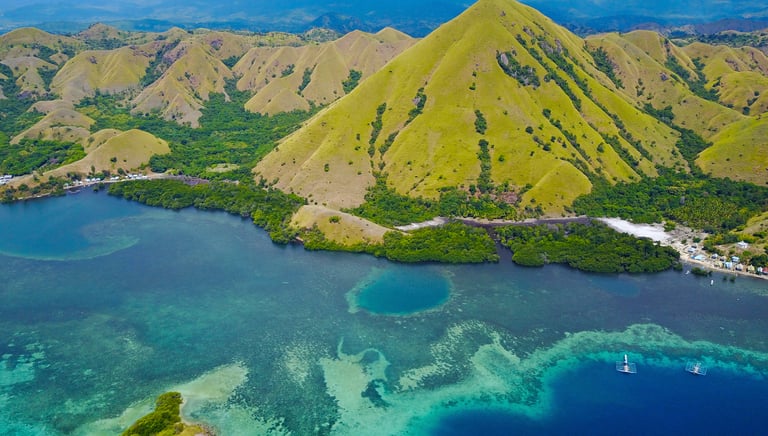
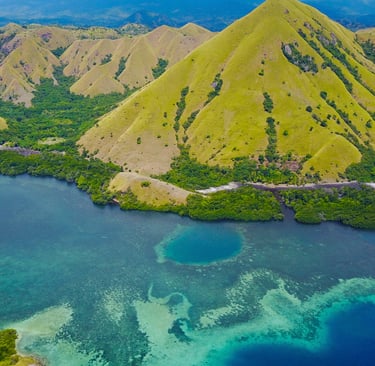
The Flores Sea sounds delicate, but the landscape around it is anything but. This is the blue world near Flores, Komodo, and parts of eastern Indonesia, where volcanic islands rise from clear water, traditional boats sail between rugged shores, and Komodo dragons still make the whole region feel prehistoric.
The Flores Sea is cinematic in a wilder, less polished way. Think pink beaches, manta rays, coral reefs, dry golden hills, island villages, and views from places like Padar Island, where the coastline twists into bays of different colors. It feels like tropical adventure with teeth.
Unlike softer island escapes, the Flores Sea carries an edge of myth. There are dragons on land, reefs below, volcanoes inland, and enough distance from the ordinary to make the trip feel like a true expedition.
It is beautiful, yes. But it is also strange, fierce, and unforgettable.
Best places to feel it: Labuan Bajo, Komodo National Park, Padar Island, Rinca, Flores, surrounding sailing routes.
Go for: sailing, Komodo dragons, pink beaches, manta rays, volcanic islands, snorkeling, and the feeling that the world is still wonderfully wild.
Why These Seas Matter
There is something powerful about learning the name of a place you have only ever admired from a distance. A sea is not just water between destinations. It is climate, history, food, mythology, trade, migration, danger, beauty, and identity. It shapes the towns on its shores. It decides what people eat. It carries boats, storms, songs, salt, legends, and loss.
The Tyrrhenian gives Italy some of its most cinematic islands.
The Ligurian lifts pastel villages above blue cliffs.
The Balearic gathers Spain’s island personalities.
The Alboran turns water into a meeting point between continents.
The Ionian softens Greece into green islands and glassy bays.
The Sea of Cortez brings desert and marine life together in one astonishing frame.
The Andaman turns limestone and jungle into tropical myth.
The Salish makes mist feel sacred.
The Hebrides make weather feel romantic.
The Wadden Sea proves even absence can be beautiful.
The Banda Sea remembers spice routes and volcanoes.
The Flores Sea feels guarded by dragons and ancient fire.
These are not just places on a map. They are blue worlds. And once you know their names, the coastlines around them become richer, stranger, and more alive.
The Next Time You Look At The Water
The next time you stand beside a beautiful coastline, ask what sea you are looking at.
Not just what town.
Not just what beach.
Not just what island.
Ask the name of the water. Because the name may change everything.
It may turn a pretty view into a story.
A ferry ride into a crossing.
A swim into a memory.
A coastline into a chapter.
A blue horizon into a world you finally know how to call by name.
Some seas shout for attention. Others wait quietly behind famous places, carrying all the beauty without taking the credit. Those are often the ones worth remembering.
Explore
Discover hidden gems in small cities worldwide.
© 2025. All rights reserved. Ripe Melland Media