Stop scrolling and start visiting

Strange Festivals From Around The World That Are Almost Too Weird To Be Real
Explore the strangest festivals from around the world, from baby-jumping rituals in Spain and monkey banquets in Thailand to cheese rolling in England, mud festivals in South Korea, and fireball battles in El Salvador. These bizarre, fascinating, and unforgettable cultural celebrations prove that travel gets a whole lot more interesting when tradition gets weird.
FESTIVALS AND CELEBRATIONS
Sarah Melland
6/9/202613 min read
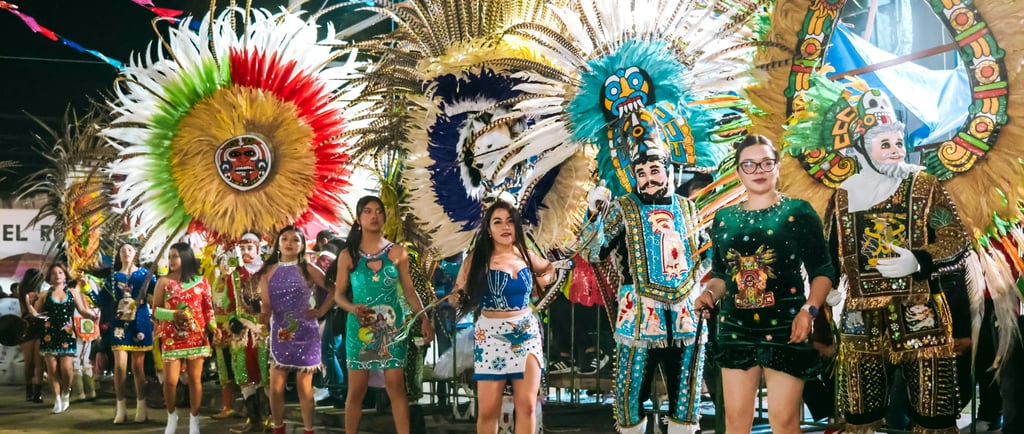
Some festivals are beautiful. Some are sacred. Some are full of flowers, candles, music, and centuries of tradition.
And then there are the festivals where people chase cheese down a hill, throw turnips at a masked demon, feed an entire buffet to monkeys, wrestle with their toes, launch homemade rockets at church towers, or dress like supernatural forest creatures to scare evil away.
This is where travel gets gloriously bizarre.
Around the world, strange festivals are not just random chaos. They are living traditions, ancient rituals, community jokes that somehow became annual events, spiritual ceremonies, harvest customs, fertility symbols, local legends, and wonderfully weird excuses for entire towns to lose their minds together.
These are some of the strangest festivals from around the world, the kind that make you stop mid-scroll and say, “Wait. They do what?”
1. El Colacho Baby Jumping Festival
Castrillo de Murcia, Spain
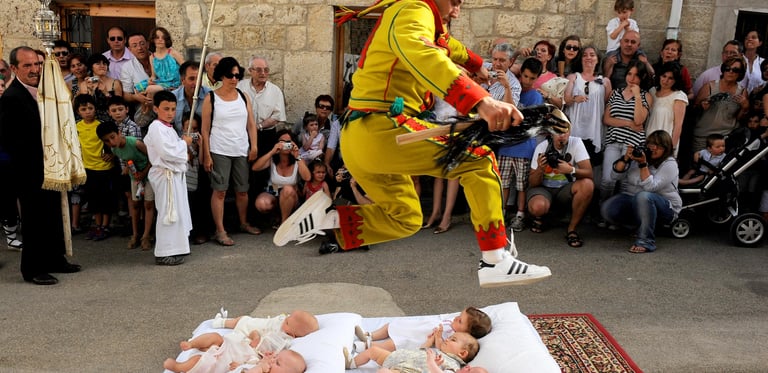
Let’s begin gently with men dressed as devils jumping over actual babies. Every year in the small Spanish village of Castrillo de Murcia, infants are laid on mattresses in the street while costumed figures representing the devil leap over them. The ritual is part of El Colacho, a centuries-old festival connected to Corpus Christi, and it symbolizes protection, purification, and the triumph of good over evil.
Is it beautiful? In its own way. Is it also the kind of thing that makes every first-time visitor clutch their pearls and whisper, “Is the baby okay?” Absolutely. This is not a festival you casually explain to your group chat without follow-up questions.
2. Jarramplas
Piornal, Spain
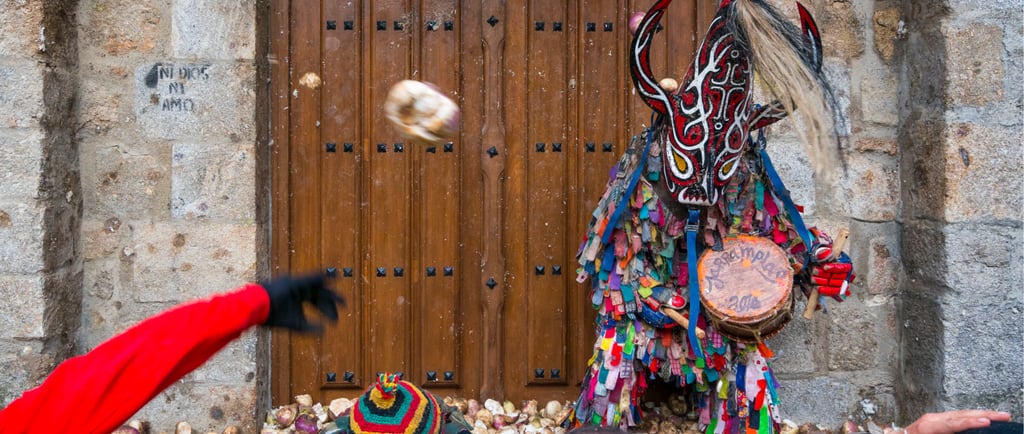
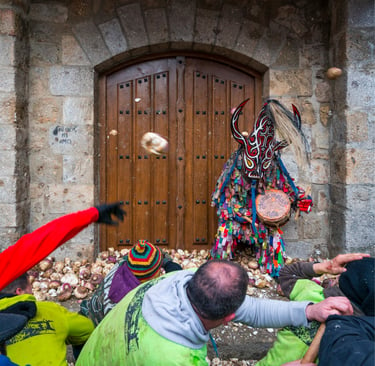
In the mountain village of Piornal, Spain, a masked figure called Jarramplas walks through the streets playing a drum while locals pelt him with turnips.
Not tomatoes. Not confetti. Turnips. The character is often interpreted as a cattle thief or symbolic villain, and the town’s response is essentially, “Excellent, let’s launch root vegetables at him until justice feels complete.” The costume is bright, strange, horned, and heavily protected underneath because being hit by thousands of turnips is not exactly a spa treatment.
It is part punishment ritual, part folk theater, part vegetable-based public rage room. Honestly, cheaper than therapy.
3. Kanamara Matsuri
Kawasaki, Japan
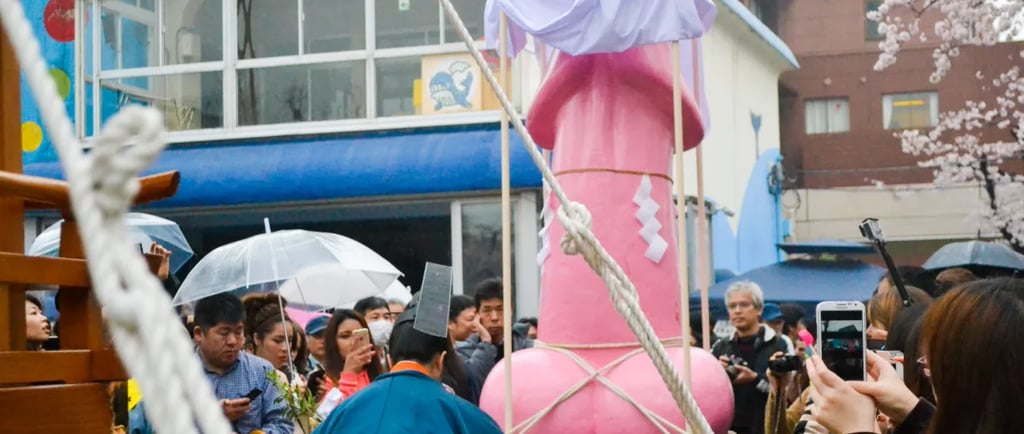
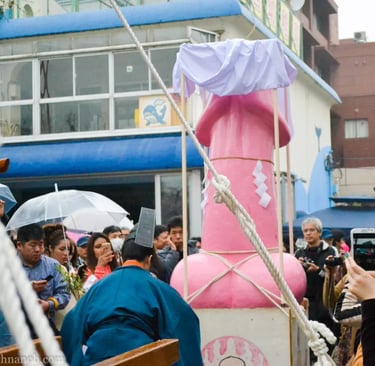
Kanamara Matsuri is often called Japan’s “Penis Festival,” and yes, that is exactly why people start giggling before they understand it. Held in Kawasaki, the festival features giant phallic mikoshi, playful themed foods, colorful souvenirs, and crowds that are absolutely not pretending to be mature about it. But beneath the cheeky visuals is a festival rooted in prayers for fertility, safe childbirth, protection from disease, and sexual health.
It is joyful, bold, funny, sacred, and completely unforgettable. Imagine a spiritual spring festival, a fertility blessing, and the world’s least subtle parade having one deeply committed baby. That is Kanamara Matsuri.
4. Naki Sumo Crying Baby Festival
Japan
Most parents spend half their lives trying to stop babies from crying. Japan looked at that and said, “What if we made it competitive?”
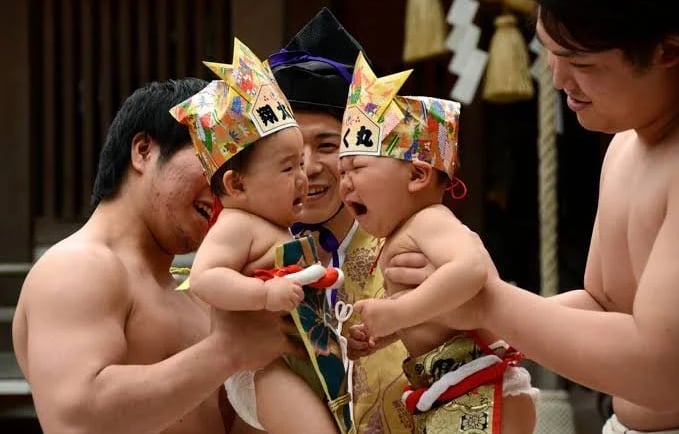
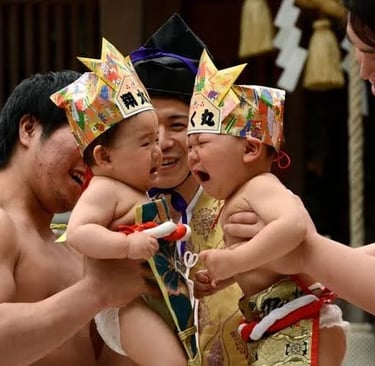
At Naki Sumo, sumo wrestlers hold babies while referees try to encourage them to cry. The first baby to cry, or sometimes the loudest crier, is considered blessed with good health and strength. In Japanese tradition, a baby’s loud cry can be seen as a sign of vitality and protection from evil spirits. It sounds chaotic, but the energy is less “traumatize the infant” and more “tiny human, please scream for prosperity.”
Still, somewhere in the crowd, every baby is thinking, “I did not sign the media release.”
5. Phuket Vegetarian Festival
Phuket, Thailand
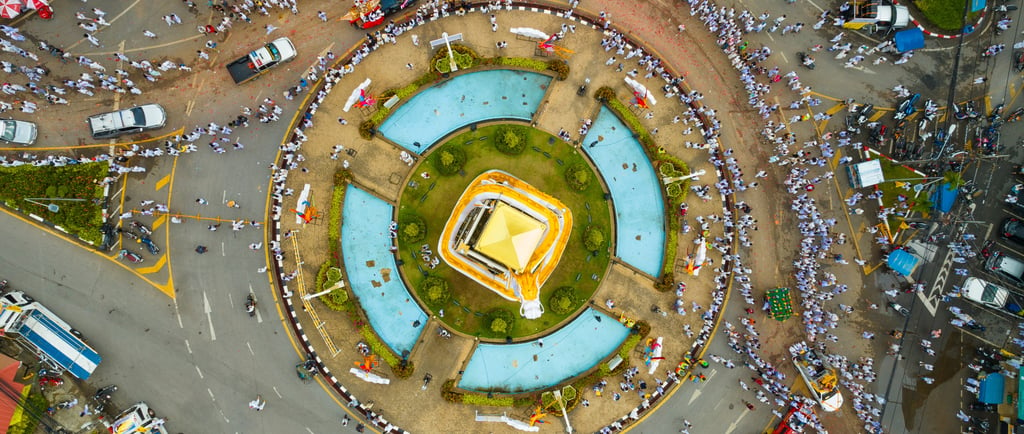
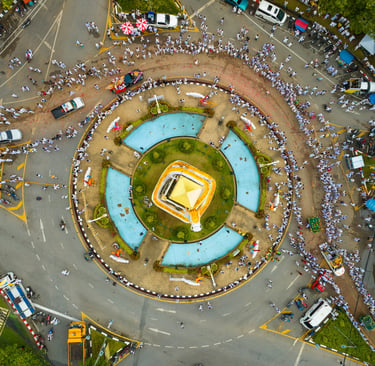
Do not let the gentle name fool you. Phuket Vegetarian Festival is not simply a parade of tofu and wholesome noodle bowls. This nine-day Taoist festival honors purification, spiritual discipline, and the Nine Emperor Gods. Participants often follow strict vegetarian diets, abstain from alcohol, and take part in intense rituals. Some devotees, known as ma song, enter trance-like states and perform acts of body piercing using swords, skewers, and other dramatic objects.
It is powerful, shocking, sacred, and not for the faint of heart. This is one of those festivals where tourists arrive expecting street food and leave wondering if they just witnessed the edge of the spirit world.
6. Takanakuy
Chumbivilcas Province, Peru
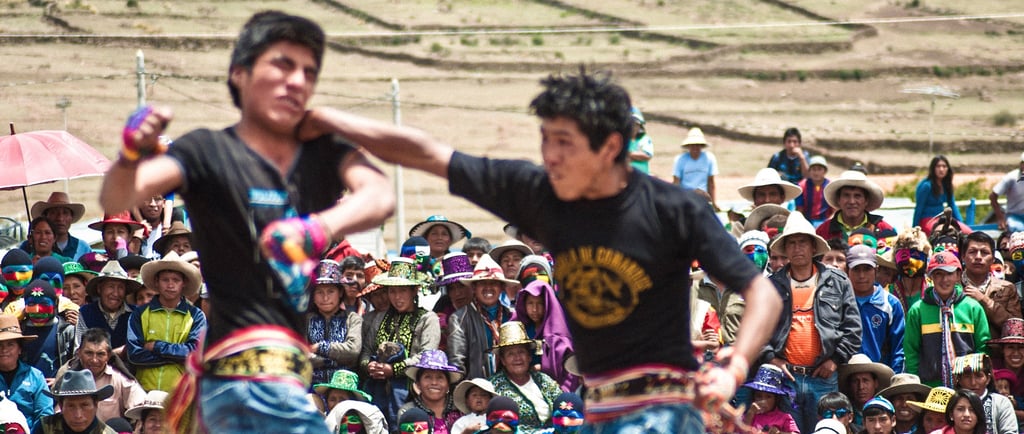
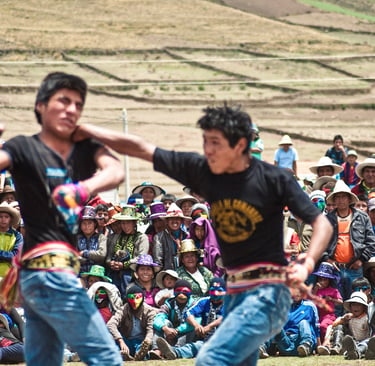
In parts of Peru, some communities settle disputes at the end of the year through Takanakuy, a Christmas-time fighting tradition where people publicly face each other, exchange blows, and then move on. The point is not random violence. It is conflict resolution, social release, and starting the new year without grudges. There are rules, music, dancing, costumes, and community oversight. People fight, then often embrace afterward. It is basically, “Before we enter January, does anyone need to catch these hands?”
Wild? Yes. But also weirdly logical in the most ancient-human way possible.
7. Rouketopolemos Rocket War
Chios, Greece
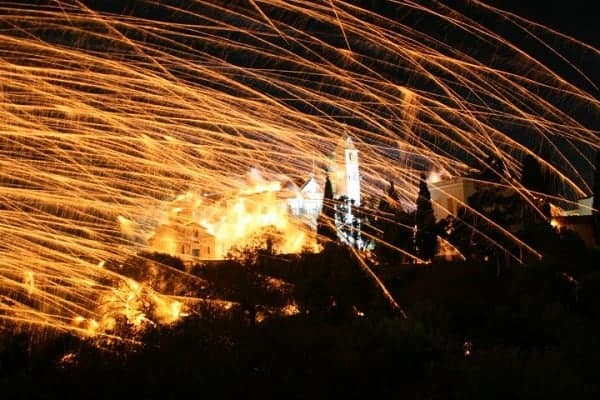
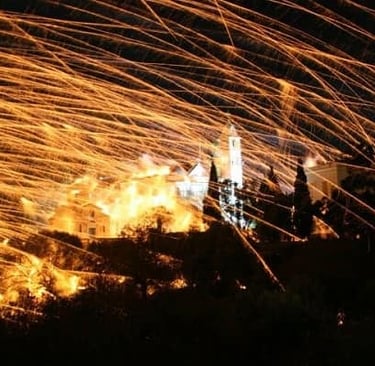
On the Greek island of Chios, Easter can involve two rival church congregations firing thousands of homemade rockets at each other’s bell towers.
This tradition, known as Rouketopolemos, happens in Vrontados and turns the night sky into a glowing war zone of sparks, smoke, bells, and chaos. The goal is to hit the opposing church’s bell tower, though the results are naturally disputed, which means the rivalry gets to continue forever.
Because apparently even Easter needed a fireworks feud. It is visually spectacular, wildly dangerous, and very much a “watch from a safe distance unless you enjoy airborne explosives with your religious celebrations” situation.
8. Las Bolas de Fuego
Nejapa, El Salvador
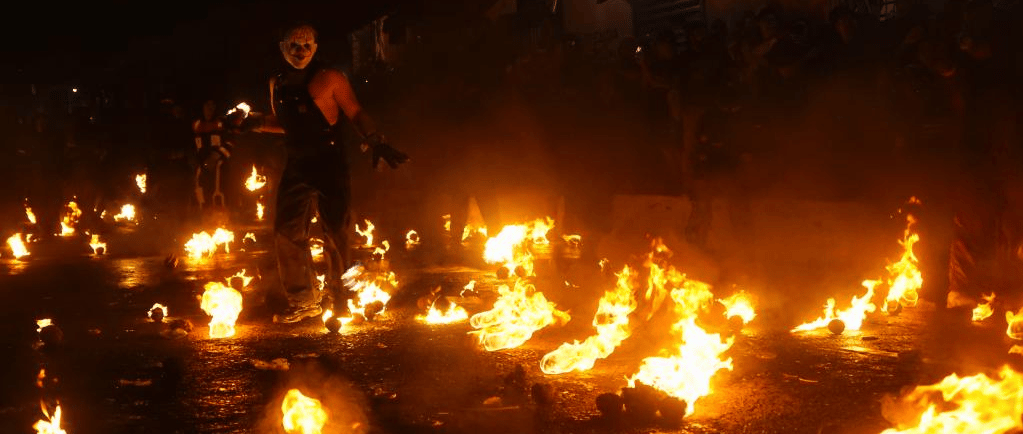
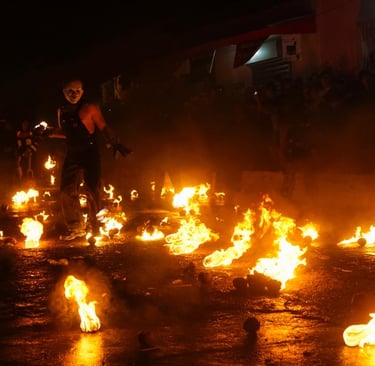
Every August, the town of Nejapa commemorates a volcanic eruption with a fireball festival. Participants soak cloth balls in flammable liquid, light them on fire, and throw them at each other in the streets. The tradition is tied to the 1658 eruption of El Playón volcano, along with legends of a battle between good and evil.
In most places, “people throwing flaming objects at each other” would be called an emergency. In Nejapa, it is tradition. This is one of those festivals where the travel insurance policy starts sweating before you even book the flight.
9. La Vijanera
Silió, Spain
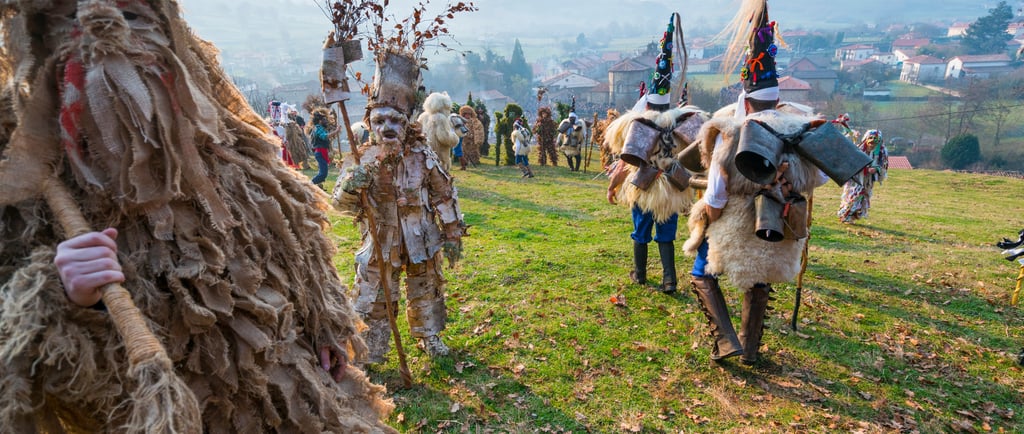
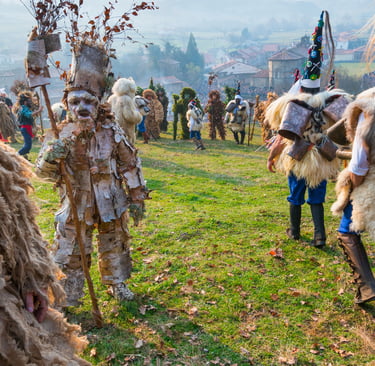
La Vijanera is one of Europe’s strangest winter masquerades, and it looks like a forest had a nightmare and decided to form a marching band. Held in Silió, Cantabria, the festival is filled with masked characters, bells, animal figures, wild costumes, and symbolic rituals meant to mark the transition into a new year and the victory of good over evil. Some participants dress in natural materials, skins, masks, and heavy bells, becoming half-human, half-mythic creatures.
It is ancient-feeling, theatrical, eerie, and completely mesmerizing. This is not “cute carnival.” This is “the woods have opinions.”
10. Kukeri And Surva
Bulgaria
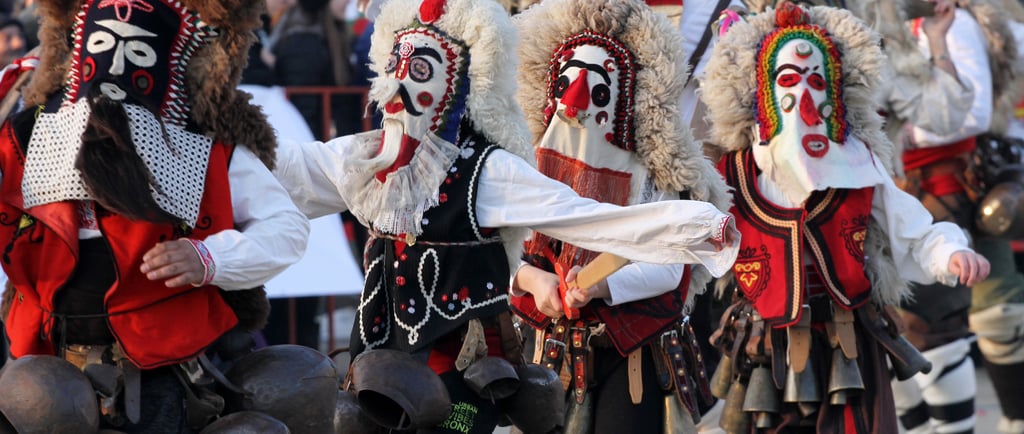
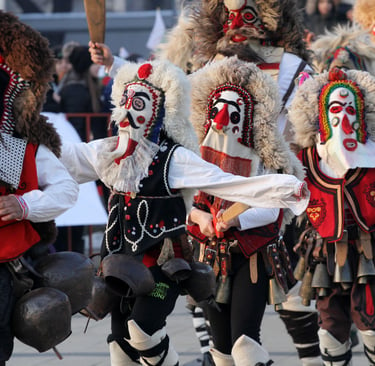
In Bulgaria, Kukeri traditions bring out towering masks, massive bells, fur-covered costumes, dancing, stomping, and ritual noise meant to chase away evil spirits. The costumes are spectacular and unsettling. Some look like demons. Some look like animals. Some look like the love child of a haunted rug and a thunderstorm. The bells can be enormous, and the sound is part of the ritual power.
The idea is simple: if evil spirits are hanging around, make yourself louder, scarier, and stranger than they are. Honestly, fair.
11. Cascamorras
Baza And Guadix, Spain
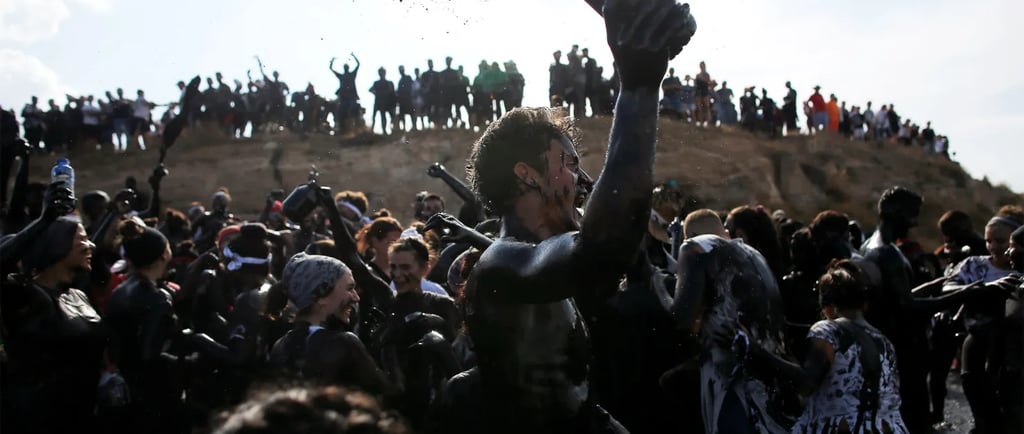
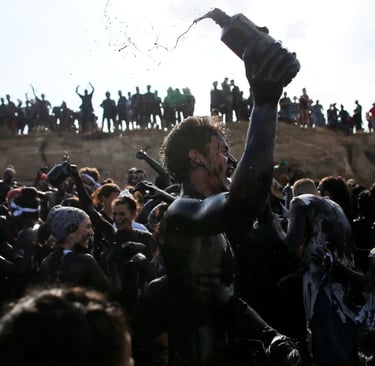
Cascamorras begins with a legend involving a disputed religious image and ends with thousands of people covering each other in black paint. The festival connects the towns of Baza and Guadix in Granada, Spain, and centers around a character called Cascamorras, who attempts to claim the statue of the Virgen de la Piedad. The crowd’s response is to chase, paint, smear, and celebrate until everyone looks like they lost a fight with a chimney.
It is dramatic, messy, symbolic, and deeply local. Spain has many festivals that involve throwing things, but Cascamorras feels like the goth cousin of La Tomatina.
12. Monkey Buffet Festival
Lopburi, Thailand
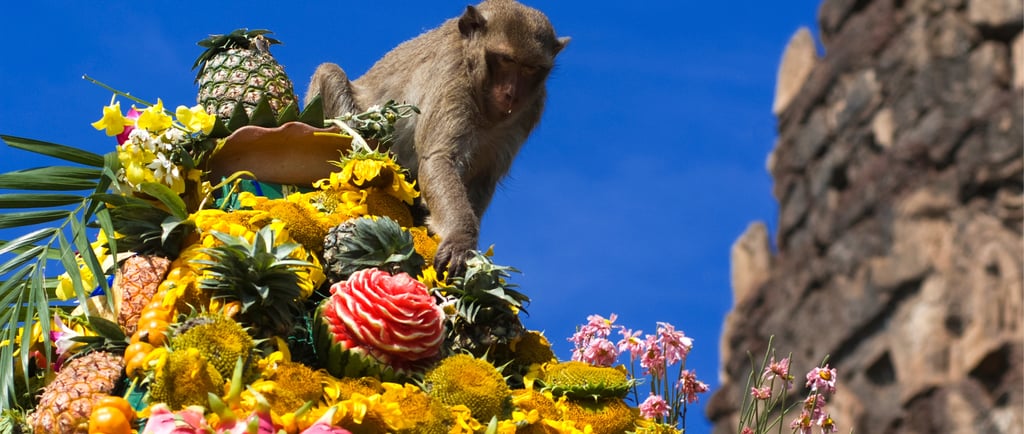
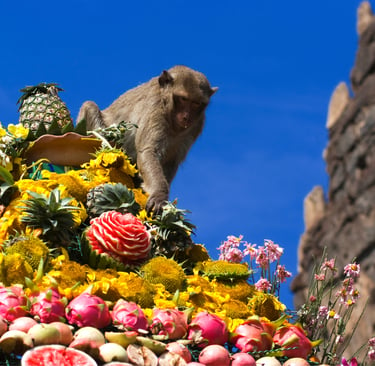
In Lopburi, Thailand, monkeys are not just tolerated. They get a banquet. At the Monkey Buffet Festival, tables are piled with fruit, vegetables, sweets, and colorful displays for the city’s macaques. The monkeys climb, grab, steal, feast, and generally behave like tiny furry wedding guests with no manners and excellent upper-body strength. The festival began as a way to celebrate the monkeys, which are tied to local identity and tourism. It is strange, adorable, chaotic, and slightly terrifying if you have snacks in your bag.
Travel tip: respect wildlife, hold onto your belongings, and never underestimate a monkey with a plan.
13. Night Of The Radishes
Oaxaca, Mexico
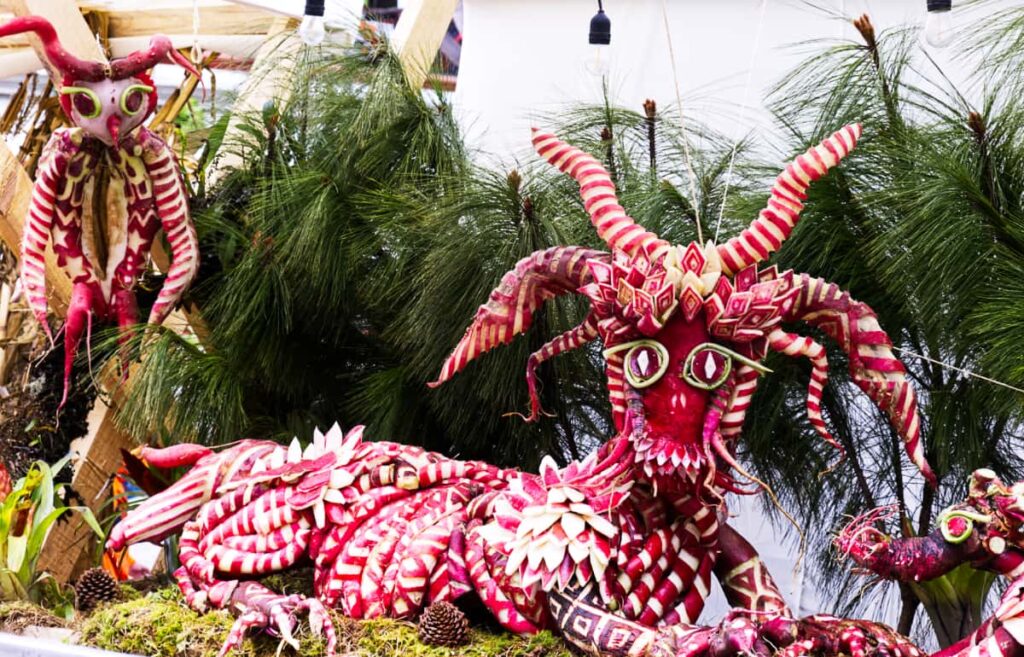
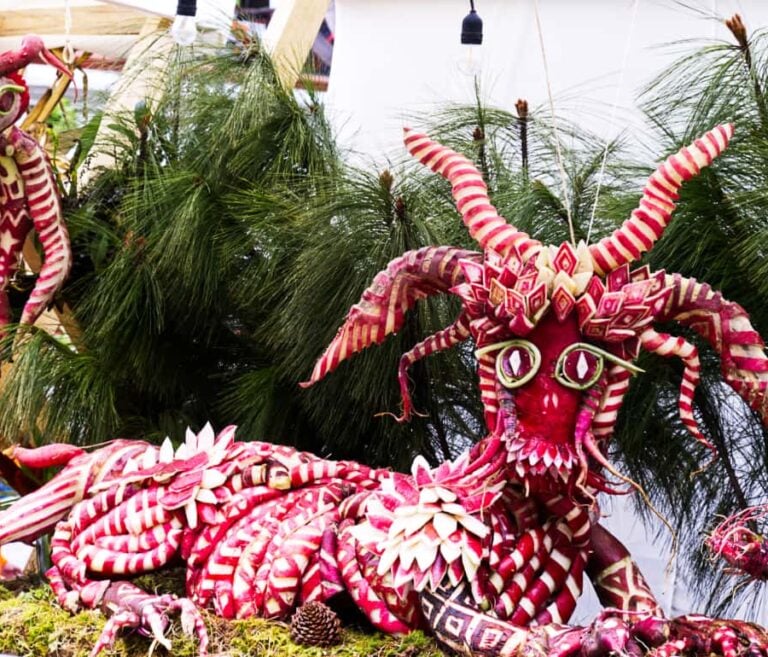
Every December 23, Oaxaca turns radishes into art. La Noche de Rábanos, or Night of the Radishes, is a one-night festival where artisans carve oversized radishes into elaborate sculptures. Scenes can include nativity displays, village life, animals, folklore, churches, dancers, and tiny red-and-white vegetable masterpieces that wilt almost as fast as they appear.
It is one of the most specific traditions in the world. Imagine spending hours sculpting an entire cathedral out of a radish so strangers can admire it briefly before nature says, “Absolutely not, this is a salad ingredient.”
Iconic.
14. Boryeong Mud Festival
Boryeong, South Korea
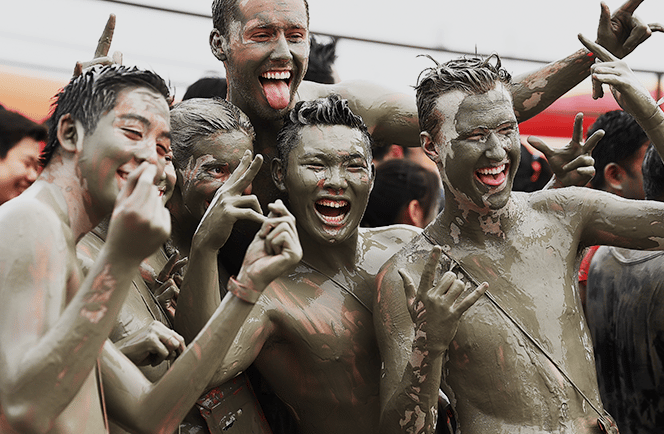
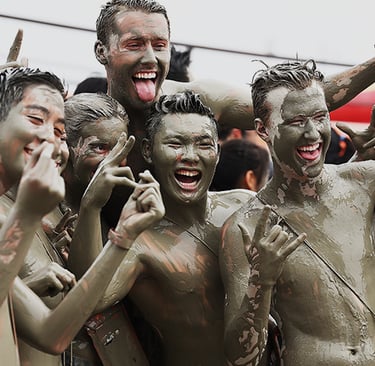
The Boryeong Mud Festival started as a way to promote mineral-rich mud used in cosmetics. Then humanity did what humanity does best and turned it into a giant mud-soaked party.
Today, visitors descend on Daecheon Beach for mud slides, mud wrestling, mud pools, mud obstacle courses, mud painting, and general full-body nonsense. It is one of South Korea’s most famous summer festivals and probably the closest adults can get to socially acceptable toddler behavior.
This is not a quiet cultural stroll. This is “I paid money to become a swamp creature and honestly I regret nothing.”
15. The Battle Of The Oranges
Ivrea, Italy
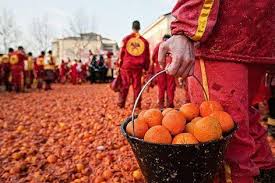
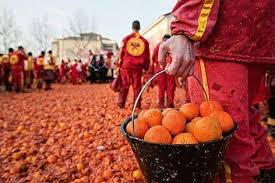
Every Carnival season, the Italian town of Ivrea reenacts rebellion by throwing oranges with alarming enthusiasm. The Battle of the Oranges is Italy’s largest food fight, with organized teams hurling oranges in the streets to symbolize a historic uprising against tyranny. There are uniforms, teams, horse-drawn carts, and enough flying citrus to make your vitamin C levels rise through fear alone.
It is colorful, bruising, symbolic, and sticky. Some destinations give you a souvenir magnet. Ivrea gives you pulp in places you did not know pulp could reach.
16. La Tomatina
Buñol, Spain
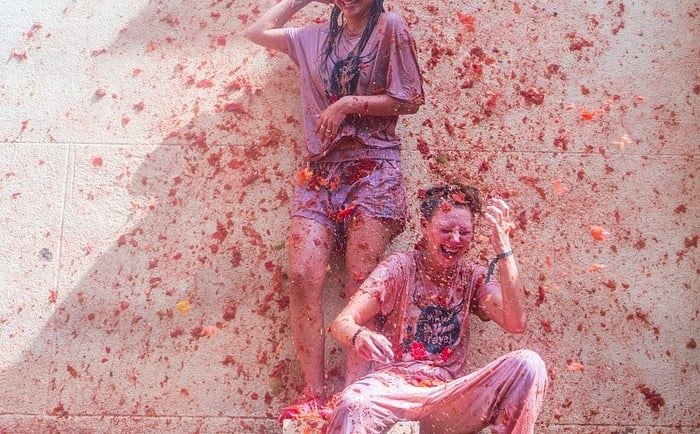
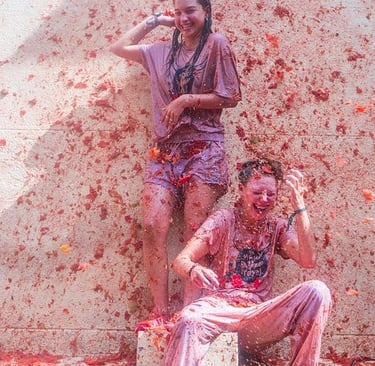
La Tomatina may be famous now, but let’s not pretend it is normal. On the last Wednesday of August, thousands of people gather in Buñol, Spain, to throw tomatoes at each other until the streets run red with pulp. It lasts about an hour, which is probably the exact amount of time before everyone collectively realizes they have become human marinara.
There are rules, tickets, crowds, and a whole infrastructure behind the madness, but at its core La Tomatina is still one giant tomato brawl. It is messy, ridiculous, iconic, and a reminder that sometimes the human spirit just needs to throw produce.
17. Haro Wine Battle
Haro, Spain
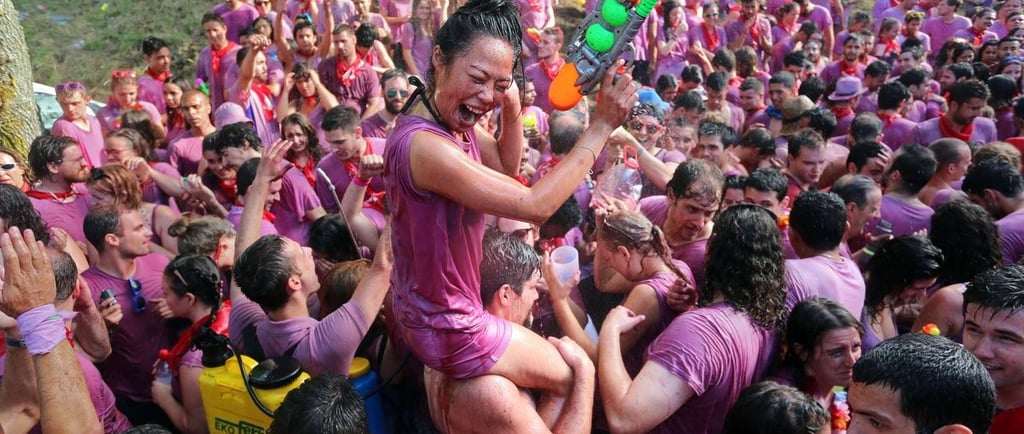
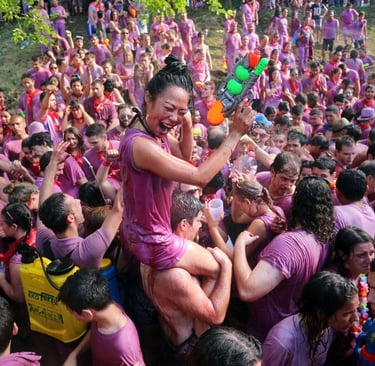
In La Rioja, one of Spain’s greatest wine regions, people celebrate by drinking wine. And throwing it.
The Haro Wine Battle takes place around San Pedro’s Day, when participants dress in white, climb toward the cliffs of Bilibio, and soak each other in red wine using buckets, bottles, water guns, and anything that can launch liquid. By the end, everyone looks like they survived a very glamorous crime scene.
It is part pilgrimage, part party, part grape-based combat. Some wine festivals offer tastings. Haro offers full-body absorption.
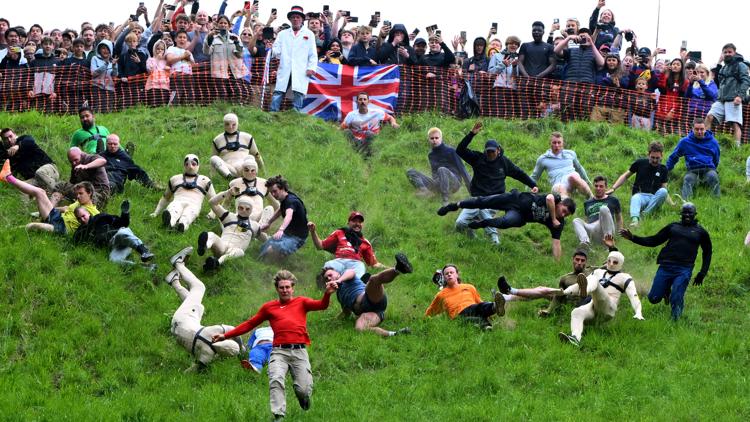
18. Cooper’s Hill Cheese Rolling
Gloucestershire, England
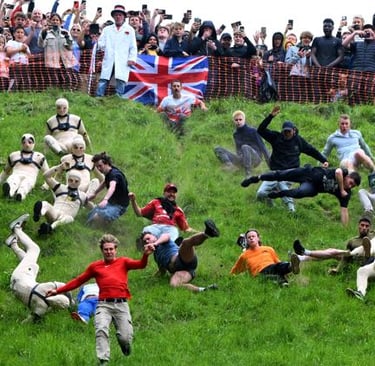
Every year, people gather at Cooper’s Hill in Gloucestershire to chase a wheel of Double Gloucester cheese down an extremely steep hill. Actually, “chase” is generous. Most people run for three seconds, lose all relationship with gravity, and then tumble downhill like laundry in a dryer.
The cheese gets a head start. The hill is brutal. Injuries are common. The winner gets the cheese, which feels both absurd and completely appropriate. There are many ways to prove bravery. England chose dairy.
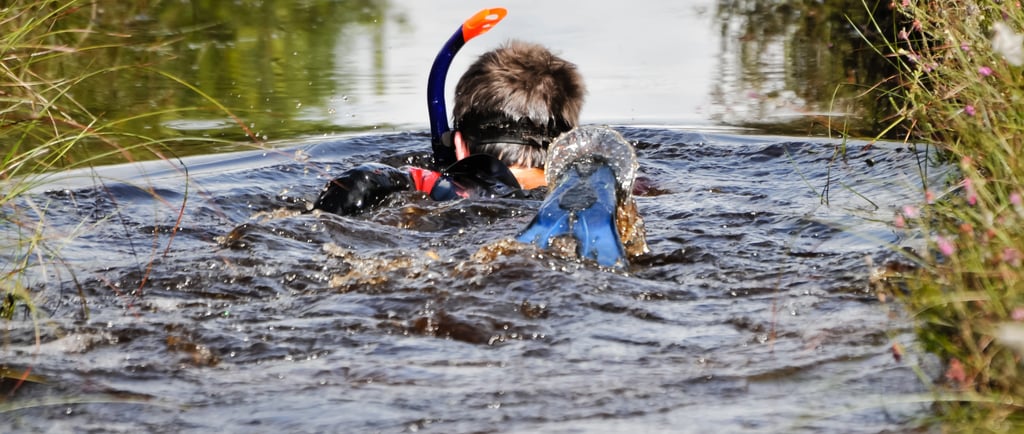
19. World Bog Snorkelling Championships
Llanwrtyd Wells, Wales
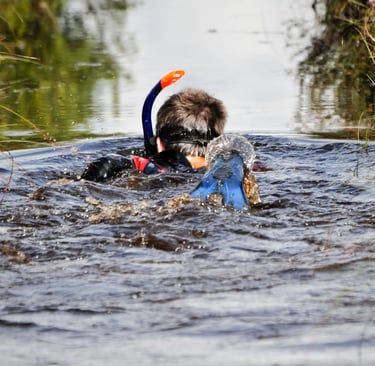
In Wales, competitive glory can be found face-down in a peat bog. The World Bog Snorkelling Championships take place in Llanwrtyd Wells, where participants wearing snorkels, masks, and flippers race through a trench cut into a bog. Swimming strokes are not allowed. Competitors rely on flipper power while navigating murky brown water that looks like something a monster would politely decline.
It is athletic, disgusting, hilarious, and strangely inspiring. Because nothing says “champion” like emerging from a bog looking like you lost a negotiation with the earth.
20. World Toe Wrestling Championship
Derbyshire, England
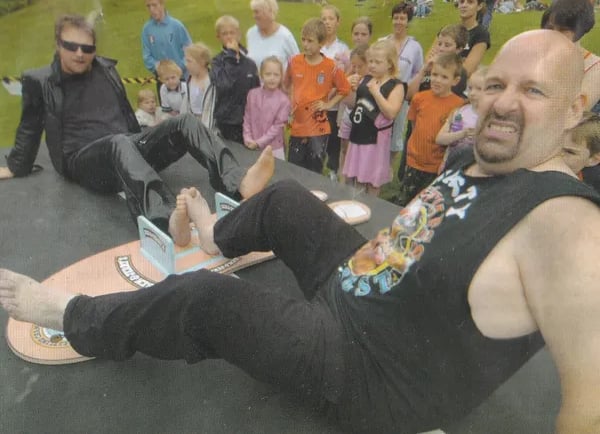
Toe wrestling is real. It has rules. It has champions. It has energy. Competitors lock toes and try to pin each other’s foot down, similar to arm wrestling but somehow more intimate and more upsetting. The World Toe Wrestling Championship has been held in England for decades, proving that the British talent for inventing niche pub sports should never be underestimated.
There are foot checks. There is strategy. There is drama. And somewhere, a person is training their big toe like it is going to the Olympics.


21. Wife Carrying World Championship
Sonkajärvi, Finland
In Sonkajärvi, Finland, teams compete in the Wife Carrying World Championship, where one person carries another through an obstacle course as fast as possible. Despite the name, participants do not actually have to be married, and the carried partner does not have to be a wife. But the visual remains delightfully absurd: people sprinting through sand, water, and obstacles with another human slung over their shoulders.
It is part athletic event, part comedy, part relationship stress test. Forget couple’s therapy. Try running through Finnish obstacles while upside down.


22. Air Guitar World Championships
Oulu, Finland
The Air Guitar World Championships are exactly what they sound like: people competing to be the best at playing a guitar that does not exist. Held in Oulu, Finland, the competition celebrates performance, imagination, theatricality, and full commitment to invisible rock stardom. Contestants are judged on stage presence, creativity, technical skill, and the mysterious quality known as “airness.”
It is silly, sincere, and weirdly beautiful. Because in a world full of noise, maybe peace really does begin with everyone shredding imaginary solos together.
23. Frozen Dead Guy Days
Estes Park, Colorado, USA
Frozen Dead Guy Days began with one of the strangest backstories in American festival culture: a cryogenically frozen man stored in Colorado. Naturally, this became a festival.
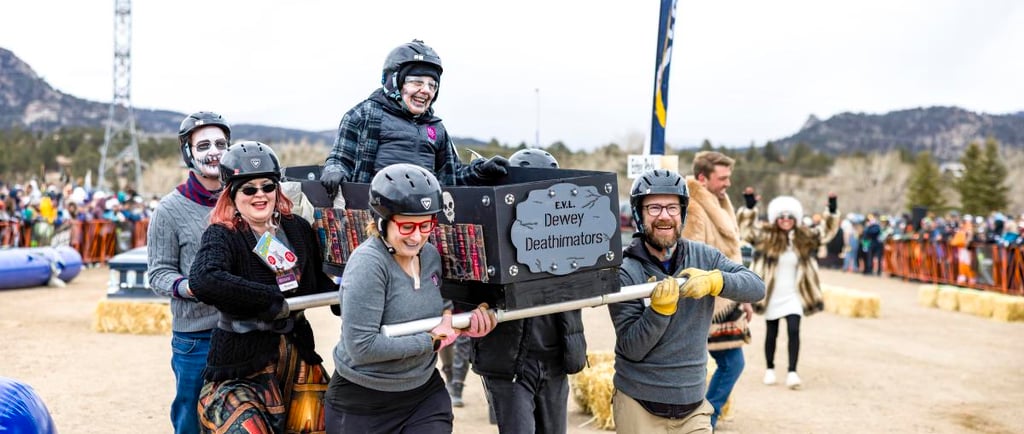
Today, Frozen Dead Guy Days includes coffin races, costumes, music, cold-weather games, and a crowd that fully understands the assignment. It is morbid, funny, mountain-town weirdness at its finest. Some towns honor founders. Some towns honor saints. Colorado said, “What if we built a party around the frozen grandpa?”
And honestly, people showed up.


24. Underwater Music Festival
Florida Keys, USA
At the Lower Keys Underwater Music Festival, divers and snorkelers listen to music beneath the sea. The event takes place near Looe Key and was created to promote coral reef awareness. Music is broadcast underwater while costumed divers pretend to play whimsical underwater instruments, including fake guitars and sea-themed props.
It is part concert, part environmental message, part surreal fever dream. Imagine floating above coral while hearing music through the water and watching someone mime a guitar solo dressed like a mermaid. That is not a vacation. That is a glitch in reality.
25. World Worm Charming Championships
Willaston, England
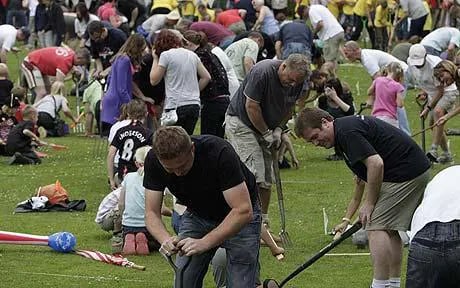
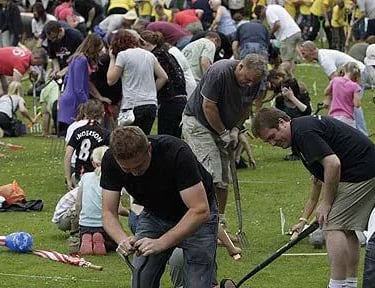
In Willaston, England, people gather to charm worms out of the ground. Competitors are given a patch of earth and a limited amount of time to coax as many worms to the surface as possible without digging. Techniques can include tapping, vibrating, music, stomping, or any worm-friendly creativity that convinces the underground community to make an appearance.
It is gentle, weird, wholesome, and deeply British. The worms are counted, the charmers are judged, and somewhere beneath the soil, one worm is saying, “Absolutely not today.”
Why Strange Festivals Matter
It is easy to laugh at strange festivals, and honestly, sometimes laughter is part of the point. But these traditions are more than weird travel trivia. They reveal how communities remember history, face fear, celebrate fertility, honor spirits, mark seasonal change, settle conflict, create identity, and turn ordinary life into something unforgettable.
A radish becomes art. A cheese wheel becomes destiny. A masked monster becomes winter’s warning. A mud pit becomes a summer ritual. A fake guitar becomes a world championship. A monkey buffet becomes a town’s identity. A bizarre local custom becomes the reason travelers cross oceans.
Strange festivals remind us that culture does not have to be polished to be powerful. Sometimes it is messy, loud, funny, ancient, symbolic, ridiculous, sacred, and completely impossible to explain without sounding like you made it up. And maybe that is exactly why we love them.
Final Thoughts
The world is full of beautiful festivals, but the strange ones are the ones that stay with you.
They are the stories you tell at dinner parties. The photos people refuse to believe are real. The traditions that make you realize travel is not just about seeing pretty places. It is about discovering how wildly creative humans can be when they gather together with a legend, a costume, a vegetable, a wheel of cheese, a monkey, a mud pit, or absolutely no guitar at all.
So yes, go see the lanterns, the flowers, the fireworks, and the grand parades. But somewhere along the way, leave room for the festivals that make you say: “What the hell did I just read?”
Because those are usually the ones you never forget.
Want Even More Festivals Worth Traveling For?
If this list made you realize the world is even stranger, louder, brighter, and more wonderfully unhinged than you thought, you are going to love 1001+ Festivals.
Part of the Visit Small Cities Discovery Collection, this festival guide takes you around the world through legendary celebrations, hidden cultural traditions, seasonal events, food festivals, flower festivals, music festivals, historic rituals, and once-in-a-lifetime gatherings worth planning an entire trip around.
From famous bucket-list festivals to the beautifully bizarre traditions most travelers have never heard of, 1001+ Festivals is made for curious travelers, culture lovers, list makers, dreamers, and anyone who believes the best trips usually start with one question:
“Wait… people actually do that?”
Ready to explore the world one festival at a time?

Explore
Discover hidden gems in small cities worldwide.
© 2025. All rights reserved. Ripe Melland Media