Stop scrolling and start visiting
Places That Feel Like Tim Burton Films
Explore real places that feel like Tim Burton films, from gothic cemeteries and crooked villages to monster gardens, eerie castles, bone chapels, and surreal fairytale towns.
CINEMATIC WORLDS
Sarah Melland
6/9/202611 min read
Places That Feel Like Tim Burton Films
Gothic villages, crooked houses, monster gardens, haunted castles, and beautifully strange places that look sketched in black ink
Some places feel pretty. Some places feel historic. And then there are places that feel like they were drawn by a lonely little genius with wild hair, a black pen, and a deep emotional attachment to misunderstood monsters.
A true Tim Burton-feeling destination is not just “spooky.” It has to be stranger than that. It needs crooked rooftops, theatrical shadows, odd little houses, mournful beauty, candy-colored weirdness, graveyard romance, gothic drama, and that very specific feeling that something with big eyes and a tragic backstory might be watching from an upstairs window.
Tim Burton’s visual world often pulls from gothic fantasy, fairy tales, fables, German Expressionism, and the beautifully grotesque, which is exactly the energy these places carry in real life.
These are the places that feel like Tim Burton films.
1. Sacro Bosco, Bomarzo, Italy
The monster garden that looks like a nightmare learned how to bloom
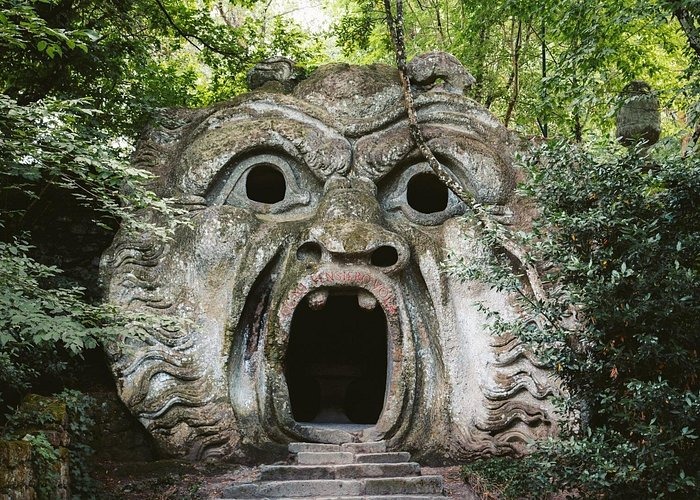
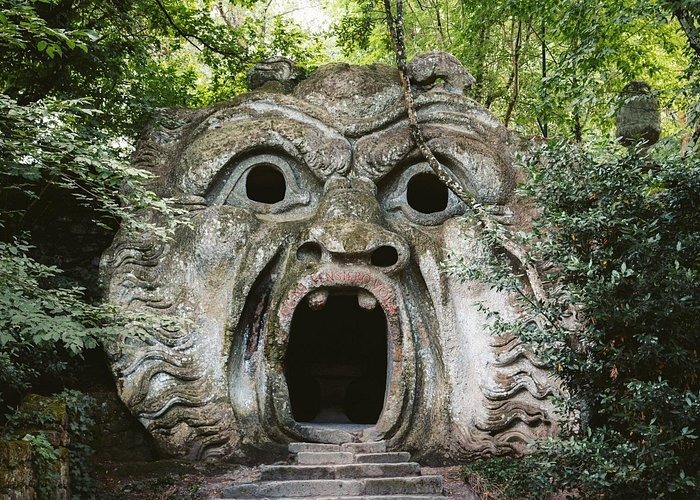
Deep in Lazio, the Sacro Bosco of Bomarzo feels less like a garden and more like a fever dream made of stone. Also known as the Park of the Monsters, it is filled with huge sculptures of mythic creatures, animals, giants, and strange faces that seem to have risen straight out of the forest floor.
This is not manicured palace-garden beauty. This is “the statues are alive and they absolutely have opinions” beauty. You wander through moss, trees, shadows, and grotesque stone mouths big enough to walk into. It feels like a forgotten storybook chapter where the villains retired, bought property, and let nature take over.
Tim Burton feeling: Beetlejuice gets lost in Alice in Wonderland.
Best for: Monster lovers, surreal gardens, strange photo spots, weird history.
Don’t miss: The giant screaming mouth, the leaning house, the mossy stone creatures.
2. Quinta da Regaleira, Sintra, Portugal
The palace where the staircase goes down into another world
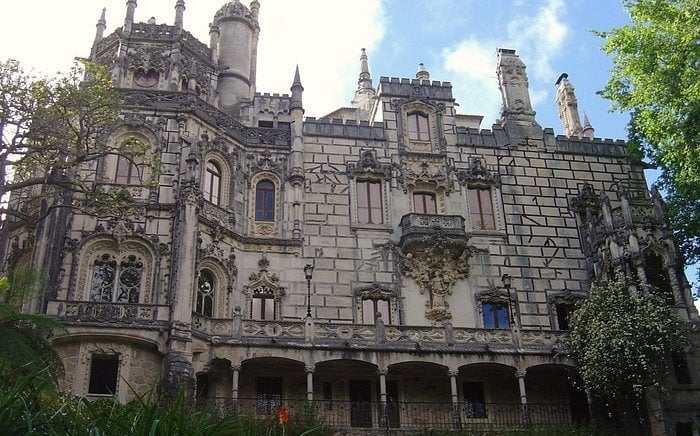
Sintra already feels like it belongs to another dimension, but Quinta da Regaleira is where the town fully loses the plot in the best possible way. The Cultural Landscape of Sintra is known for its palaces, parks, gardens, castles, and lush, almost overgrown beauty. Quinta da Regaleira adds gothic towers, symbolic gardens, caves, tunnels, and the famous Initiation Well, a spiraling stone shaft that descends into the earth like an inverted tower.
This is the kind of place where you do not simply “walk around.” You descend. You disappear. You follow stone paths into damp passageways and come out somewhere that feels vaguely enchanted and mildly cursed.
Tim Burton feeling: Sleepy Hollow meets Alice in Wonderland with a little Corpse Bride melancholy.
Best for: Gothic romance, secret tunnels, moody gardens, mysterious architecture.
Don’t miss: The Initiation Well, underground passages, palace exterior, chapel details.
3. Lavenham, England
The crooked village that looks like it survived a spell
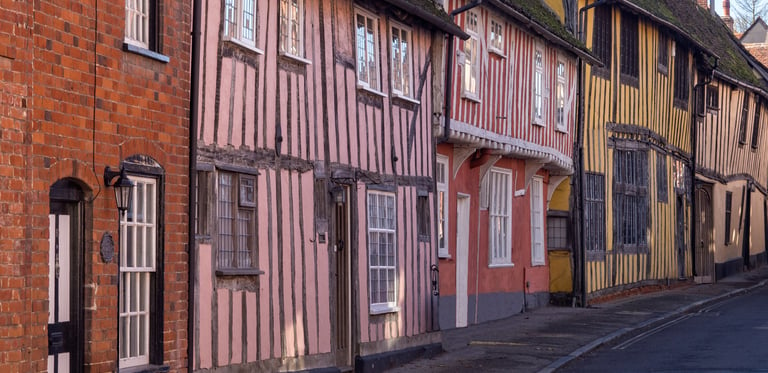
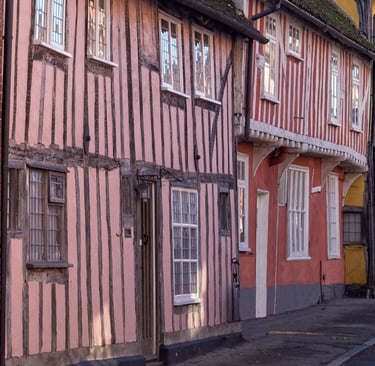
Lavenham is what happens when medieval England refuses to stand up straight. Its timber-framed buildings lean, bow, sag, and twist in ways that make the whole village feel slightly animated. The famous Crooked House dates back to 1395 and is said to be connected to the old English nursery rhyme “There Was a Crooked Man.”
It is charming, yes, but charming in a “why is that house looking at me?” sort of way. The streets are lovely. The buildings are historic. The angles are absolutely unhinged. This is one of the most Burtonesque villages in England because it has that perfect mix of sweetness and unease.
Tim Burton feeling: Corpse Bride with afternoon tea.
Best for: Crooked houses, English villages, medieval streets, soft spooky charm.
Don’t miss: The Crooked House, timber-framed streets, the old market square.
4. Wernigerode, Germany
The colorful town with a castle, a crooked house, and main-character drama
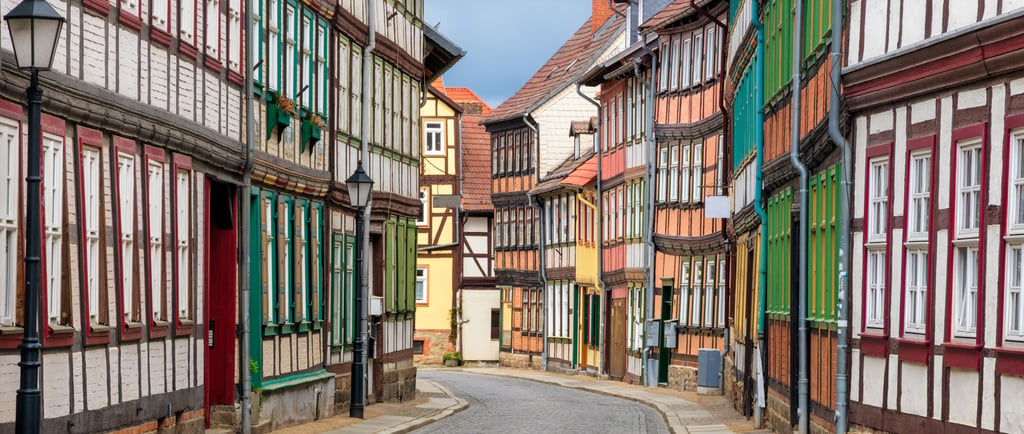
Wernigerode sits on the northern edge of the Harz Mountains and is known as the “Colorful Town in the Harz,” thanks to its restored half-timbered houses, historic center, market square, crooked house, smallest house, oldest house, and castle above town.
This place feels like a fairy tale, but not the polished princess kind. More like a toy village designed by someone who loved shadows as much as frosting. The buildings are cheerful, but the mountains and castle give everything a slightly haunted backdrop.
Tim Burton feeling: Edward Scissorhands if the pastel suburb had a medieval German cousin.
Best for: Half-timbered streets, castle views, autumn atmosphere, storybook architecture.
Don’t miss: Wernigerode Castle, the town hall, the crooked house, the market square.
5. Portmeirion, Wales
The pastel village that feels too strange to be real
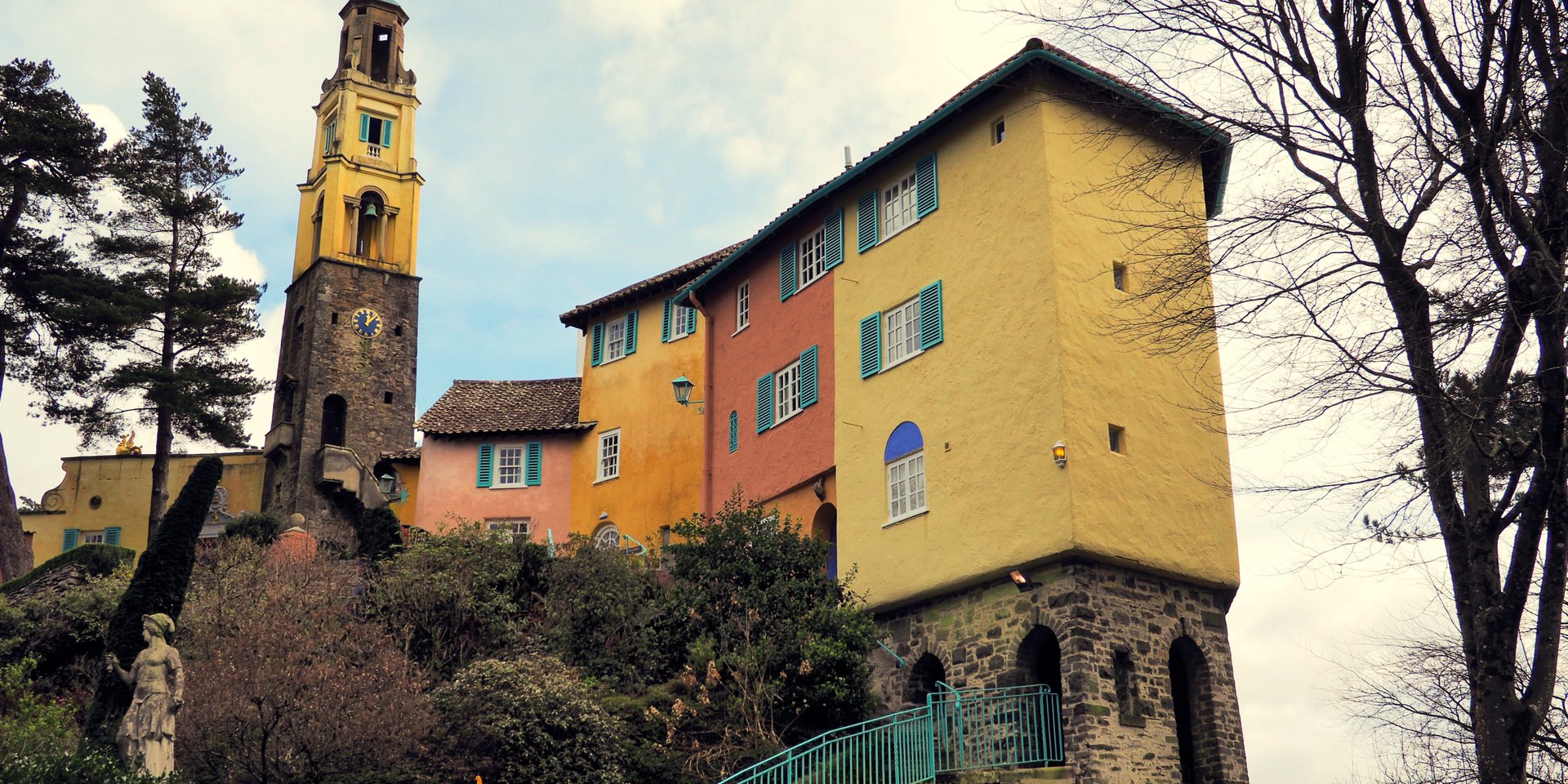
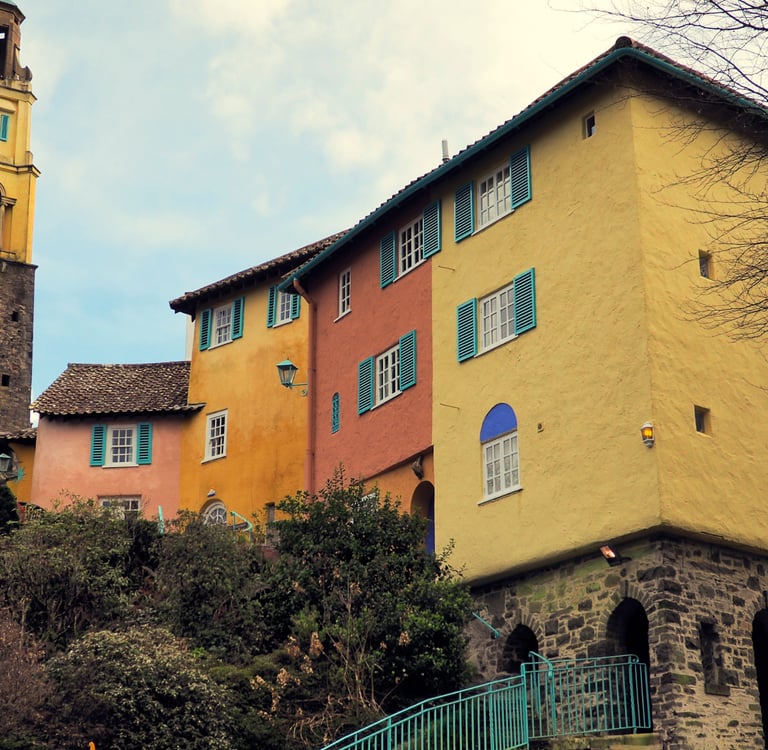
Portmeirion is an Italianate-style village on the coast of North Wales, designed with colorful buildings, theatrical architecture, gardens, and seaside views. It feels like someone built a cheerful dream village and then tilted the emotional temperature just slightly off-center.
That is what makes it so good. Portmeirion is not gothic in the graveyard sense. It is Burtonesque because it feels artificial, playful, uncanny, and deeply theatrical. The colors are bright. The buildings are whimsical. The whole place feels like a set waiting for a strange little parade to begin.
Tim Burton feeling: Big Fish meets Beetlejuice on a Welsh holiday.
Best for: Color, odd architecture, surreal villages, dreamy photography.
Don’t miss: The Piazza, pastel buildings, coastal viewpoints, garden paths.
6. Albarracín, Spain
The red medieval town that looks painted in dried blood and sunset
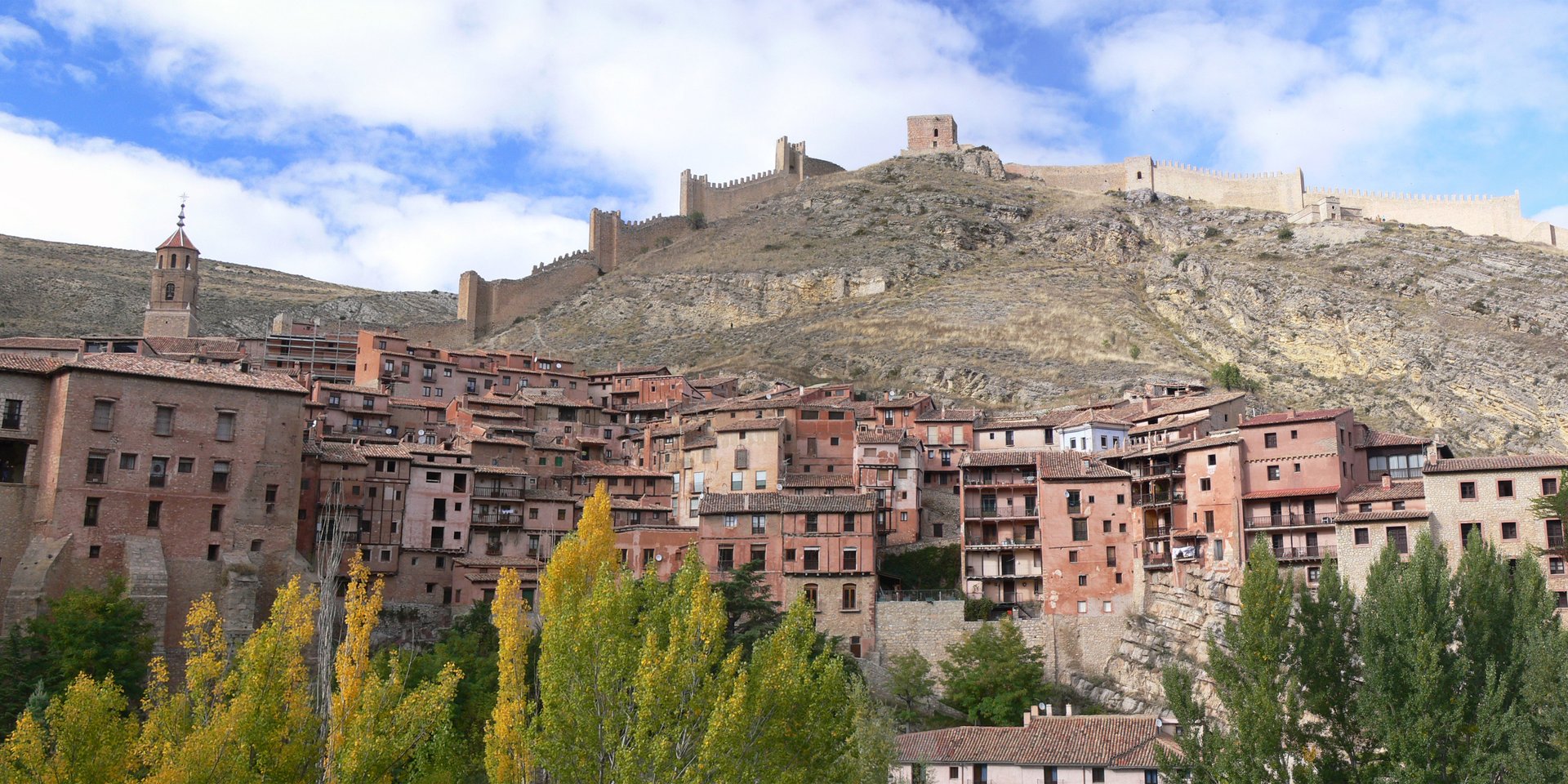
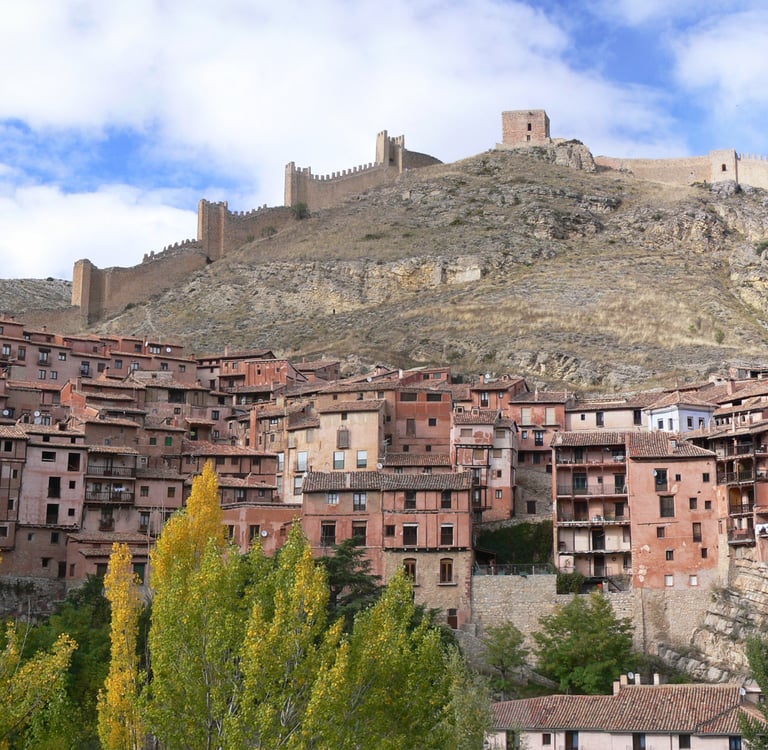
Albarracín is one of Spain’s most atmospheric medieval towns, with red-colored houses, tiny windows, carved wooden details, iron balconies, and winding streets that feel almost too perfectly moody.
The whole town rises in dusty rose and rust tones, surrounded by cliffs and old walls. It does not look haunted in a jump-scare way. It looks haunted by memory. The narrow streets, warm stone, and fortress views make it feel like a place where every doorway leads into a very dramatic backstory.
Tim Burton feeling: Sleepy Hollow in a desert-red medieval dream.
Best for: Medieval streets, dramatic viewpoints, moody photography, romantic weirdness.
Don’t miss: The old town, city walls, red houses, cliffside viewpoints.
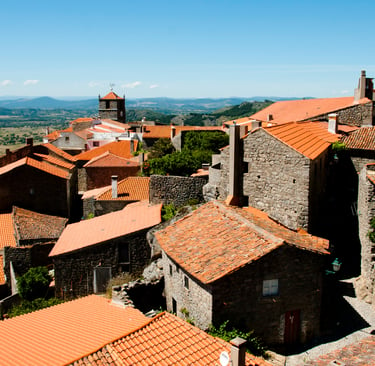
7. Monsanto, Portugal
The boulder village where the rocks seem to be in charge
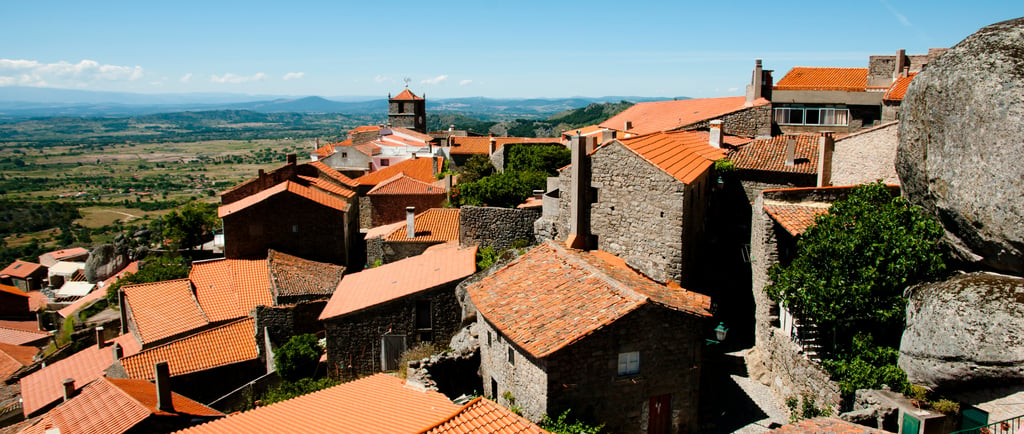
Monsanto is the kind of village that makes your brain pause for a second. Houses are tucked between, beneath, and around enormous granite boulders, as if the town politely asked nature for permission and nature said, “Fine, but I’m keeping the roof.”
This is one of those places that feels impossible in photographs and even stranger in person. The rocks are not decoration. They are part of the architecture. Walls bend around them. Rooflines vanish beneath them. Streets squeeze between them. It feels ancient, playful, and slightly monstrous.
Tim Burton feeling: Frankenweenie meets a prehistoric fairy tale.
Best for: Unusual villages, stone houses, surreal architecture, offbeat Portugal.
Don’t miss: Boulder houses, castle ruins, stone alleys, hilltop views.
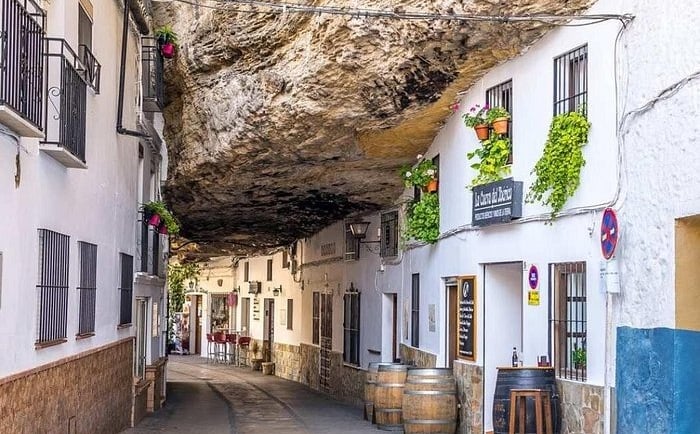
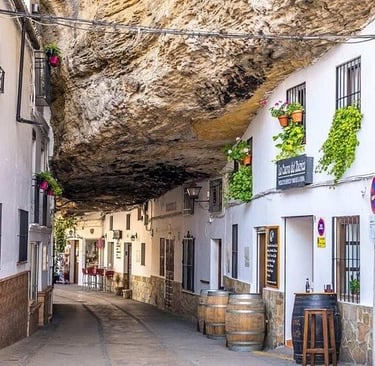
8. Setenil de las Bodegas, Spain
The town living under a rock, literally
Setenil de las Bodegas is one of Andalusia’s strangest and most unforgettable white villages. The town sits along a river gorge, and its main attraction is the originality of streets and houses built into the rock itself.
Some streets feel like the mountain is leaning over them. Cafés, homes, and shops sit beneath enormous stone overhangs, turning ordinary village life into something surreal. It feels like a Burton sketch where the landscape became a character and demanded top billing.
Tim Burton feeling: A whimsical village trapped beneath a giant’s sleeping hand.
Best for: Weird architecture, white villages, dramatic streets, Spain road trips.
Don’t miss: Cuevas del Sol, Cuevas de la Sombra, rock-covered streets, local tapas.
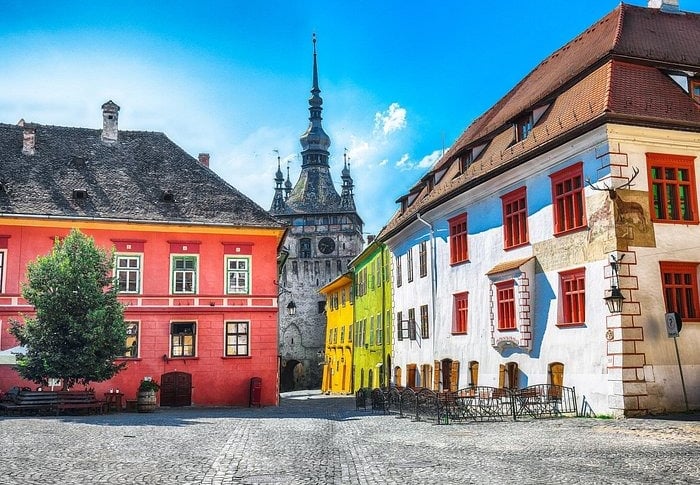
9. Sighișoara, Romania
The candy-colored Transylvanian citadel with a gothic soul
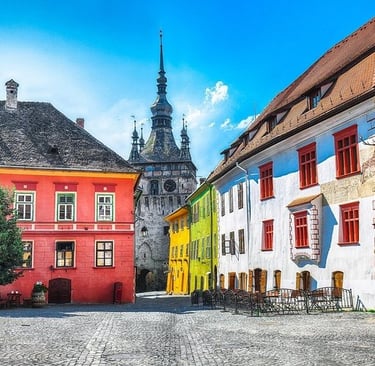
Sighișoara is a small fortified medieval town in Transylvania, founded by Saxon craftsmen and merchants, and recognized by UNESCO for its historic center. It has cobblestone streets, colorful houses, old towers, and just enough Dracula-adjacent atmosphere to make the whole place feel delightfully theatrical.
This is where Burton energy gets interesting. It is not all darkness. Sighișoara has color, charm, and warmth, but underneath that prettiness is a gothic pulse. The rooftops feel watchful. The towers feel dramatic. The streets feel like they are waiting for a pale violinist to appear at the top of the hill.
Tim Burton feeling: Corpse Bride in Transylvania, but with better pastries.
Best for: Medieval towns, colorful streets, gothic Europe, Dracula-adjacent atmosphere.
Don’t miss: Clock Tower, citadel streets, covered staircase, old defensive towers.
10. Bojnice Castle, Slovakia
The romantic castle with mysterious-story energy
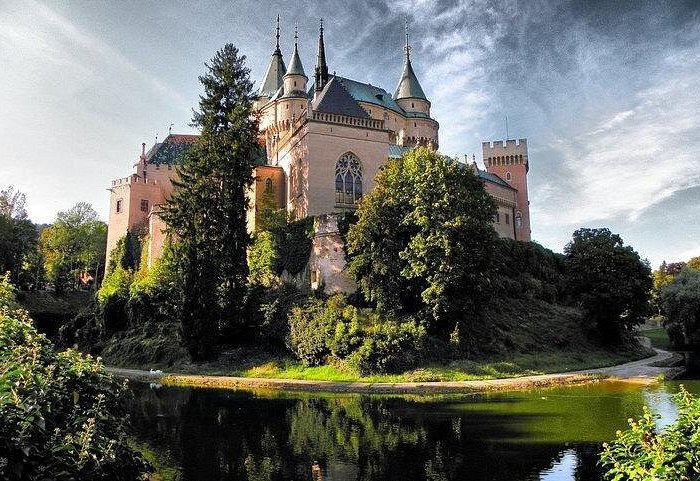
Bojnice Castle is one of Slovakia’s oldest and most important monuments, standing above the town on a travertine mound. The castle is known for its romantic appearance, mysterious stories, and even a natural travertine cave beneath it.
It looks like a fairy-tale castle, but with a shadow at the edge of the frame. The towers are graceful. The setting is beautiful. But there is enough mystery in the design to make you imagine a lonely count, a locked room, and a portrait whose eyes definitely moved.
Tim Burton feeling: A romantic castle from a fairy tale that took a gothic turn after midnight.
Best for: Castles, romantic gothic architecture, Slovakia road trips, dreamy drama.
Don’t miss: Castle interiors, towers, cave, views from the grounds.
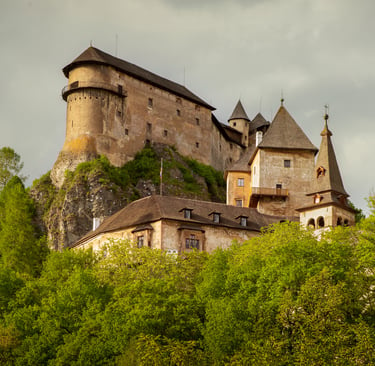
11. Orava Castle, Slovakia
The vampire castle before vampire castles became a cliché
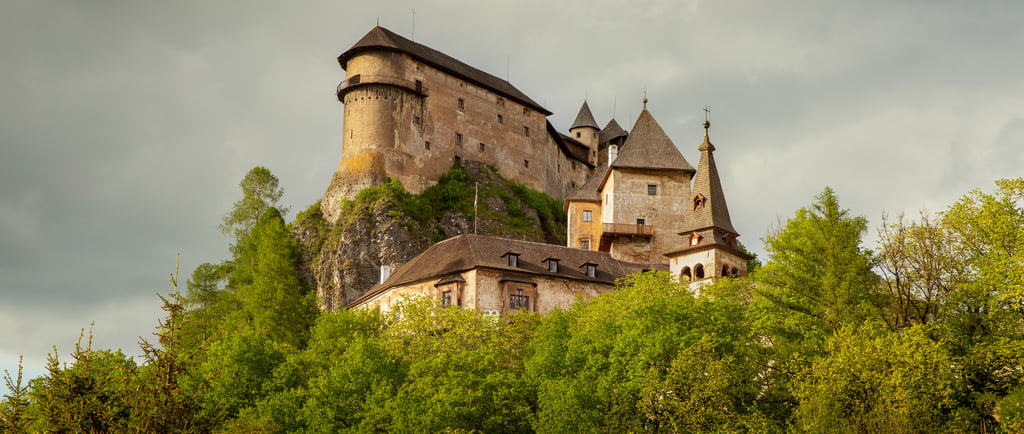
Orava Castle is perched high on a rock above the Orava River, and it has real horror-film history: Slovakia’s official tourism site notes that Orava Castle appeared in the 1922 landmark vampire film Nosferatu.
This castle is sharper, darker, and more severe than Bojnice. It does not flirt with gothic atmosphere. It stares directly into it. The vertical drama, cliffside position, and old stone walls make it feel like the kind of place where the wind has a villain monologue prepared.
Tim Burton feeling: Sleepy Hollow meets old vampire cinema.
Best for: Dark castles, horror history, dramatic landscapes, gothic photography.
Don’t miss: Exterior views from below, castle courtyards, tower angles, river setting.
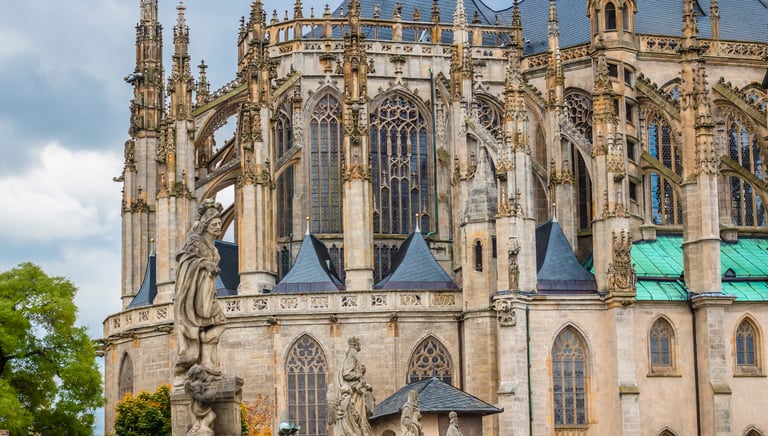
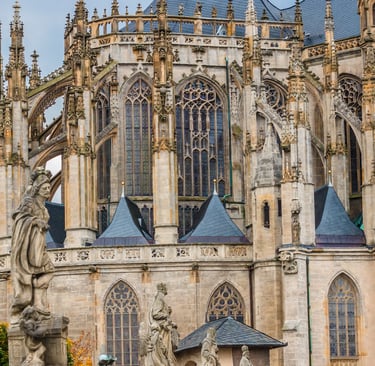
12. Sedlec Ossuary, Kutná Hora, Czechia
The bone chapel that turns mortality into art
Sedlec Ossuary is not just spooky. It is sacred, symbolic, and deeply strange. The lower chapel is decorated with skeletal arrangements, including bone pyramids and a famous chandelier said to contain all the bones of the human body. The major 19th-century arrangement of the bones was completed in 1870 by František Rint.
This is one of the rare places where “macabre” does not feel cheap. It feels reverent, unsettling, artistic, and unforgettable. It is Burtonesque not because it treats death like a gimmick, but because it makes death visible, symbolic, and oddly beautiful.
Tim Burton feeling: The Nightmare Before Christmas if Halloween Town studied theology.
Best for: Macabre art, sacred sites, unusual churches, day trips from Prague.
Don’t miss: Bone chandelier, skeletal pyramids, chapel details, Kutná Hora old town.
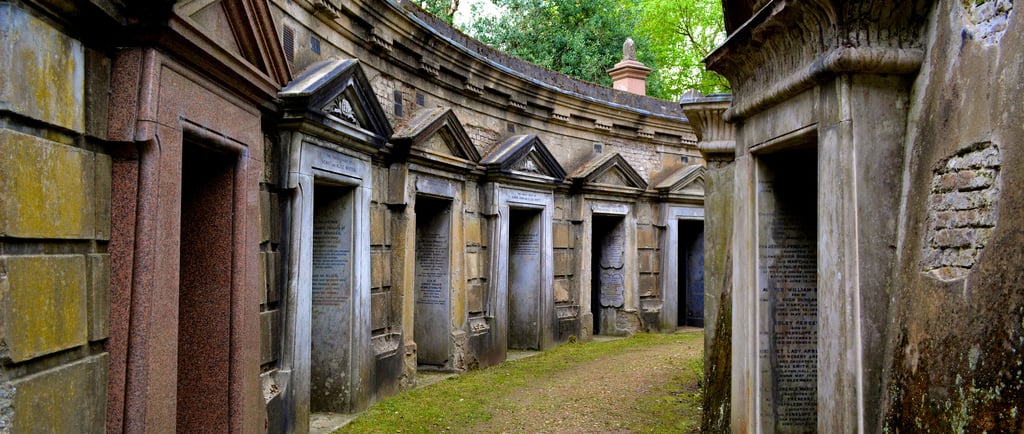
13. Highgate Cemetery, London, England
The Victorian cemetery that practically invented gothic mood
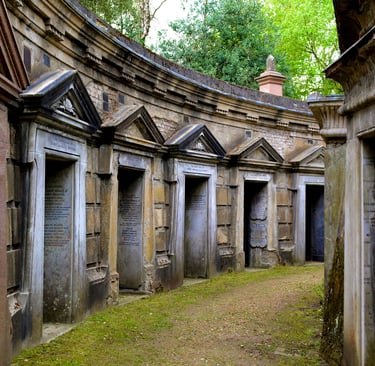
Highgate Cemetery is one of London’s great atmospheric places, especially the West Cemetery, where the Egyptian Avenue, Circle of Lebanon, and Terrace Catacombs create a theatrical Victorian landscape of tombs, vaults, ivy, stone, and shadow. The Highgate Cemetery tour page lists the Egyptian Avenue, Circle of Lebanon, and Terrace Catacombs as key highlights of the West side.
This is not a horror-movie cemetery. It is better. It is romantic, overgrown, sculptural, and full of the kind of melancholy grandeur Burton loves. The whole place feels like grief became architecture and then invited moss to move in.
Tim Burton feeling: Sweeney Todd taking a quiet walk after a thunderstorm.
Best for: Victorian gothic, cemetery architecture, London atmosphere, moody walks.
Don’t miss: Egyptian Avenue, Circle of Lebanon, ivy-covered paths, guided West Cemetery tour.
14. Cimitero Monumentale, Milan, Italy
The cemetery that feels like an open-air opera of grief
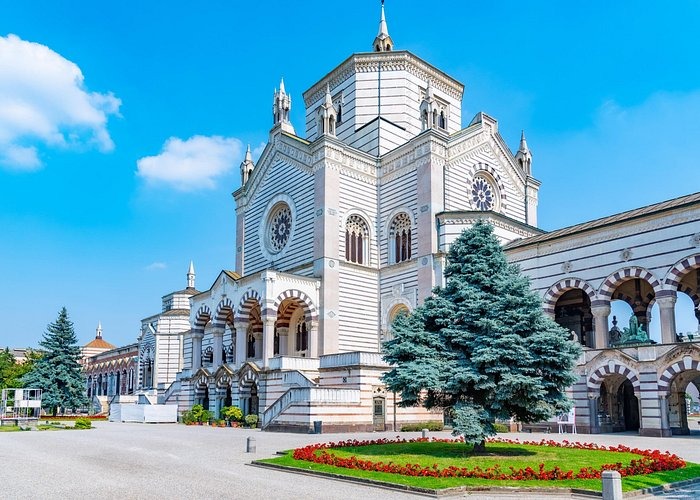
Milan’s Cimitero Monumentale is described by YesMilano as more than a cemetery, an extraordinary outdoor museum filled with sculptural and architectural works. The City of Milan notes that it was designed by Carlo Maciachini, opened in 1867, and is appreciated for its sculptural and architectural heritage.
This place is extravagant in the most gothic Italian way. Angels collapse in marble. Tombs look like stage sets. Grief becomes dramatic, elegant, and almost cinematic. It is less “haunted village” and more “the final act of a very expensive opera.”
Tim Burton feeling: Corpse Bride with couture and cathedral lighting.
Best for: Sculpture, architecture, gothic elegance, unusual Milan stops.
Don’t miss: Famedio, gallery tombs, dramatic family monuments, sculptural details.
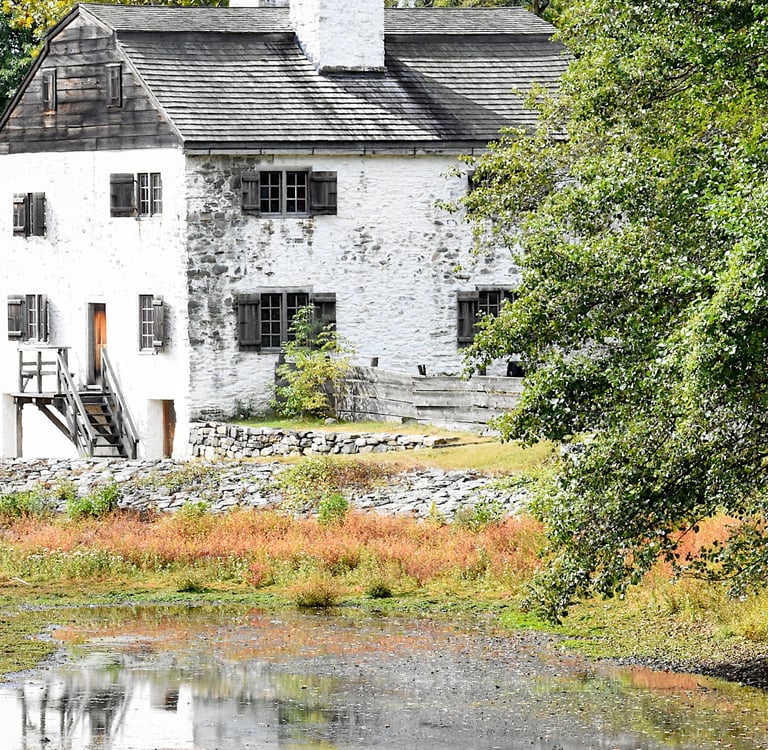
15. Sleepy Hollow, New York
The obvious one, but it still earns its place
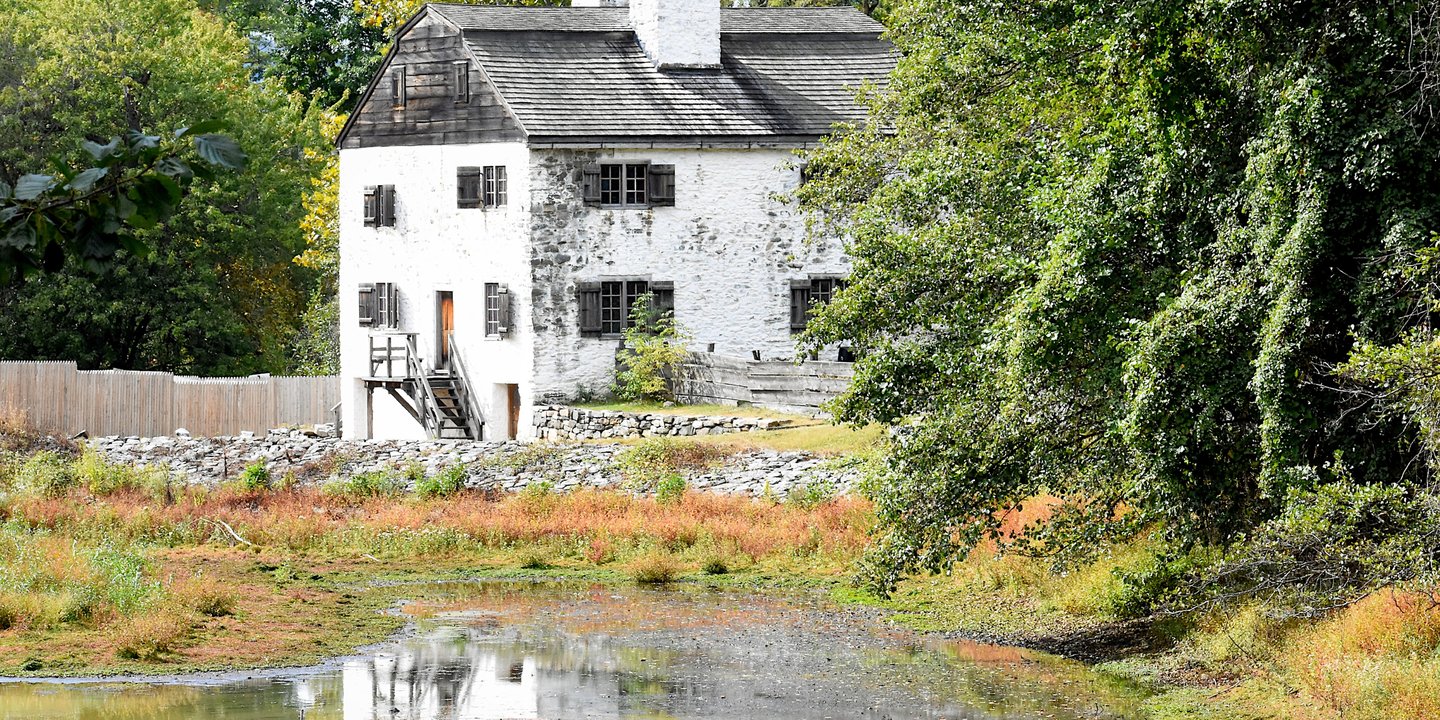
Yes, Sleepy Hollow is the easy answer. But sometimes the easy answer is easy because it is perfect. The village is tied to Washington Irving’s legendary Headless Horseman story, and the Headless Horseman Bridge inside Sleepy Hollow Cemetery remains one of the area’s most atmospheric stops.
This is the place for autumn leaves, cemetery roads, old churches, lantern-lit walks, foggy Hudson Valley mood, and that delicious feeling that a horse might come thundering down the road at exactly the wrong moment.
To be clear, this is the real village connected to the legend, not a claim that Burton’s Sleepy Hollow was filmed here. But as a travel experience, it absolutely belongs on the list.
Tim Burton feeling: Sleepy Hollow, obviously, with a full October orchestra.
Best for: Halloween travel, fall foliage, literary history, gothic small-town atmosphere.
Don’t miss: Sleepy Hollow Cemetery, Headless Horseman Bridge, Old Dutch Church area, autumn events.
The Best Tim Burton-Style Travel Routes
The Gothic Europe Route
Start in London for Highgate Cemetery, then head to Lavenham for crooked houses. Continue to Portmeirion for surreal village color, then cross into Germany for Wernigerode. From there, go east to Kutná Hora, Orava Castle, Bojnice Castle, and Sighișoara.
This route is pure gothic fairy tale with crooked houses, graveyards, castles, bones, and colorful medieval towns.
The Surreal Portugal and Spain Route
Start in Sintra at Quinta da Regaleira, then head inland to Monsanto. Cross into Spain for Setenil de las Bodegas and continue to Albarracín. This route is perfect if you want places that feel physically impossible: underground wells, boulder houses, towns under cliffs, and red medieval streets.
The Strange Italy Route
Pair Bomarzo’s Monster Park with nearby hill towns like Viterbo or Orvieto, then continue north to Milan’s Cimitero Monumentale. This is the best route for theatrical stone monsters, gothic sculpture, and Italian drama with a dark little wink.
Final Thoughts: Where the Real World Gets Wonderfully Weird
The magic of Tim Burton-style places is that they are not simply dark. They are emotional. They make room for oddness. They turn crooked houses, graveyards, strange gardens, lonely castles, and impossible villages into something tender and unforgettable.
These are places for travelers who like beauty with a shadow. Places where the houses lean, the statues stare, the staircases descend, the cemeteries bloom, and the castles look like they have been keeping secrets for centuries. So pack something black, charge your camera, and follow the crooked road. The weird little world is waiting.
Explore
Discover hidden gems in small cities worldwide.
© 2025. All rights reserved. Ripe Melland Media