Stop scrolling and start visiting

Grand Hotels Frozen In Time: Historic Hotels So Gorgeous They Feel Like You Walked Into Another Century
Step inside the world’s most beautiful grand hotels frozen in time, from alpine Belle Époque palaces and lakefront villas to imperial seaside resorts, historic railway hotels, Venetian palazzos, and glamorous old-world lobbies that still feel untouched by time.
GILDED ESCAPES
Sarah Melland
6/9/202613 min read
Grand Hotels Frozen In Time
Historic Hotels So Gorgeous They Feel Like You Walked Into Another Century
Some hotels are places to sleep. And then there are grand hotels.
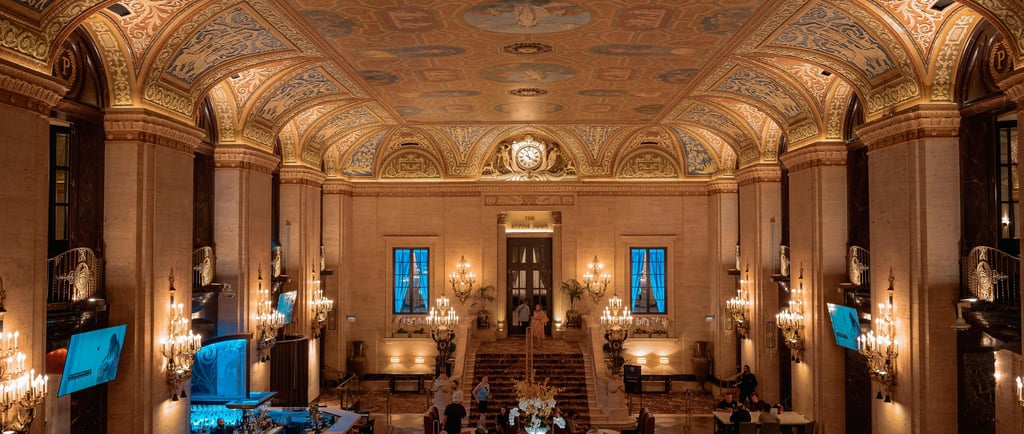
The kind where you walk through the doors and immediately lower your voice, not because anyone told you to, but because the staircase, chandeliers, marble floors, velvet chairs, carved ceilings, and impossible flower arrangements have politely informed you that sweatpants were a mistake.
These are not just hotels. They are architectural time capsules. They were built for emperors, opera singers, railway passengers, aristocrats, writers, film stars, honeymooners, and people who apparently traveled with trunks, hat boxes, steamer coats, and emotional commitment.
They belong to the world of Belle Époque lobbies, grand staircases, sea-view terraces, palace suites, lakefront verandas, afternoon tea, and dining rooms where you half expect a countess to dramatically remove one glove and ruin someone’s life.
For the Gilded Escapes category, these are the grand hotels frozen in time, the ones where history did not leave. It just checked in permanently.
1. Grand Hotel Kronenhof
Pontresina, Switzerland
If a snow globe had a trust fund, it would look like the Grand Hotel Kronenhof.
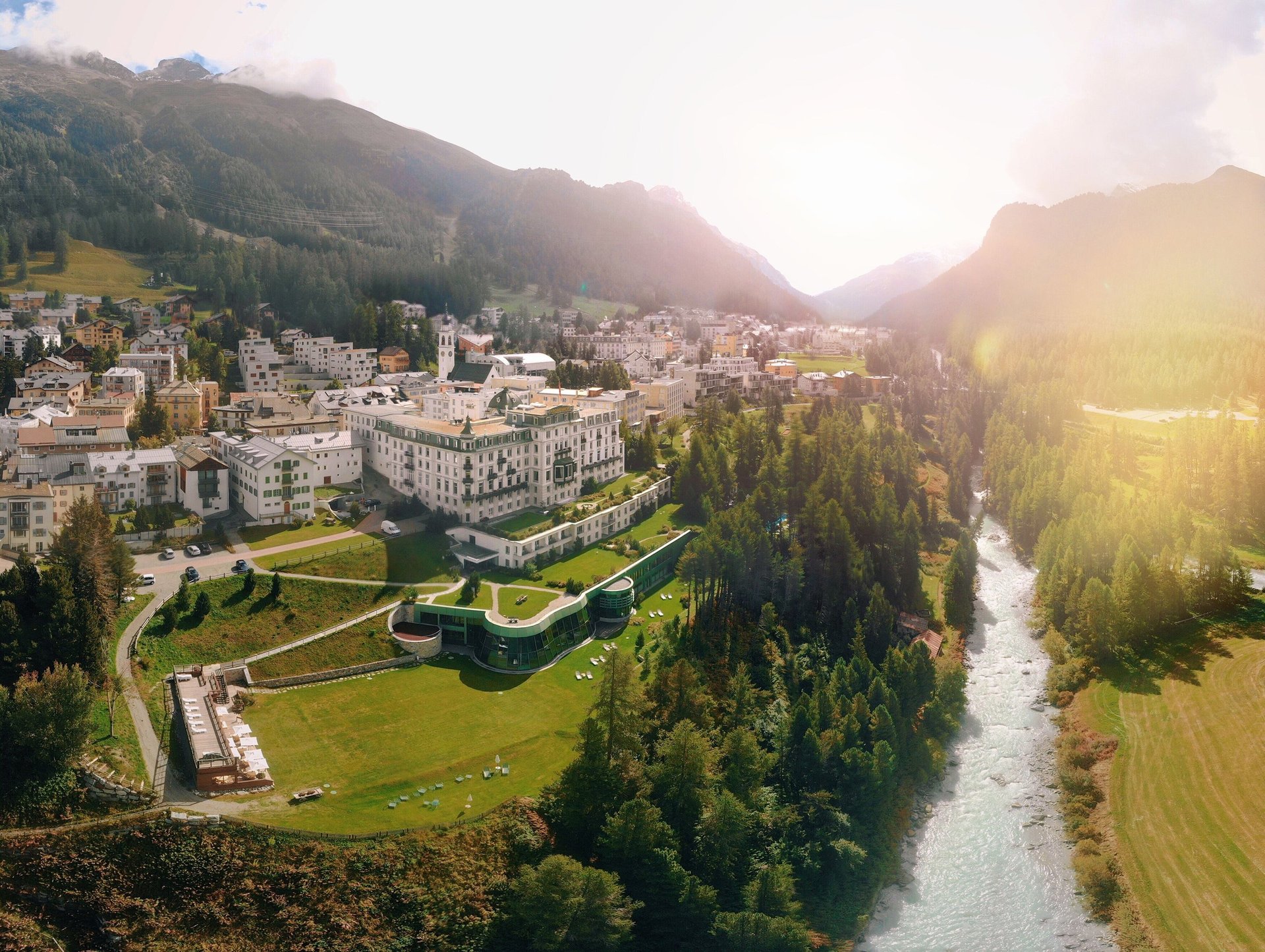
Set in Pontresina in the Swiss Alps, this neo-Baroque beauty dates its hospitality history back to 1848 and later became the horseshoe-shaped grand hotel known as Kronenhof & Bellavista in 1898. Its official portrait describes the building as a landmark alpine architectural gem, with historic architecture, light-filled rooms, and an old-world setting in the Engadine mountains.
The wow moment is pure alpine fantasy: a grand cream-colored façade, a domed entrance, painted ceilings, chandeliers, polished parquet, mountain views, and rooms that feel like they were designed for someone arriving by carriage under falling snow.
Why it feels frozen in time: This is Belle Époque Switzerland at its most cinematic. It has that grand resort feeling from the era when people went to the Alps not just to ski, but to breathe mountain air, recover from vague aristocratic ailments, and look fabulous in wool.
Fun fact: The hotel began as the Gasthaus Rössli before growing into one of Switzerland’s great alpine grand hotels. That is quite the glow-up. From guesthouse to “please don’t touch anything unless you are wearing pearls.”
2. Hôtel du Palais
Biarritz, France
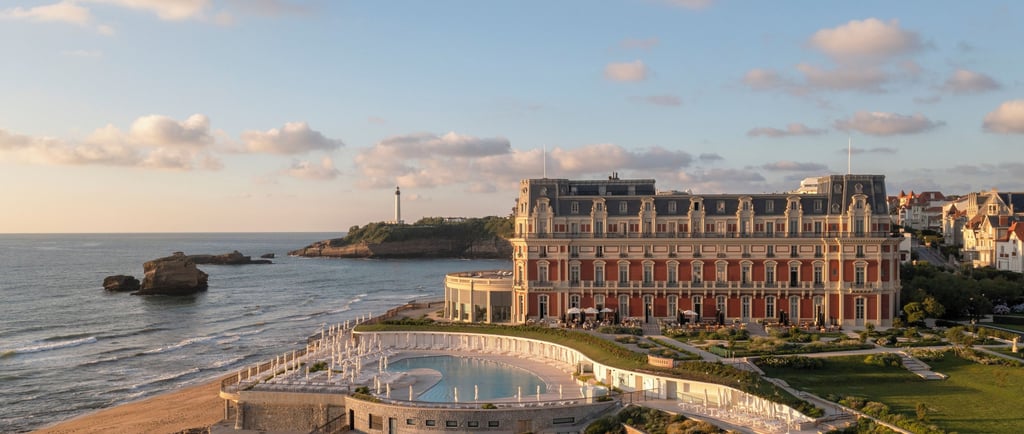
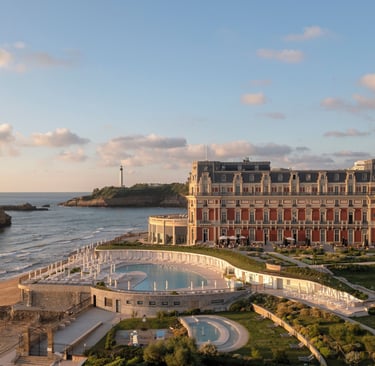
The Hôtel du Palais is not pretending to be royal. It literally began as an imperial residence.
Napoleon III commissioned Villa Eugénie in 1854 for Empress Eugénie, and the building later became the Hôtel du Palais overlooking Biarritz’s Grande Plage. Today, Hyatt describes it as a former imperial residence of Napoleon III and Empress Eugénie, founded in 1854 and facing the Atlantic Ocean.
The whole place feels like France put on a red velvet cape and stood dramatically by the sea. The red-and-cream façade, mansard roofs, oceanfront pool, formal terraces, and imperial scale make it feel less like a hotel and more like a palace that happens to serve breakfast.
Why it feels frozen in time: It still carries the energy of a Second Empire seaside court. Biarritz became fashionable partly because the imperial couple came here, which means the hotel is not just part of the resort’s glamour. It helped create it.
Fun fact: The building’s original name, Villa Eugénie, was a love letter in architecture. Imagine getting a beach house from Napoleon III. Some people get flowers. Some people get an Atlantic palace.
3. Grand Hotel Tremezzo
Lake Como, Italy
Grand Hotel Tremezzo is Lake Como doing the absolute most, and honestly, we thank her for her service.
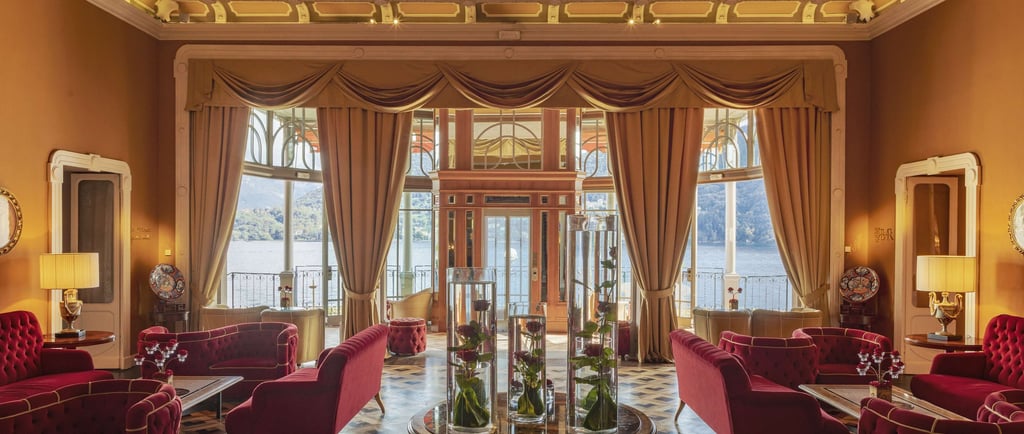
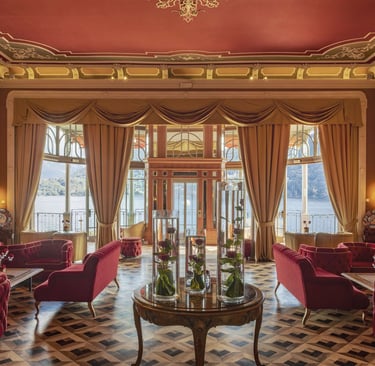
Opened in the early 20th century, the hotel was designed with Art Nouveau elegance, soaring ceilings, ornate balconies, modern-for-the-time technical innovations, elevators, and even an electric sign spelling out the hotel’s name. Its own heritage page describes an era of nobility, celebrities, parasols, lake evenings, and refined pleasure.
The wow moment is the view: peachy-palace façade, floating pool, terraced gardens, grand rooms, lake light, and Bellagio shimmering across the water like it knows it is being stared at.
Why it feels frozen in time: This is old Lake Como glamour before “quiet luxury” became a hashtag. It is rich, romantic, theatrical, and completely unbothered by the fact that everyone else is trying to catch up.
Fun fact: It was built with the latest comforts of its day, including not one but two elevators. In 1910 hotel terms, that was basically saying, “Yes, darling, we have entered the future.”
4. Pera Palace Hotel
Istanbul, Türkiye
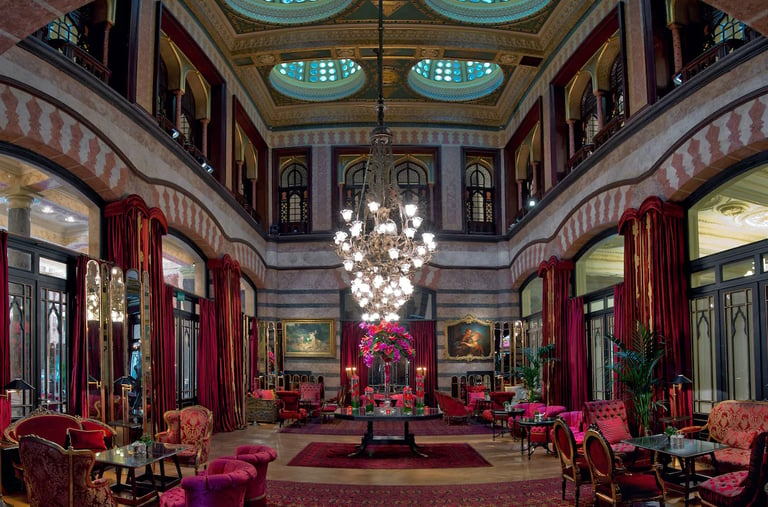
Pera Palace is the kind of hotel where you can almost hear luggage wheels from the Orient Express and someone whispering, “There has been a murder,” even if everyone is just having tea.
Built by architect Alexandre Vallaury and opened in 1895, Pera Palace was created to welcome Orient Express passengers arriving in Istanbul. The hotel says it was the first modern hotel in Istanbul to use electricity in the late Ottoman period and the first hotel there to install an electric lift.
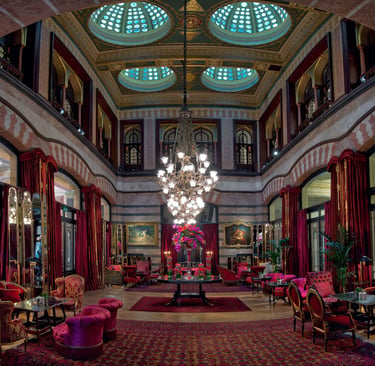
Inside, it is all domes, marble, polished wood, old elevators, high ceilings, and that mysterious hotel energy where every corridor feels like it knows three secrets and one scandal.
Why it feels frozen in time: It captures the romance of rail travel, late Ottoman Istanbul, European luxury, and literary drama all in one building.
Fun fact: Agatha Christie is famously associated with the hotel, and room 411 carries her name. Even if you are not writing a murder mystery, the place will make you feel like you should at least own a fountain pen.
5. Raffles Singapore
Singapore
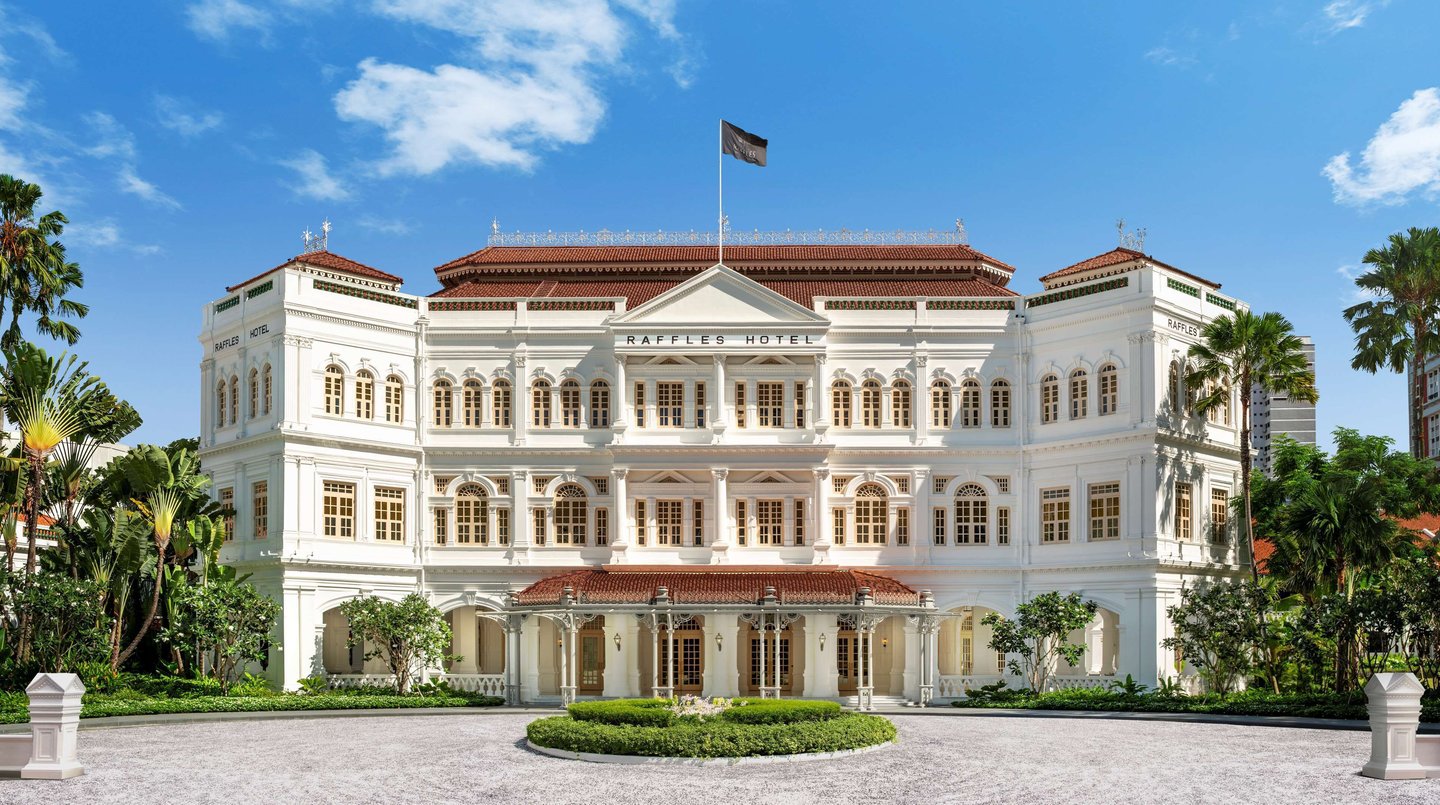
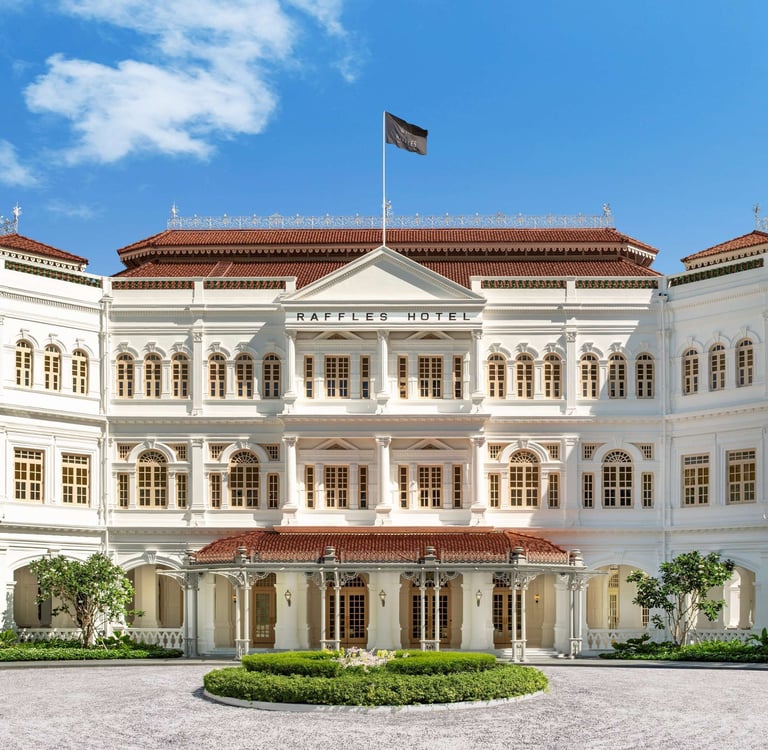
Raffles Singapore is colonial-era grandeur with a tropical soul. It dates back to 1887 and is widely known for its period architecture, elegant décor, and historic importance. Singapore’s National Library notes that it was gazetted as a national monument in 1987 and is also associated with the Singapore Sling, created in 1915.
The lobby is the kind of place that makes people physically pause: white columns, polished floors, towering height, dark wood staircases, flowers, chandeliers, and that serene “we have seen empires rise and fall, but tea is at four” attitude.
Why it feels frozen in time: Raffles has preserved the fantasy of old-world travel while still feeling alive. It is polished, iconic, and very aware that it is Raffles.
Fun fact: The Singapore Sling was created at the hotel’s Long Bar, which means this is one of the few historic properties where ordering a cocktail counts as cultural research. Convenient.
6. Reid’s Palace
Funchal, Madeira, Portugal
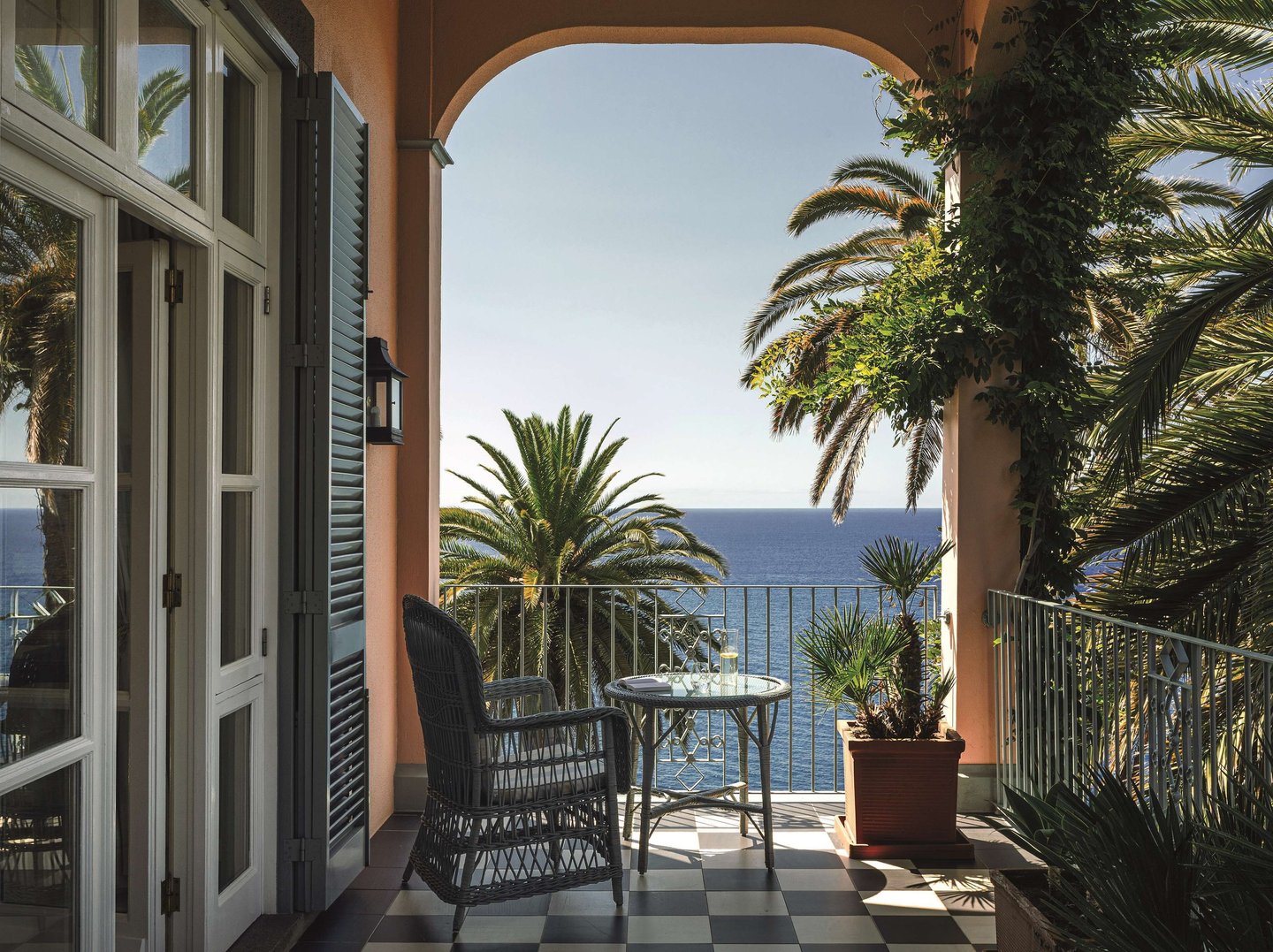
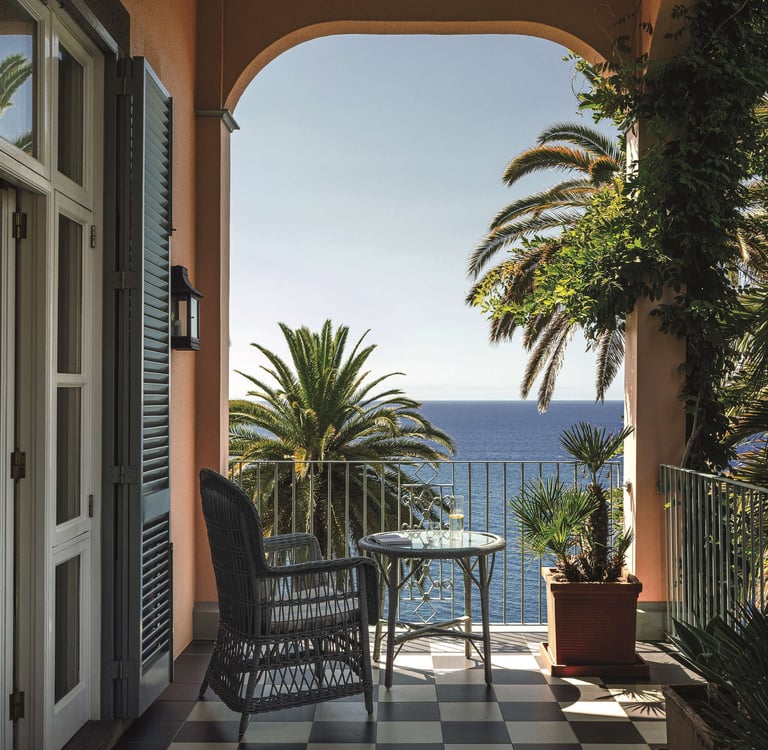
Reid’s Palace sits on a cliff above the Atlantic looking like it has been waiting all day for someone elegant to arrive by ship.
The hotel opened in 1891, and its history includes royals, writers, politicians, and legendary guests. Belmond notes that George Bernard Shaw learned to tango there, while Winston Churchill came to write his memoirs and paint.
The wow moment is the setting: pastel façades, subtropical gardens, ocean terraces, afternoon tea, cliffside pools, and Atlantic views that make every normal hotel balcony seem deeply unserious.
Why it feels frozen in time: Reid’s is Edwardian resort glamour with sea air. It feels like the age of ocean liners, linen suits, garden paths, and long Madeira afternoons never quite ended.
Fun fact: Winston Churchill visited in 1949 to recover, write, and paint. Honestly, if you are going to have a restorative era, a cliffside palace in Madeira is a strong choice.
7. Grand Hotel Timeo
Taormina, Sicily, Italy
Grand Hotel Timeo is what happens when Sicily, ancient ruins, Mount Etna, and old-world glamour all decide to stand in the same frame.
Belmond notes that when Grand Hotel Timeo opened in 1873, it became Taormina’s first hotel and helped put Sicily on the map for international travelers. Its location beside the ancient Greek Theatre, with views toward Mount Etna and the sea, is frankly unfair to other hotels.
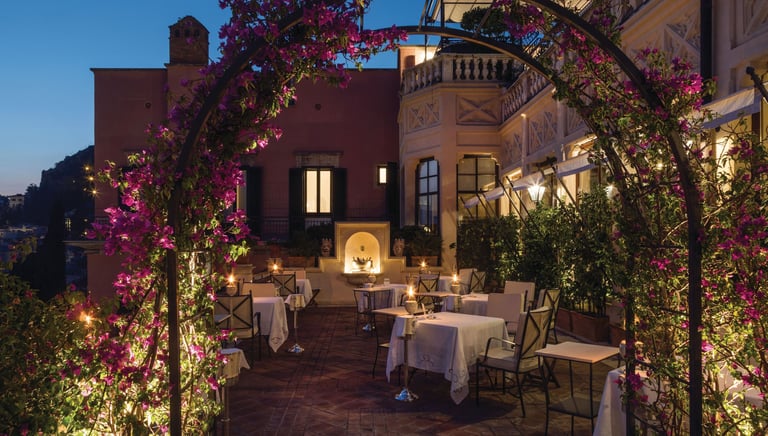
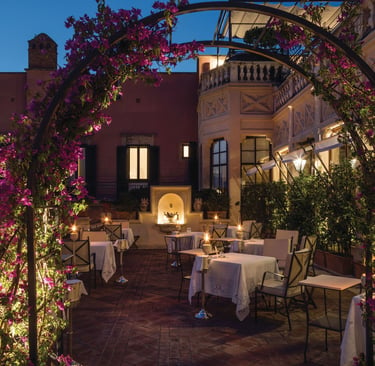
This is the hotel for terraces, citrus trees, antique furniture, cypress silhouettes, opera-level sunsets, and cocktails that taste better because a volcano is casually watching.
Why it feels frozen in time: Timeo feels like the Grand Tour never fully packed up. Writers, artists, aristocrats, and romantics came for Taormina’s ruins and light, and the hotel still carries that old Sicilian spell.
Fun fact: The name Timeo connects back to Tauromenion, the ancient Greek city associated with Taormina’s origins. So yes, even the hotel name has ancient-drama energy.
8. The Gritti Palace
Venice, Italy
The Gritti Palace is not “Venetian inspired.” It is Venetian. Dramatically, deeply, almost offensively Venetian.
The palazzo dates back to 1475, when the Pisani family transformed it into its Gothic shape. In 1525, it became the private residence of Andrea Gritti, Doge of Venice, and it was later converted into a luxury hotel in 1895.
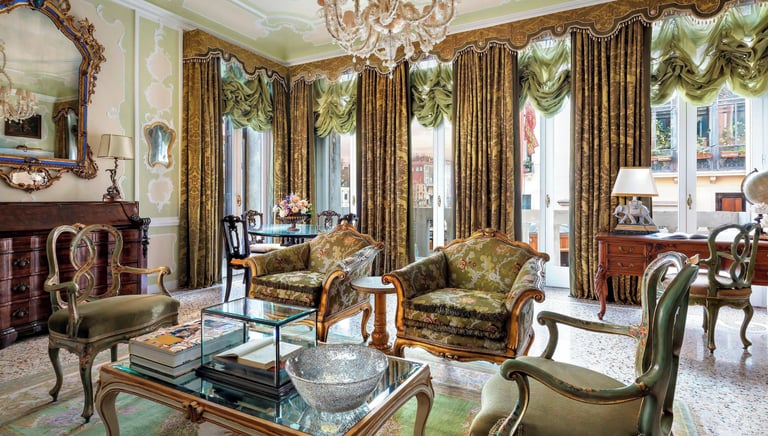
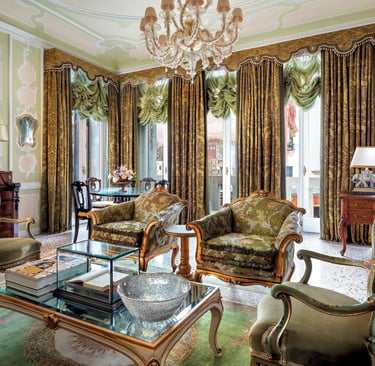
Inside, it is a dream of damask, Murano glass, antiques, carved wood, rich fabrics, portraits, Grand Canal views, and rooms that feel less decorated than inherited.
Why it feels frozen in time: This is not a hotel trying to recreate the past. It is the past, layered and polished. The whole place feels like Venice turned into a jewel box and added room service.
Fun fact: It has hosted generations of writers, artists, and glamorous travelers. If the walls could talk, they would probably speak in low Italian and refuse to name names.
9. Hotel Sacher Wien
Vienna, Austria
Hotel Sacher is Vienna with velvet on.
Eduard Sacher, son of pastry legend Franz Sacher, opened the hotel in 1876 in the heart of Vienna. The hotel’s own history notes that the Sachertorte quickly became the hallmark of the house, and Anna Sacher later helped turn the hotel into one of Vienna’s most fashionable high-society addresses.
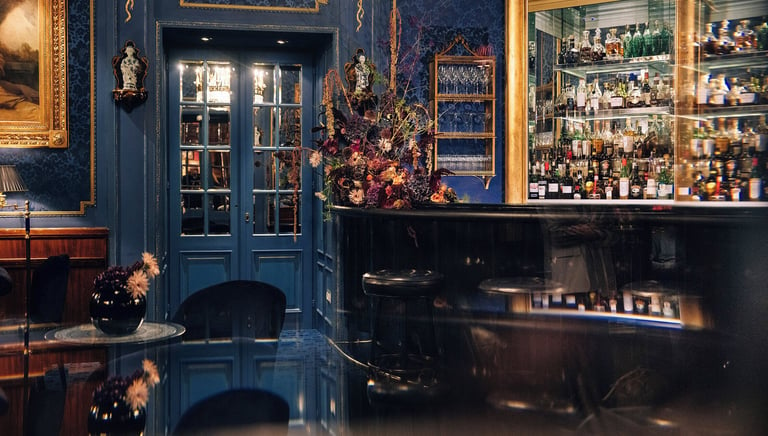
Expect deep reds, chandeliers, polished antiques, opera-night elegance, and the kind of rooms where dessert feels less optional and more constitutionally required.
Why it feels frozen in time: It carries the grand café, opera, imperial Vienna atmosphere beautifully. It is not just a hotel. It is a slice of Austrian cultural identity with better frosting.
Fun fact: Anna Sacher was known for cigars, little dogs, and serious authority. A glamorous hotel matriarch with bulldogs and a cigar? Put her in the Visit Small Cities Hall of Fame immediately.
10. Grand Hotel et de Milan
Milan, Italy
Grand Hotel et de Milan is old Milan glamour with opera in the walls.
The hotel opened on May 23, 1863, and its history has long been tied to La Scala, which the hotel says is just 674 steps away. It became a home-away-from-home for artists connected to the opera house, including Verdi, Caruso, Callas, and Nureyev. The Leading Hotels of the World notes that Giuseppe Verdi lived there from 1872 until his death in 1902.
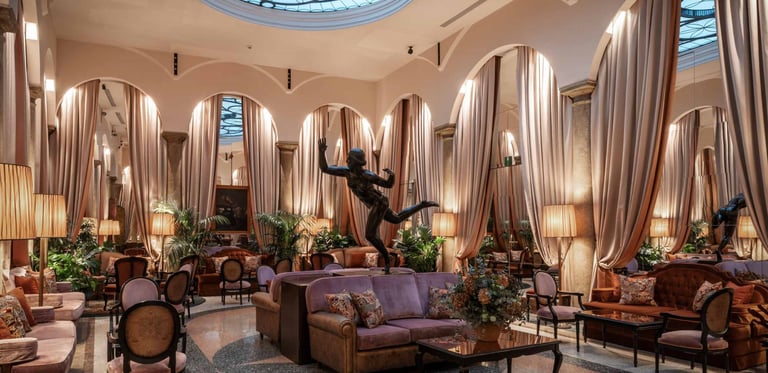
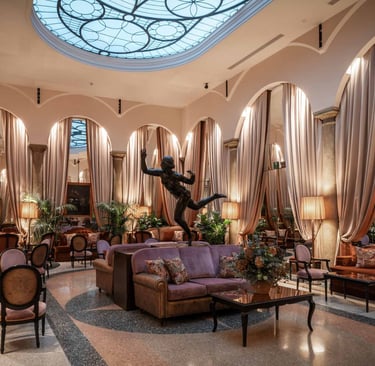
The wow here is quieter than some palace hotels, but it is powerful: townhouse elegance, old Milanese interiors, refined rooms, artistic ghosts, and the feeling that someone is about to enter wearing a cape and applause.
Why it feels frozen in time: It preserves the world of 19th-century Milanese culture, when grand hotels were salons for artists, composers, diplomats, and people who knew how to make an entrance.
Fun fact: Verdi lived here for decades because of its closeness to La Scala. Imagine casually sharing hotel air with one of opera’s greatest composers.
11. The Shelbourne
Dublin, Ireland
The Shelbourne is Dublin’s grand old stage.
The hotel has been welcoming guests since 1824, and it sits across from St. Stephen’s Green with all the confidence of a place that has watched Irish history unfold from its front steps. Its own history highlights Room 112, where Michael Collins and others gathered in 1922 to draft Ireland’s inaugural constitution.
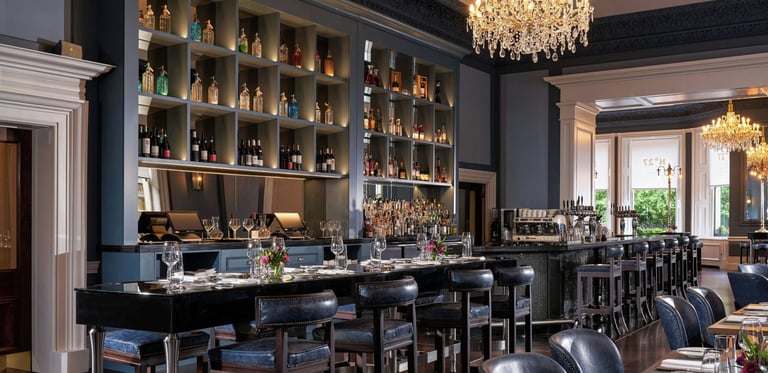
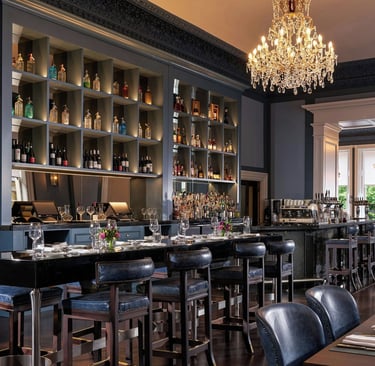
Inside, the feeling is polished and classic: chandeliers, heritage rooms, carved details, proper afternoon tea energy, and a sense that the hotel has seen politicians, poets, revolutionaries, and honeymooners all pass through its doors.
Why it feels frozen in time: The Shelbourne is not just decorative history. It is political, social, literary, and deeply Irish.
Fun fact: The Constitution Room gives this hotel a rare kind of gravity. Some grand hotels hosted dances. This one helped host the birth of a nation.
12. Grand Hôtel Stockholm
Stockholm, Sweden
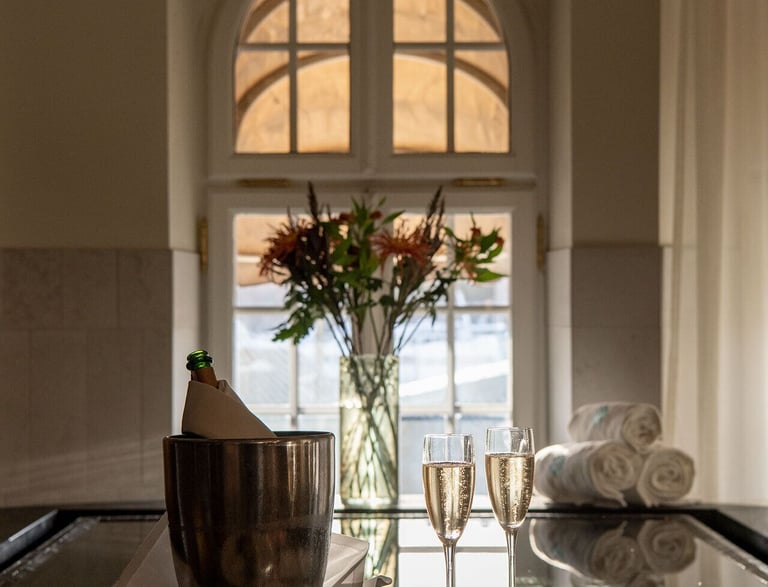
Grand Hôtel Stockholm sits on the waterfront looking across toward the Royal Palace and Old Town, which is exactly the kind of flex a grand hotel should have.
The hotel opened in 1874, founded by Régis Cadier, and is known as one of Sweden’s great luxury hotels. The hotel’s own site references its 1874 opening, while Forbes Travel Guide notes its position across the harbor from the royal palace and describes its stately interior details, including pillars, crown molding, and Carrara marble floors.
The wow moment is Stockholm elegance without shouting: waterfront views, royal sightlines, creamy interiors, grand dining rooms, and Scandinavian restraint wearing diamonds.
Why it feels frozen in time: It captures the grandeur of 19th-century European hospitality, but with Swedish calm. Elegant, formal, and not desperate for attention.
Fun fact: Nobel laureates have long been associated with the hotel, making it a perfect place to feel under-accomplished while ordering coffee.
13. Grand Hotel Mackinac Island
Mackinac Island, Michigan, USA
Grand Hotel on Mackinac Island is what happens when a porch becomes a personality.
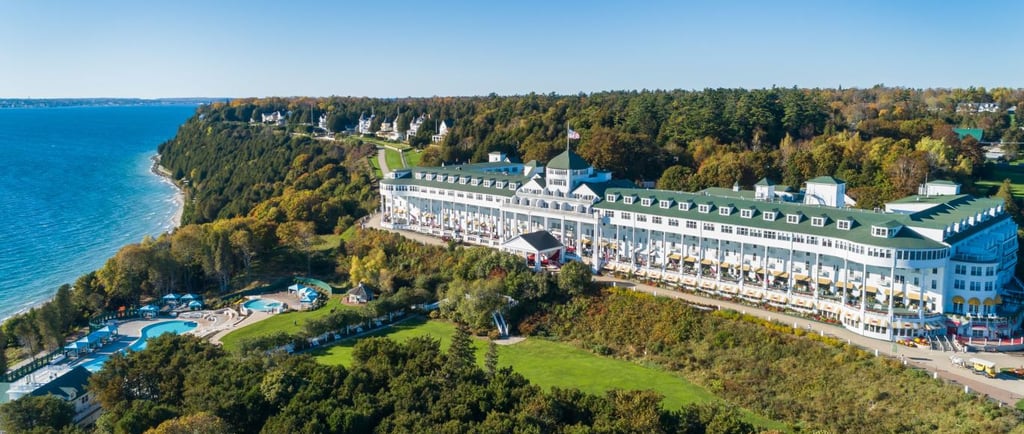
Opened on July 10, 1887, Grand Hotel is one of America’s most famous summer resort hotels. The hotel says its front porch is 660 feet long and is the world’s largest, visible as guests approach the island from Lake Huron.
The whole place feels like summer got dressed up: white columns, rocking chairs, striped awnings, geraniums, horse-drawn carriages, dinner dress codes, lake breezes, and no cars on the island.
Why it feels frozen in time: Mackinac Island already feels like a time slip, but Grand Hotel commits fully. It is old resort America at its most theatrical and cheerful.
Fun fact: The porch is so famous it is basically a landmark with furniture. Come for the island. Stay for the rocking-chair drama.
14. Hotel del Coronado
Coronado, California, USA
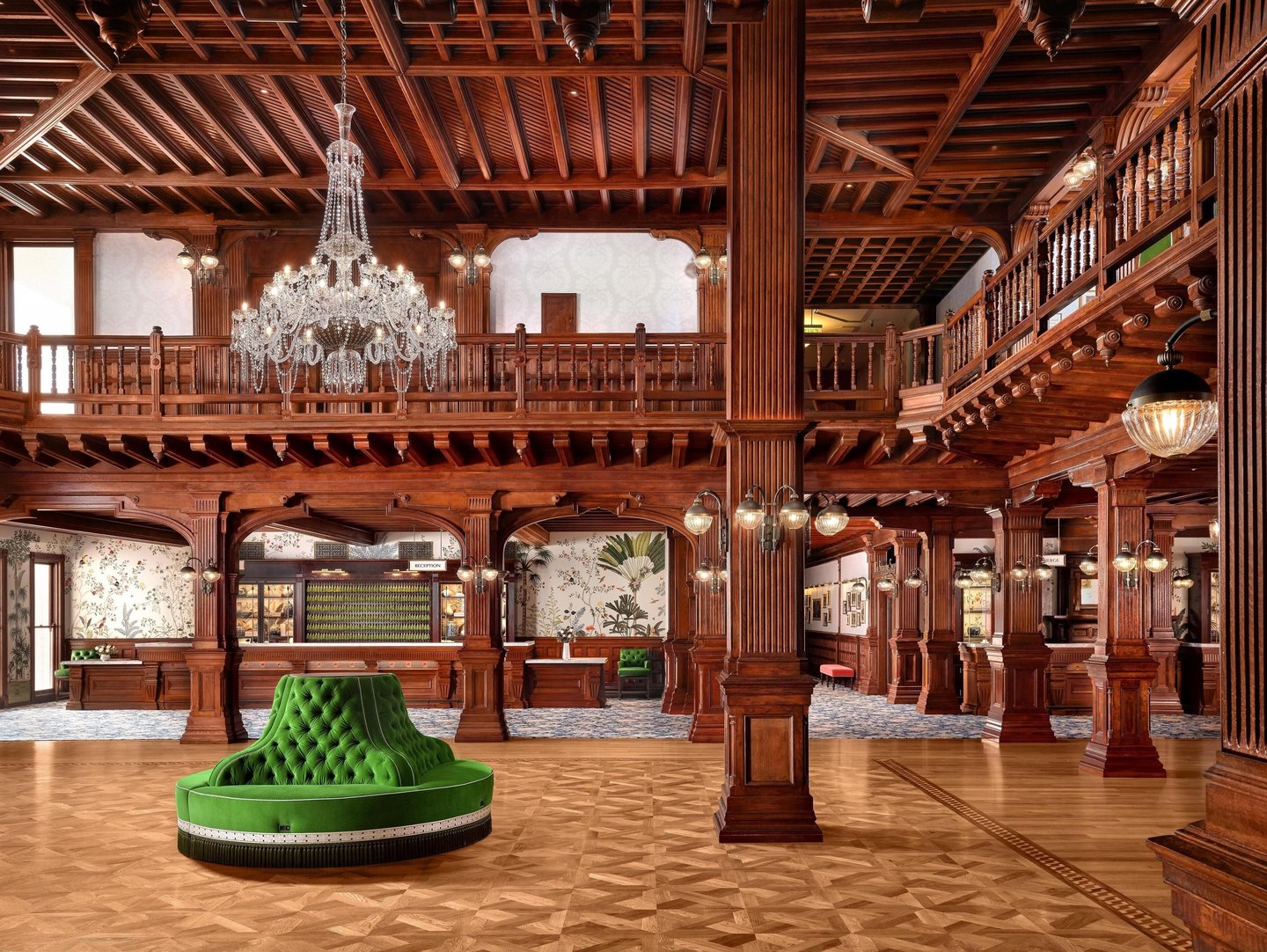
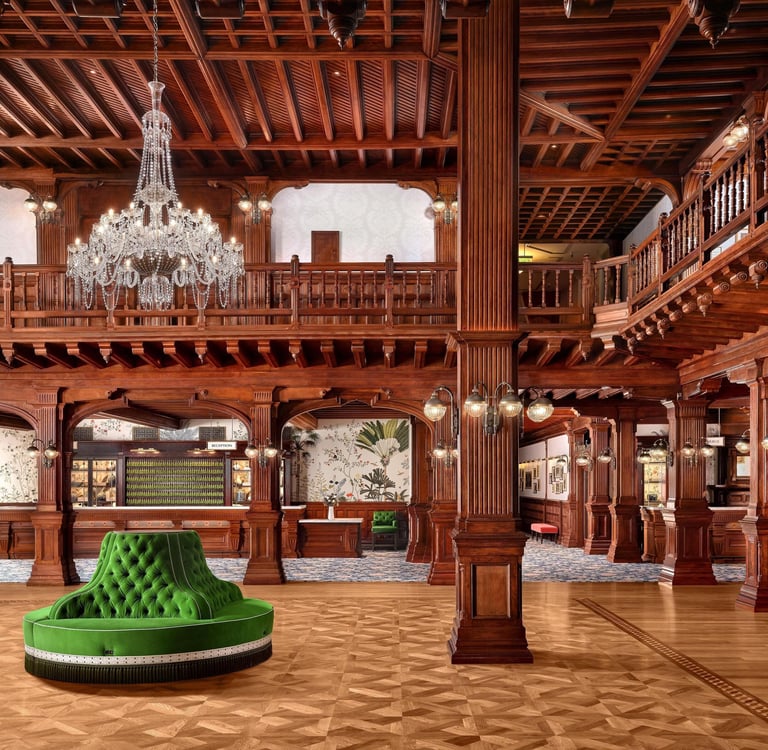
Hotel del Coronado is the grand Victorian beach resort that looked at the Pacific Ocean and said, “I need turrets.”
Built in 1888 by Elisha Babcock Jr. and Hampton L. Story, the hotel is designated a National Historic Landmark and remains one of San Diego’s great icons. Its red roofs, white wooden balconies, conical towers, palm trees, and beachfront setting make it instantly recognizable.
The wow moment is the silhouette. The whole building looks like a sandcastle designed by a Gilded Age millionaire who had excellent taste and no fear of whimsy.
Why it feels frozen in time: It preserves the grandeur of the American seaside resort, before beach hotels became glass boxes with lobby candles and “coastal minimalism.”
Fun fact: The Del has hosted presidents, royalty, celebrities, and generations of beach-loving guests. It is basically old Hollywood with salt air.
15. Omni Mount Washington Resort
Bretton Woods, New Hampshire, USA
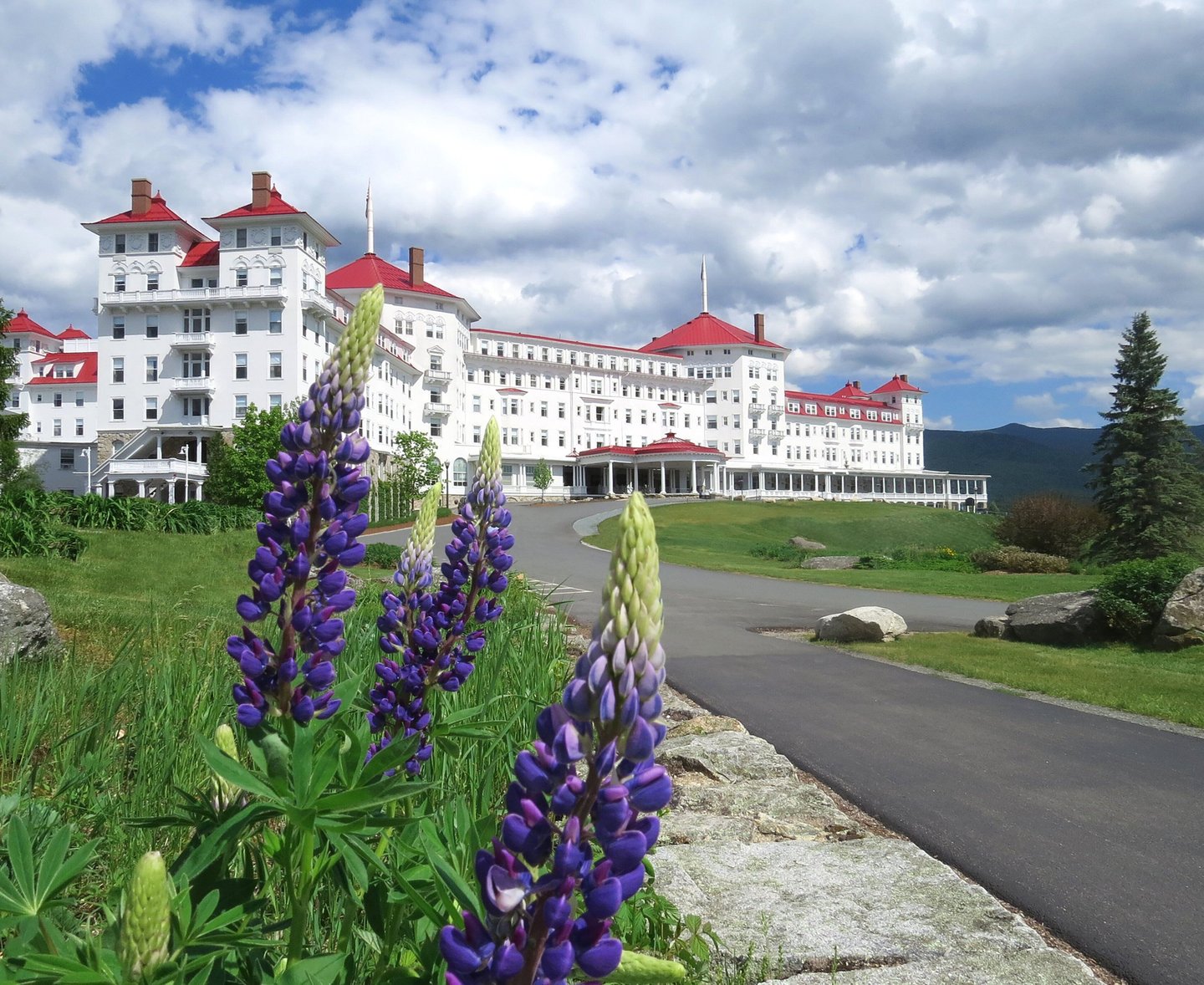
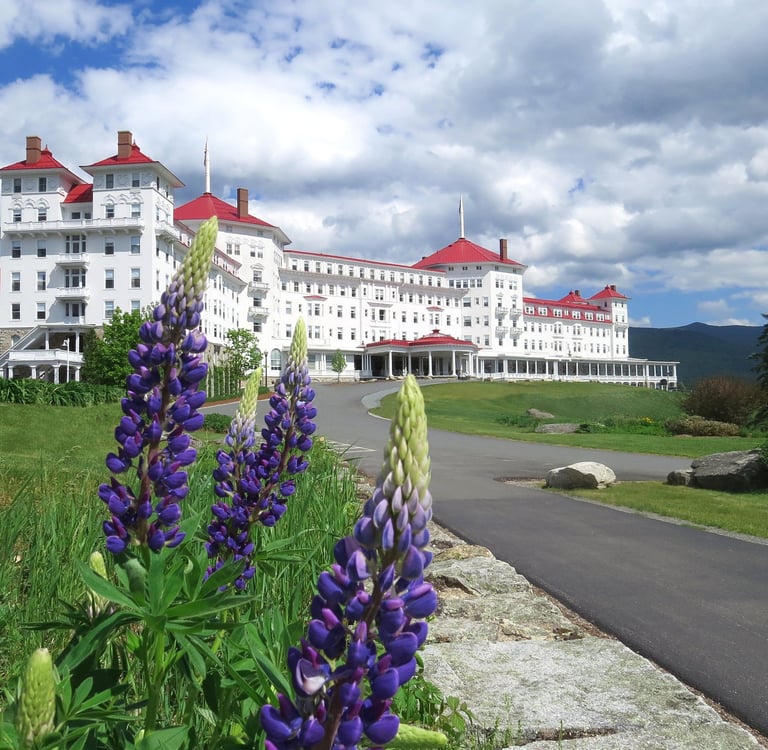
Omni Mount Washington is a white mountain palace with a very serious résumé.
Completed in 1902 by industrialist Joseph Stickney, the resort was built at the base of Mount Washington and welcomed elite travelers for more than a century. Historic Hotels of America notes that it was the site of the 1944 Bretton Woods Conference, where major postwar financial institutions, including the World Bank, were established.
Architecturally, it is massive and majestic: red roof, white façade, long verandas, mountain views, huge public rooms, and enough grandeur to make a normal inn feel like it needs to apologize.
Why it feels frozen in time: It is grand resort architecture plus world history. You get sweeping mountain romance and global economic drama in the same building.
Fun fact: Some hotels have ghost stories. This one has the Bretton Woods Conference. Same level of intensity, different costume department.
16. Taj Lake Palace
Udaipur, India
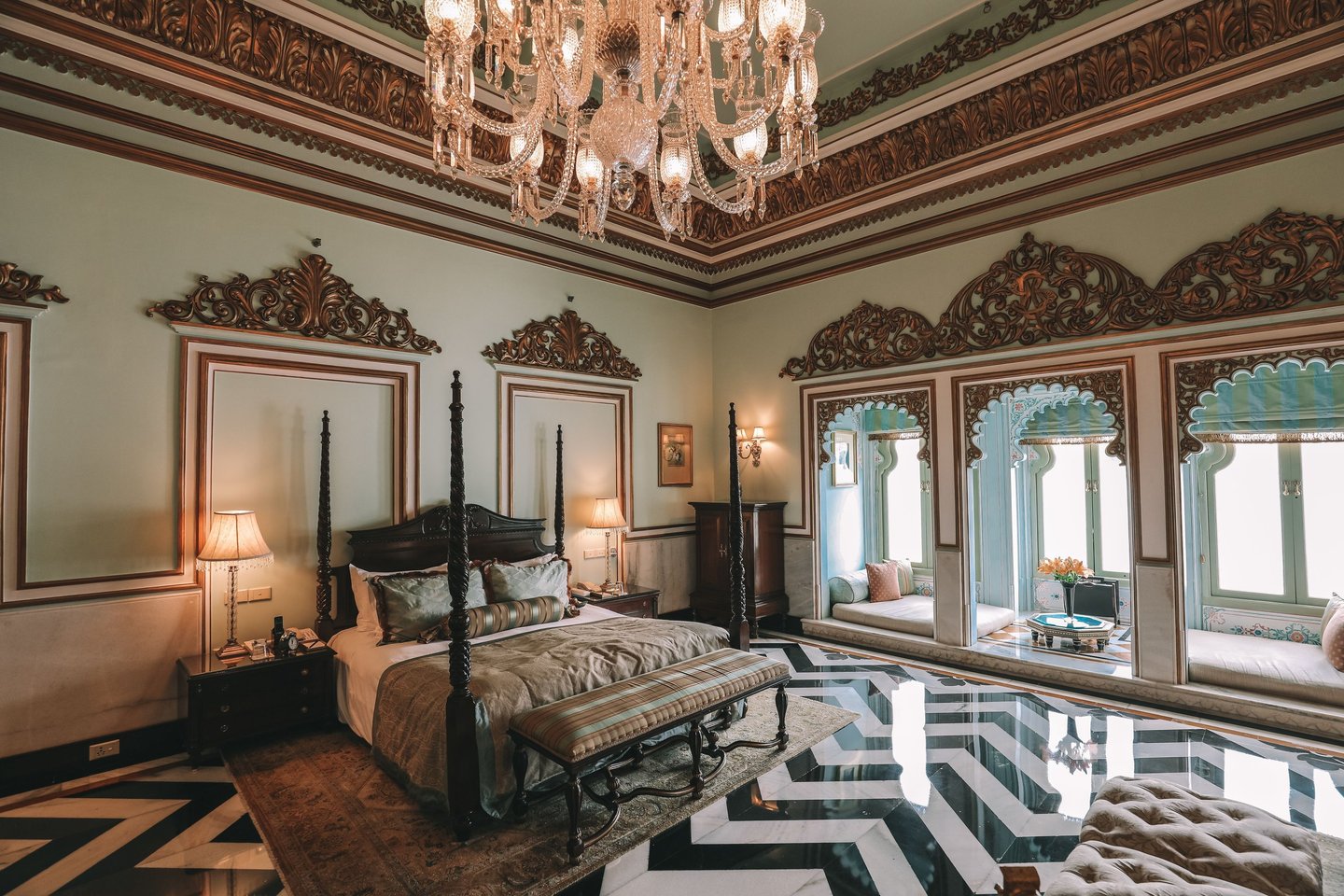
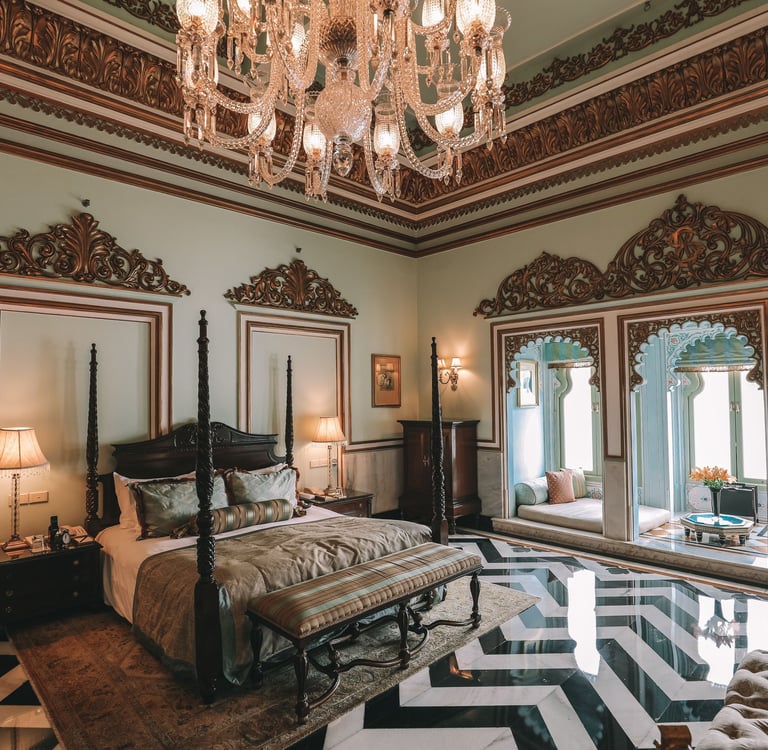
Taj Lake Palace is so beautiful it looks fake. Like someone painted a white marble palace onto Lake Pichola and dared the world to accept it.
Originally conceived between 1743 and 1746 by Maharana Jagat Singh II, the palace once served as a royal summer retreat for the House of Mewar. Taj describes it as an 18th-century royal pleasure palace, floating on Lake Pichola, with white marble beauty and a film connection to the James Bond movie Octopussy.
The wow moment is not subtle. You arrive by boat, the palace appears to float on the water, and Udaipur rises around it with hills, lake light, and city palace views. It is absurdly romantic.
Why it feels frozen in time: This is not hotel glamour. This is royal fantasy. Courtyards, fountains, carved details, lake reflections, and the feeling that the real world politely waited onshore.
Fun fact: It was built as a summer retreat, which is a dramatic way to say “vacation home.” Respectfully, everyone else’s summer cottage has been defeated.
Why Grand Hotels Feel So Magical
Grand hotels were not built only to provide rooms. They were built to impress. They arrived in an age when travel itself was an event. Guests came by train, steamship, carriage, or early automobile. They dressed for dinner. They wrote letters from hotel desks. They took afternoon tea under chandeliers. They lingered in lobbies because the lobby was the point. That is what makes these places different from modern luxury hotels. New hotels can be beautiful. They can be sleek, expensive, and perfectly designed.
But grand hotels have memory.
They have staircases polished by generations of arrivals. Dining rooms that survived wars, revolutions, scandals, and renovations. Suites named after writers, royals, presidents, and composers. Elevators old enough to have opinions. Lobbies that know exactly how impressive they are.
A great grand hotel does not feel decorated. It feels inherited.
How To Experience These Hotels Without Staying Overnight
Because let’s be honest, some of these rooms cost “sell a kidney and possibly a second kidney” money.
The good news is that many grand hotels can still be experienced without booking a suite. Go for afternoon tea, a cocktail, dinner, a spa day, a terrace drink, a guided history tour, or even just a lobby moment where allowed.
Best “just go for the atmosphere” options:
For afternoon tea: Raffles Singapore, Reid’s Palace, The Shelbourne, Grand Hotel Mackinac Island
For cocktails: Pera Palace, The Gritti Palace, Hotel Sacher, Grand Hotel Timeo
For architecture photos: Hôtel du Palais, Grand Hotel Kronenhof, Hotel del Coronado, Grand Hôtel Stockholm
For pure fantasy: Taj Lake Palace, Grand Hotel Tremezzo, Grand Hotel Timeo
For history lovers: Omni Mount Washington, The Shelbourne, Pera Palace, Grand Hotel et de Milan
Final Thoughts
Grand hotels frozen in time are not just about luxury. They are about the world before travel became rushed, branded, and optimized into beige little boxes. They remind us that arriving somewhere used to matter. That buildings could be theatrical. That staircases could be emotional. That a lobby could change your mood before you even reached the front desk.
Some of these hotels were built for emperors. Some for opera singers. Some for railway travelers. Some for royals, writers, honeymooners, and wealthy people with luggage situations that required staff.
But the best ones still offer something beyond money. A feeling. The feeling of walking into another century and realizing it still knows how to make an entrance.
Explore
Discover hidden gems in small cities worldwide.
© 2025. All rights reserved. Ripe Melland Media