Stop scrolling and start visiting

Deserts That Will Change How You Think About Earth
Discover spectacular deserts around the world, from Morocco’s Agafay and Jordan’s Wadi Rum to Namibia’s Namib, Chile’s Atacama, Egypt’s White Desert, Brazil’s Lençóis Maranhenses, Spain’s Bardenas Reales, and more.
WONDERS OF EARTH
Sarah Melland
7/5/202617 min read
Deserts That Will Change How You Think About Earth
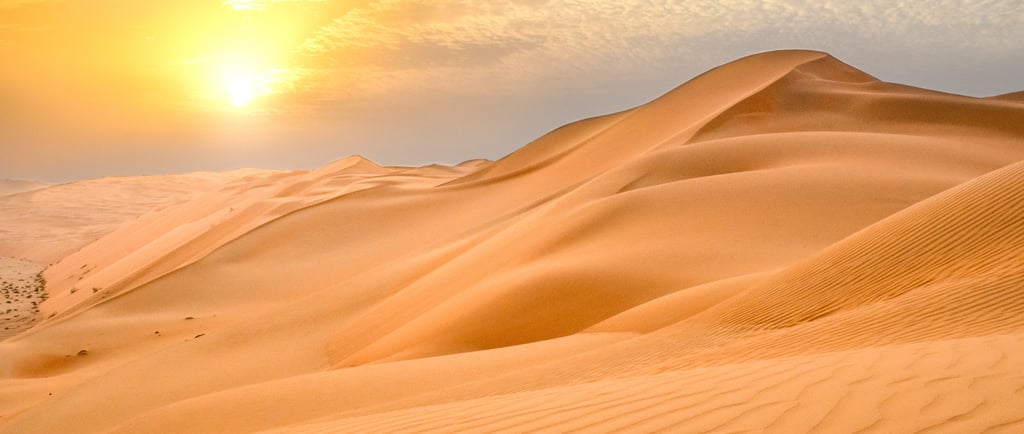
From Red Martian Valleys And White Chalk Dreamscapes To Salt Flats, Stone Deserts, And Blue Lagoons In The Sand
There is a lie people tell about deserts. They call them empty.
As if emptiness could carve stone into cathedrals.
As if emptiness could move dunes like oceans.
As if emptiness could hold fossils, stars, silence, salt flats, ancient trade routes, hidden water, sleeping seeds, nomadic memory, and enough color to make the rest of the world look timid.
Deserts are not empty. They are exposed.
They are Earth with the decoration stripped away. No forests to soften the edges. No cities to distract you. No constant green to convince you everything is gentle. In the desert, the planet shows its bones, its heat, its patience, its violence, and its astonishing ability to make beauty out of almost nothing.
A desert can look like the moon.
It can look like Mars.
It can look like a frozen ocean made of sand.
It can look like a white dream, a red planet, a stone sea, a gold horizon, or a place time forgot to finish.
Some deserts are famous because they are vast. Others are unforgettable because they are strange. The best ones do both: they make you feel small, then somehow make the world feel bigger, older, and more magical than it did before.
These are the deserts that change how you think about Earth. Not because they are lifeless. Because they prove life, beauty, and wonder do not always arrive in the forms we expect.
1. Agafay Desert, Morocco
The Stone Desert That Feels Like A Secret Outside Marrakech
Agafay is the desert for people who think they know what a desert is supposed to look like.
There are no endless golden dunes here. No sweeping Sahara fantasy rolling toward the horizon. Instead, Agafay is a stone desert: dry, pale, rippling, lunar, and strangely elegant. Its beauty is quieter, more restrained, almost architectural. The hills rise and fall like waves turned to clay. The Atlas Mountains hover in the distance, sometimes snowcapped, which makes the whole landscape feel like a contradiction.
It is close to Marrakech, but it does not feel like the city’s backyard. It feels like a threshold. One minute, you are in the noise and color of the medina. The next, the world opens into silence, dust, stone, and sky.
Agafay changes how you think about deserts because it reminds you that not every desert is made of sand. Some are made of absence, texture, light, and the shock of stillness after too much human noise.
This is not the desert of movie clichés. It is the desert of first exhale.
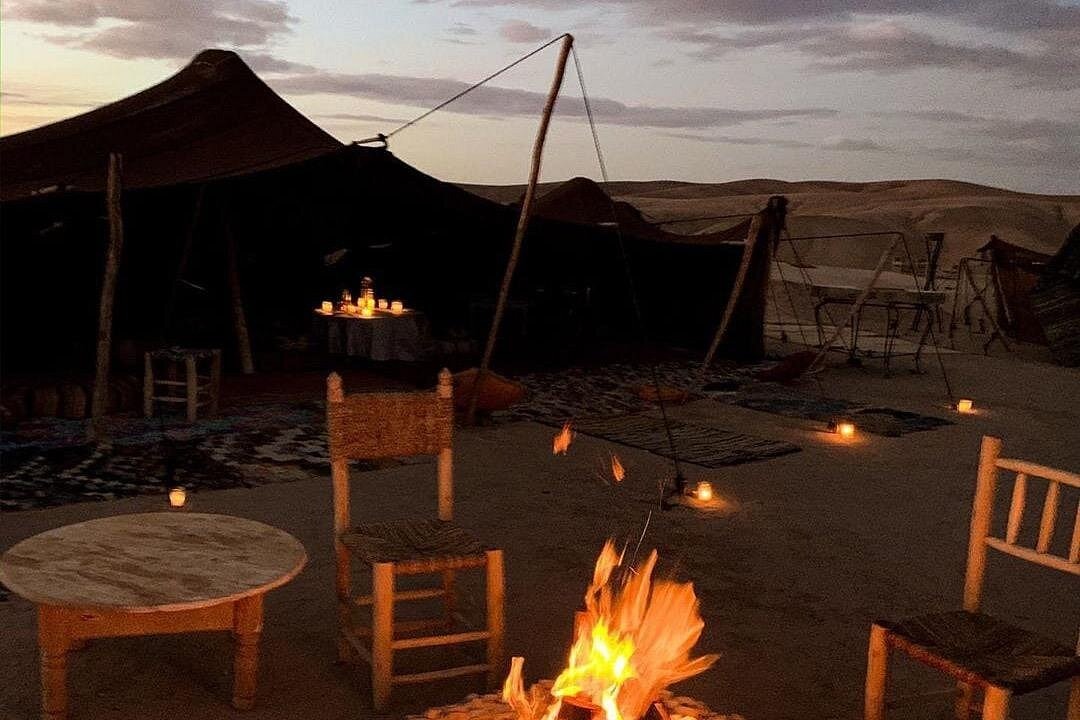
Come at sunset, when the rocky folds turn gold and rose. Stay for dinner beneath the stars if you can. Let the quiet arrive slowly. Agafay does not overwhelm you all at once. It works like a spell you only realize has happened after the world goes dark.
What it changes: The idea that deserts have to be endless dunes to feel magical.
Best base: Marrakech, with a day trip or overnight camp in Agafay.
Go for: rocky lunar landscapes, Atlas Mountain views, sunset camps, camel rides, quad biking, and an easy desert escape without traveling deep into the Sahara.
2. Wadi Rum, Jordan
The Red Desert That Makes Earth Look Like Another Planet
Wadi Rum does not feel like a landscape. It feels like a planet remembering it was once a myth.
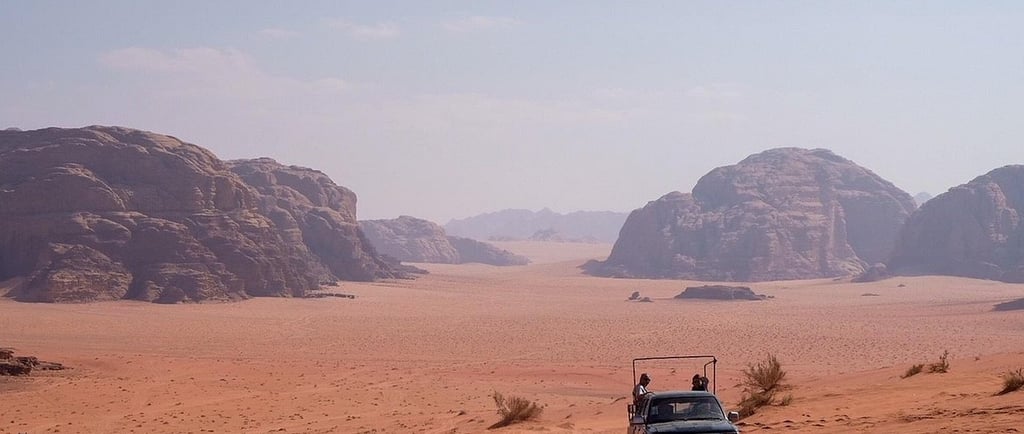
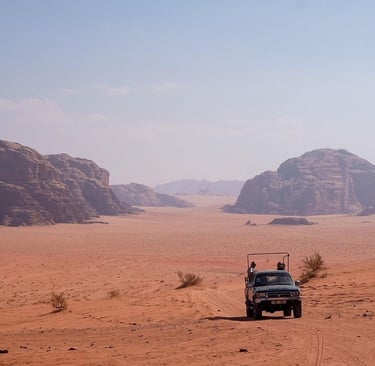
Known as the Valley of the Moon, this protected desert in southern Jordan is all red sand, towering sandstone cliffs, natural arches, narrow canyons, ancient inscriptions, and open space so cinematic it has been used again and again to stand in for Mars. But calling Wadi Rum “Martian” is almost unfair to Wadi Rum. Mars has never had Bedouin camps, tea by the fire, petroglyphs, camel caravans, or a night sky that feels close enough to fall into your hands.
The scale here is humbling. Rock formations rise from the desert floor like ruined temples built by giants. Sand changes color with the light. The wind moves through canyons. Footprints vanish. Voices carry differently.
And then the stars come out.
Wadi Rum changes how you think about Earth because it makes the planet feel less familiar. It reminds you that Earth is not always green, wet, and comfortable. Sometimes Earth is red, vast, old, and theatrical. Sometimes it looks so alien that the only reasonable response is silence.
But Wadi Rum is not just scenery. It is also a cultural landscape, shaped by thousands of years of human presence. People crossed, carved, lived, navigated, herded, camped, and survived here long before travelers came looking for otherworldly photographs.
That is what makes it powerful. It is not empty space. It is memory made of stone and sand.
What it changes: The idea that alien landscapes only exist beyond Earth.
Best base: Wadi Rum Village, Aqaba, or a Jordan route including Petra.
Go for: red desert landscapes, jeep tours, Bedouin camps, stargazing, camel rides, sandstone arches, ancient inscriptions, and one of the most cinematic nights on Earth.
3. Namib Desert, Namibia
The Ancient Sand Sea Where Dunes Meet Fog
The Namib does not feel young. It feels like a desert that has had millions of years to perfect itself.
Here, dunes rise in huge red-orange waves, some of them so sculptural they barely look natural. Sossusvlei and Deadvlei are the icons: towering dunes, white clay pans, blackened camel thorn trees, and shadows so sharp they turn the landscape into geometry. Everything feels reduced to color and form. Red sand. White earth. Black trees. Blue sky.
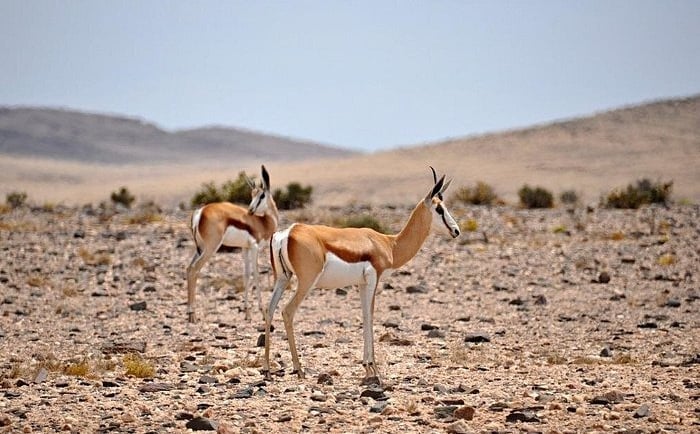
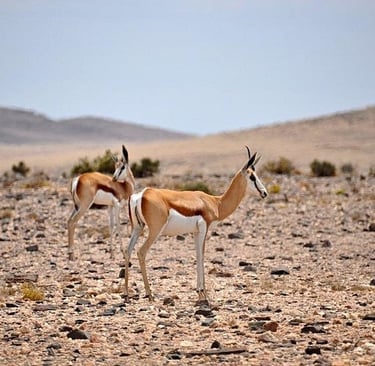
It is almost too perfect. But the Namib’s strangeness goes deeper than beauty. This is a coastal desert, shaped by fog that rolls in from the Atlantic. That fog becomes a lifeline. In a place that looks impossibly dry, moisture arrives sideways, carried in from the ocean, allowing strange adaptations and unexpected life to exist.
That is the lesson of the Namib. Survival does not always look like abundance. Sometimes survival looks like a beetle catching fog on its back. A plant drinking from mist. A dune system moving with wind for ages. A coastline so dangerous and lonely it earned the name Skeleton Coast.
The Namib changes how you think about deserts because it refuses to be simple. It is dry, but influenced by the sea. Harsh, but delicate. Ancient, but always moving. Minimal, but full of hidden strategy. At sunrise, when the dunes turn copper and the shadows stretch across the pans, the Namib does not feel like a place you visit. It feels like a planet-sized sculpture you are briefly allowed to walk through.
What it changes: The idea that deserts are static, lifeless, or disconnected from water.
Best base: Sesriem for Sossusvlei and Deadvlei, Swakopmund for coastal desert experiences.
Go for: Sossusvlei, Deadvlei, sunrise dune climbs, Skeleton Coast atmosphere, fog deserts, desert-adapted life, and landscapes that look designed by light itself.
4. Atacama Desert, Chile
The Driest Desert That Looks Like The Moon, Mars, And A Dream
The Atacama is what happens when Earth decides to become a science fiction film and a spiritual experience at the same time.
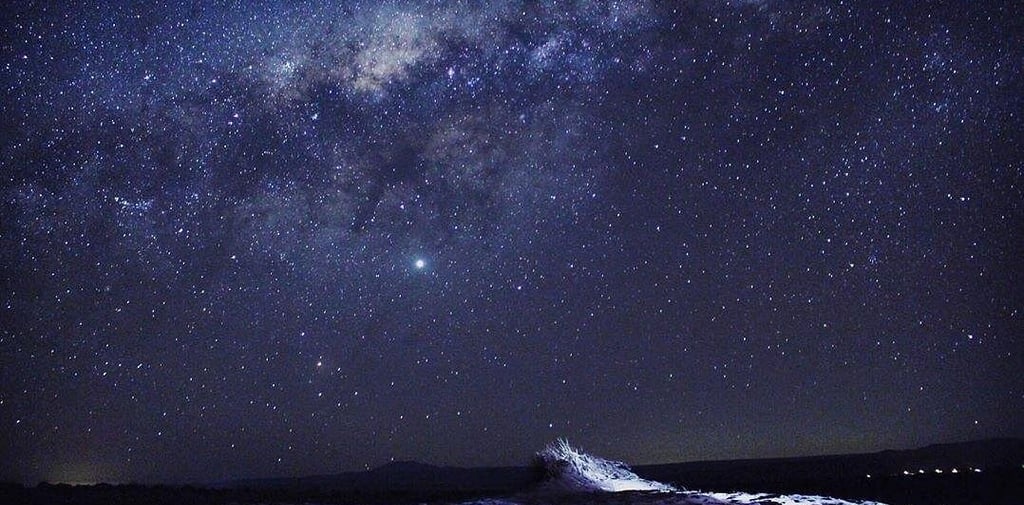
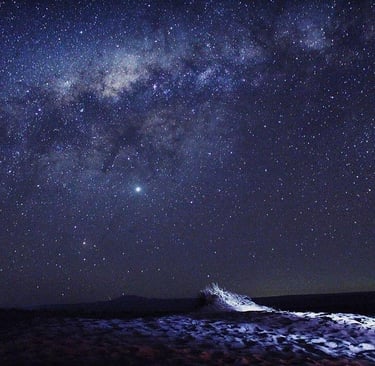
In northern Chile, between the Pacific and the Andes, this desert is famous for being one of the driest places on the planet. But dryness is only the beginning. Around San Pedro de Atacama, the landscape shifts from salt flats to geysers, volcanoes, red rock valleys, high-altitude lagoons, flamingos, mineral ridges, and night skies so clear they feel almost unreasonable.
Valle de la Luna does exactly what its name promises. It looks lunar, but not in a dull gray way. It is textured, mineral, carved, pale, rusty, strange, and quiet enough to make your footsteps sound dramatic. Then there are the Tatio Geysers, steaming in the cold morning at high altitude, and the salt flats where flamingos move through mirrored water beneath volcanoes.
The Atacama changes how you think about Earth because it shows you extremes layered on top of extremes.
Dryness and life.
Salt and flame.
Cold dawns and brutal sun.
Volcanoes and stars.
Stillness and geological violence.
Mars-like soil beneath one of the clearest skies on Earth.
It is a desert that points both downward and upward. You look at the cracked ground and think of ancient Earth. You look at the sky and think of galaxies. It is no accident that observatories and stargazing experiences thrive here. The Atacama feels like a place built for looking beyond ourselves.
And yet, somehow, it is also deeply grounding. A reminder that this planet is already strange enough to make you believe in other worlds.
What it changes: The idea that Earth is ordinary.
Best base: San Pedro de Atacama.
Go for: Valle de la Luna, stargazing, salt flats, flamingos, geysers, volcanoes, high-altitude lagoons, and that eerie feeling of standing on Earth while looking at space.
5. White Desert, Egypt
The Chalk Desert That Looks Like A Dream After The World Ended
Egypt is so famous for its monuments that it is easy to forget the country has landscapes that feel just as impossible as its temples.
The White Desert is one of them.
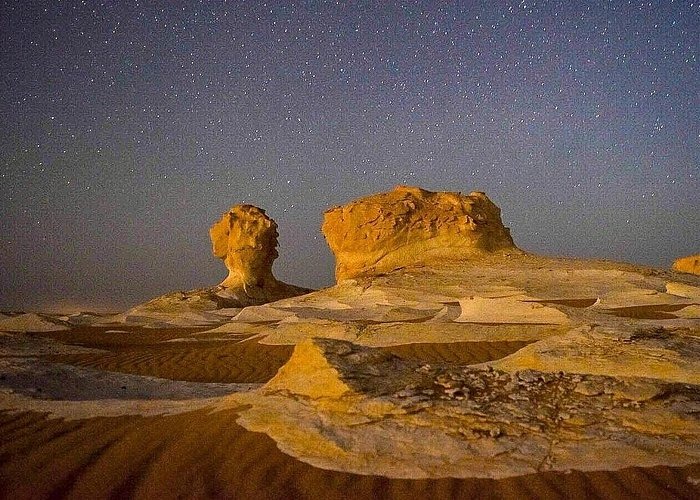
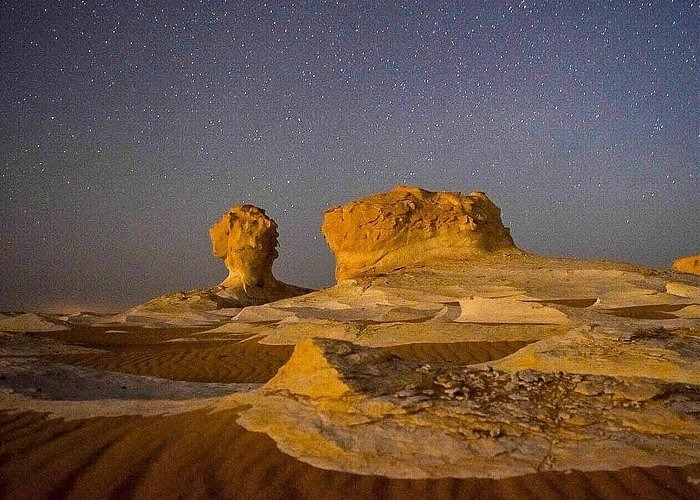
Located in Egypt’s Western Desert, this surreal place is filled with chalk-white rock formations shaped by wind into mushrooms, towers, animals, tents, ice cream cones, and figures that seem almost too whimsical for such a silent landscape. In the middle of a desert, the world suddenly turns white. Not snow white, though it can look like it from far away. Chalk white. Bone white. Moon white. A soft, strange brightness against empty sky.
It feels less like a natural landscape and more like an abandoned sculpture garden built by something that did not understand human categories.
The White Desert changes how you think about deserts because it disrupts the color palette entirely. We expect deserts to be gold, red, brown, orange. This one is pale, ghostly, and dreamlike. It feels colder than it is. Quieter than it should. Like a place where daylight and moonlight made a secret agreement.
At night, it becomes even stranger. The chalk shapes glow under stars. Shadows gather around the formations. Your campfire feels temporary. The rocks feel ancient. The silence feels enormous.
This is not the Egypt of crowds and cruise ships. This is Egypt as a dreamscape.
What it changes: The idea that deserts must be warm-toned, golden, or familiar.
Best base: Bahariya Oasis, often combined with the Black Desert and Farafra region.
Go for: chalk formations, wild camping, surreal photography, desert silence, stargazing, and one of the most unexpected landscapes in Egypt.
6. Bardenas Reales, Spain
The Badlands That Make Northern Spain Look Like Another Continent
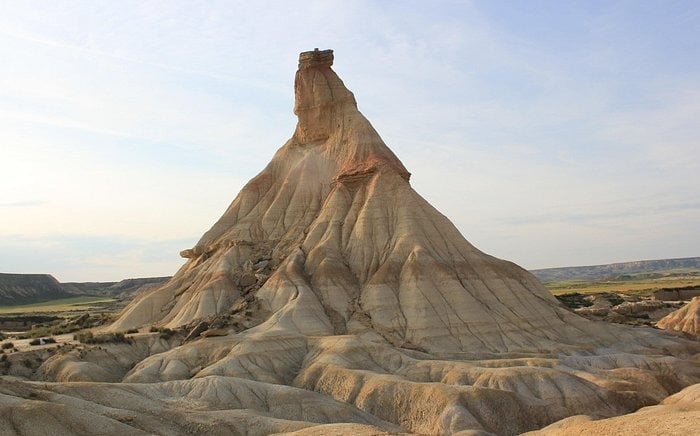
Bardenas Reales feels like Spain briefly misplaced part of the American Southwest.
In southeastern Navarra, not far from small towns and medieval villages, the landscape breaks open into pale badlands, eroded clay towers, dry ravines, flat-topped formations, and strange sculpted shapes that feel more Utah than Europe. One minute, you are in green northern Spain. The next, you are looking at a semi-desert that seems to have been drawn by wind, sun, and a slightly dramatic hand.
The most famous formation, Castildetierra, rises like a natural chimney from the clay earth, fragile and theatrical. Around it, the Bardenas Blancas form an almost lunar landscape of pale ridges and gullies, while other areas shift into darker, more rugged terrain.
This is exactly the kind of place travelers miss because it does not match their mental picture of Spain. And that is the whole reason to go.
Bardenas Reales changes how you think about deserts because it proves desert magic does not always belong to remote continents. Sometimes it waits inside Europe, hiding behind wine regions, hill towns, and ordinary maps. It is strange. It is photogenic. It is accessible. And it feels like a secret stage set for travelers who like their landscapes with a little weirdness.
What it changes: The idea that Europe cannot surprise you with desert scenery.
Best base: Tudela, Arguedas, Valtierra, or smaller Navarra towns.
Go for: clay badlands, unusual rock formations, cycling routes, photography, road-trip scenery, and a wonderfully unexpected side of Spain.
7. Lençóis Maranhenses, Brazil
The Almost-Desert Filled With Blue Lagoons
Lençóis Maranhenses is the kind of place that makes Earth seem like it is showing off.
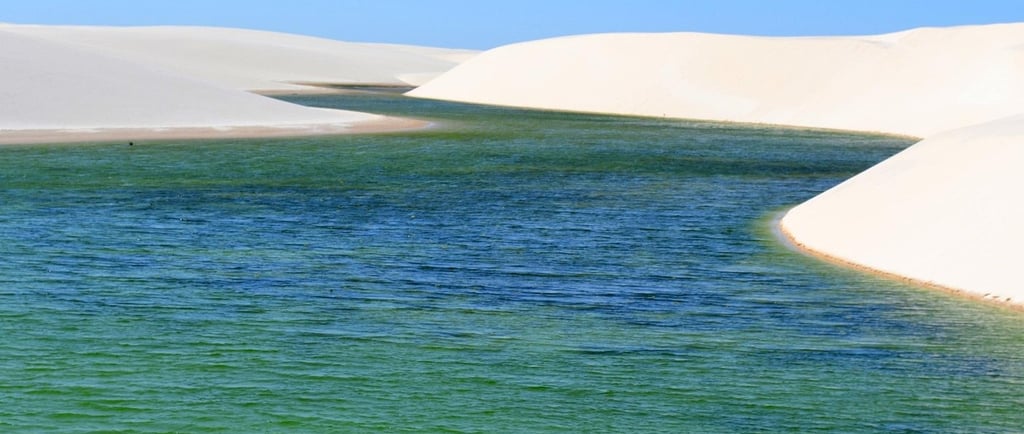
At first, it looks like a desert. Endless white dunes roll toward the horizon like sheets of silk, which is fitting because “lençóis” means sheets in Portuguese. But then the impossible part appears: blue and green freshwater lagoons pooled between the dunes, curving through the sand like someone spilled pieces of the sky.
Technically, this is not a true desert in the classic sense. It receives seasonal rains, and those rains are the whole miracle. Water gathers in low spaces between the dunes, forming temporary lagoons that can become astonishingly clear, bright, and swimmable. That contradiction is what makes it unforgettable.
A desert that is not a desert.
Sand that holds water.
White dunes that look snow-covered.
Lagoons that appear and disappear with the seasons.
Lençóis Maranhenses changes how you think about deserts because it completely breaks the rules. It asks what a desert even is. Is it sand? Is it dryness? Is it feeling? Is it appearance? Can a place look like a desert and behave like something else entirely? This is not simply beautiful. It is confusing in the best possible way.
What it changes: The idea that desert-like landscapes cannot be full of water.
Best base: Barreirinhas, Santo Amaro, or Atins.
Go for: white dunes, seasonal lagoons, swimming in sand basins, remote coastal energy, and one of the most magical landscapes in Brazil.
8. Pinnacles Desert, Western Australia
The Golden Desert Filled With Stone Sentinels
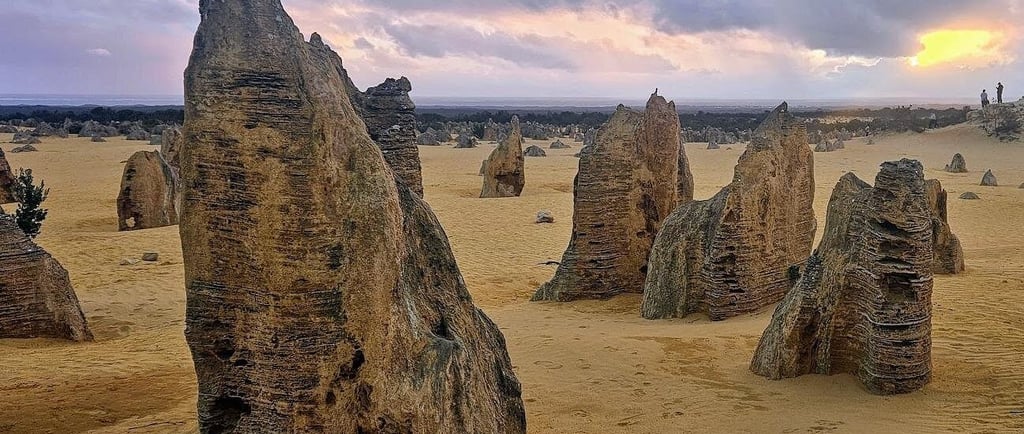
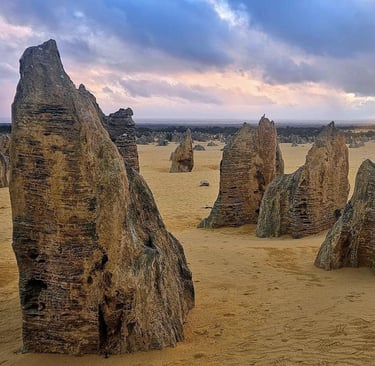
The Pinnacles Desert looks like something was built there, then vanished. Inside Nambung National Park in Western Australia, thousands of limestone pillars rise from yellow sand, some short and tomb-like, others tall and sharp like ancient markers. They stand in loose formations across the desert floor, catching light and shadow in a way that makes the landscape feel ceremonial.
It is not a dune sea. It is not a canyon. It is not a classic desert panorama. It feels like a lost stone city without walls.
That is what makes it so magnetic. The Pinnacles change how you think about deserts because they turn sand into a stage for natural architecture. You are not just looking across open space. You are walking through a field of shapes, each one sculpted by time and weather into something that looks intentional.
Come early or late in the day when the low light makes the stones glow and the shadows stretch. The whole place starts to feel less like geology and more like a gathering of silent figures. Australia is full of famous natural icons, but this one has a quieter strangeness. It does not shout. It waits. And then it follows you home in your memory.
What it changes: The idea that deserts are flat, plain, or visually simple.
Best base: Cervantes, Jurien Bay, or a road trip north from Perth.
Go for: limestone pillars, golden sand, surreal photography, self-drive routes, stargazing, and one of Western Australia’s weirdest natural landscapes.
9. Kyzylkum Desert, Uzbekistan
The Red-Sand Desert Of Silk Road Shadows
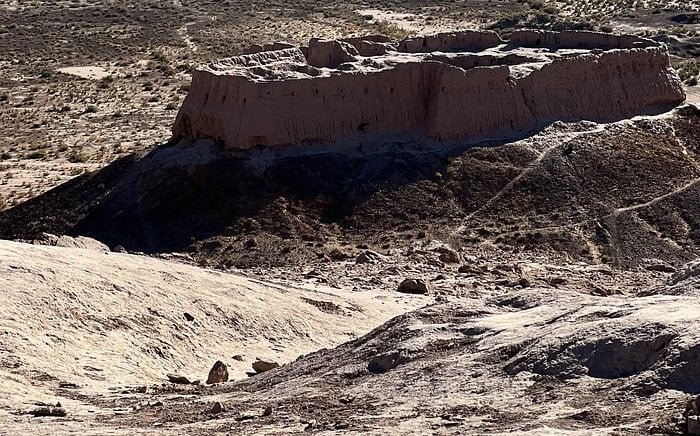
The Kyzylkum Desert is for travelers who want their deserts with ruins, legends, and a little lost-map energy. Its name means “red sand,” and it stretches across parts of Central Asia between great rivers and ancient routes. In Uzbekistan, the desert feels tied to the Silk Road imagination: yurts, camel rides, distant fortresses, dry horizons, desert plants, quiet lakes, and old trade cities nearby.
This is not the polished desert fantasy of luxury camps and perfectly staged sunsets. Kyzylkum feels wider, rougher, less packaged. It has the atmosphere of a crossing: a place between cities, between empires, between stories.
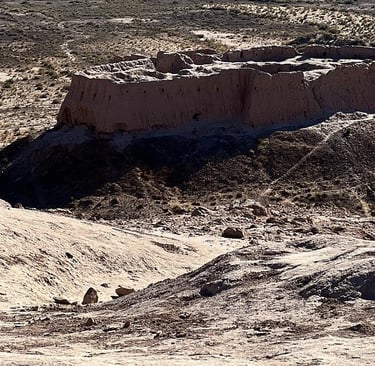
One of the most fascinating ways to experience this region is by pairing the desert with ancient Khorezm, where ruined fortresses rise from the dry land like fragments of an abandoned kingdom. Places like Ayaz-Kala and Toprak-Kala feel as if they were left behind by time, watching over the desert long after the caravans moved on.
Kyzylkum changes how you think about deserts because it reminds you that deserts were not always barriers. They were routes. People crossed them. Traded through them. Built near them. Feared them. Relied on them. Survived them. The desert was not empty space between civilizations. It was part of civilization’s map.
What it changes: The idea that deserts are endings rather than crossings.
Best base: Bukhara, Khiva, Nurata, or yurt camps near Aydar Lake.
Go for: Silk Road atmosphere, yurts, camel rides, desert lakes, ancient fortresses, and a lesser-known Central Asian adventure.
10. Makgadikgadi Pans, Botswana
The Salt Desert Where An Ancient Lake Became A Dream
Makgadikgadi is not a desert in the way most people picture deserts. It is stranger.
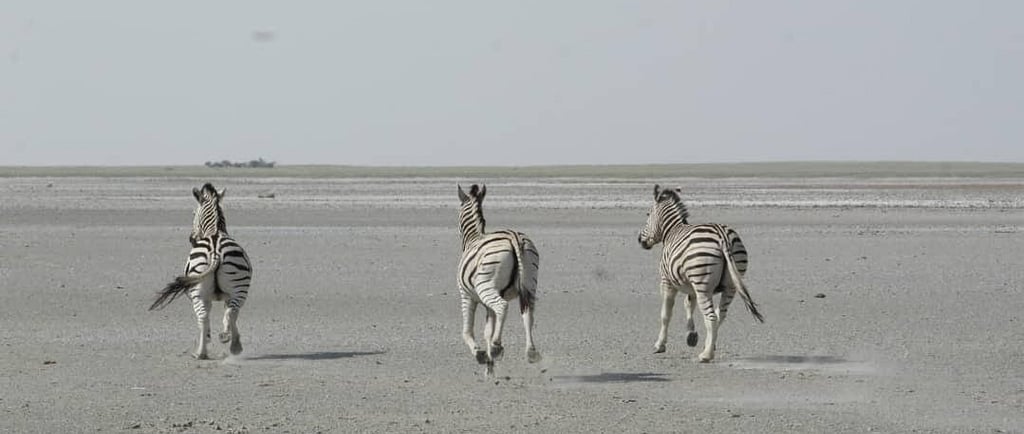
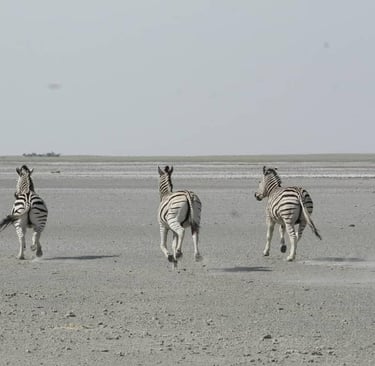
These vast salt pans in Botswana are the remains of an ancient lake, now transformed into a shimmering, cracked, pale landscape that can feel almost lunar in the dry season. The horizon flattens. The sky expands. The ground turns white and hard. Distance becomes difficult to understand.
It is the kind of place where silence feels physical. Then the seasons shift, and the story changes. Water arrives. Grass grows. Wildlife moves through. Flamingos may appear. Zebras migrate. Meerkats stand alert on the edges of the vastness. Baobabs rise like ancient guardians over pans that have seen water, drought, animals, people, and time pass across them.
Makgadikgadi changes how you think about deserts because it proves that emptiness can be seasonal, and that a place can hold the memory of water even when the water is gone. There is something haunting about standing on an ancient lakebed. You are not just looking at a salt flat. You are standing inside absence. A ghost of water. A vanished inland sea. A landscape that reminds you Earth has had many lives before ours.
What it changes: The idea that deserts have no memory of water.
Best base: Gweta, Nata, Maun, or lodges around the Makgadikgadi and Nxai Pan region.
Go for: salt pans, baobabs, meerkats, zebra migration, vast skies, sleep-outs, and landscapes that feel ancient in your bones.
11. Tabernas Desert, Spain
Europe’s Cinematic Desert Of Westerns, Badlands, And Dusty Drama
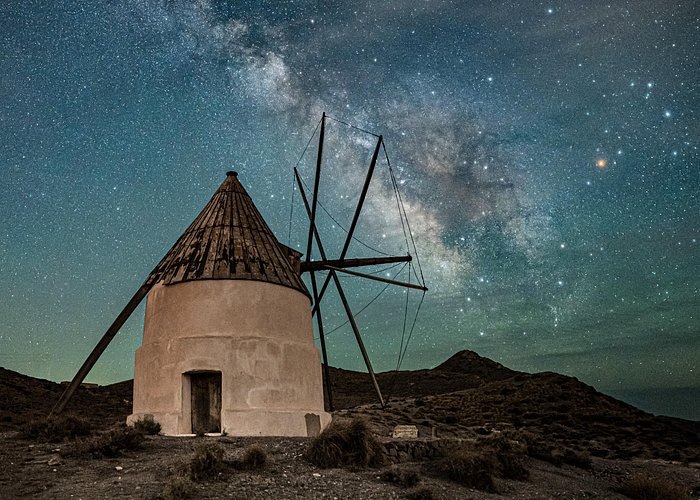
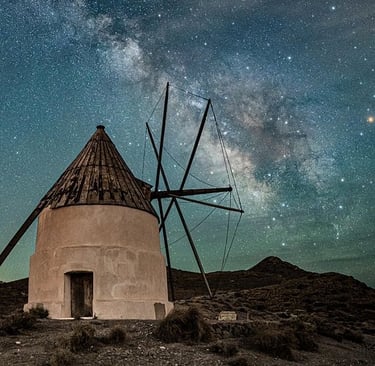
Tabernas is the desert that became a film star. Set in Almería in southeastern Spain, this dry, rugged landscape has long been used as a filming location, especially for spaghetti westerns. The badlands, gullies, dusty ridges, and sunburned slopes could pass for the American West, the Middle East, or another century entirely, which is exactly why filmmakers loved it.
But Tabernas is more than a movie backdrop. It is a strange natural landscape in its own right, with an arid climate, sculpted ravines, and a sense of theatrical dryness that feels wildly different from the Spain many travelers expect. It is not the Spain of flamenco postcards, Gothic cathedrals, or Mediterranean beaches. It is Spain as dust, silence, rock, and cinematic illusion. And that makes it fascinating.
Tabernas changes how you think about deserts because it blurs the line between natural wonder and cultural imagination. You are not only seeing geology. You are seeing how a landscape became myth through film. The desert did not just shape the land. It shaped scenes, stories, characters, shootouts, and entire genres.
It is a real place that has spent decades pretending to be other places. That is very weird. And very worth seeing.
What it changes: The idea that deserts belong only to faraway wilderness, not film history.
Best base: Almería, Tabernas, or nearby Cabo de Gata.
Go for: badlands, film sets, western villages, dry landscapes, quirky road trips, and one of Europe’s most unexpected desert experiences.
12. Sahara Desert, North Africa
The Desert So Vast It Becomes A World
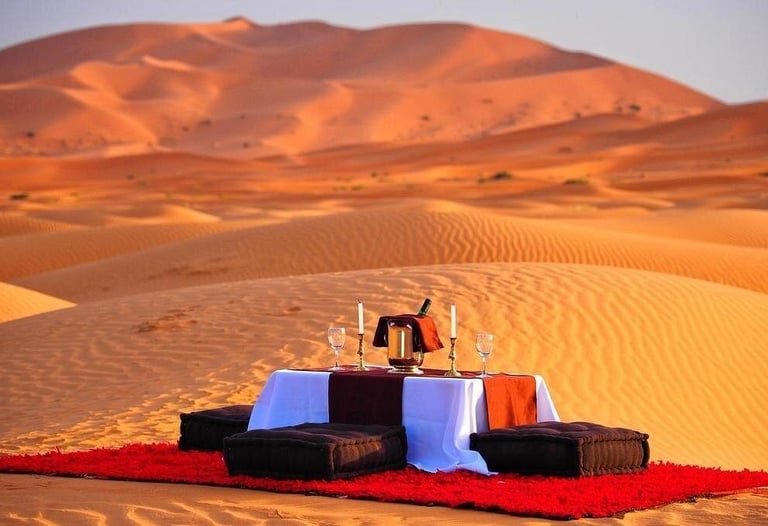
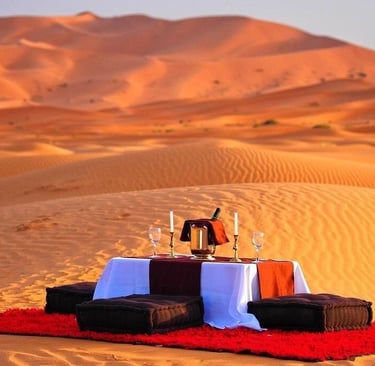
The Sahara is not a single place. That is the first thing it teaches you. It is a world.
It stretches across North Africa in a sweep so vast that reducing it to “sand dunes” is almost offensive. Yes, there are dunes: golden, towering, cinematic, unforgettable. But the Sahara is also rocky plateaus, gravel plains, salt flats, dry riverbeds, mountains, oases, trade routes, ancient towns, fossil beds, nomadic cultures, and night skies that make cities feel like a bad habit.
The Sahara changes how you think about Earth because it makes scale personal. You can understand intellectually that something is enormous. But standing at the edge of a dune sea, watching the sun drop behind waves of sand, you feel enormity differently. The horizon does not end. The silence does not rush. The stars do not seem decorative. They seem like the original ceiling of the world.
This desert has carried caravans, empires, salt, gold, stories, music, survival, exile, and longing. It is not just a natural wonder. It is a historic force. A cultural corridor. A place where geography shaped destiny.
For travelers, the Sahara is best approached with humility. Not as a backdrop for a camel photo. Not as a prop. But as a living landscape with people, memory, and danger inside its beauty. The most accessible Sahara experiences often begin in Morocco, Tunisia, or Egypt, but the deeper truth of the Sahara is bigger than any one country. It is the desert as continent, as myth, as weather, as history.
And when you see the dunes at dawn, when the sand turns from blue shadow to gold fire, you understand why humans have always turned harsh landscapes into sacred ones.
Some places impress you. The Sahara rearranges you.
What it changes: The idea that a desert is one landscape, one color, or one story.
Best base: Merzouga or M’Hamid in Morocco, Douz in Tunisia, Siwa or Bahariya in Egypt, depending on your route.
Go for: dune seas, camel treks, desert camps, oasis towns, caravan history, stargazing, and the overwhelming feeling of standing inside one of Earth’s great landscapes.
How To Choose The Right Desert For You
Choose Agafay if you want an easy, atmospheric desert escape near Marrakech without traveling deep into the Sahara.
Choose Wadi Rum if you want red-rock drama, Bedouin hospitality, cinematic landscapes, and one of the most magical nights under the stars.
Choose Namib if you want towering dunes, ancient landscapes, surreal photography, and the feeling of walking through Earth’s most elegant sand sculpture.
Choose Atacama if you want lunar valleys, salt flats, geysers, volcanoes, observatories, and landscapes that feel like they belong to both Earth and space.
Choose Egypt’s White Desert if you want something weird, pale, dreamlike, and completely unlike the Egypt most travelers picture.
Choose Bardenas Reales if you want a strange European semi-desert that feels like a secret film set in northern Spain.
Choose Lençóis Maranhenses if you want the most magical rule-breaker: white dunes filled with blue lagoons.
Choose Pinnacles Desert if you want natural stone sculptures, golden sand, and a desert that feels like an alien archaeological site.
Choose Kyzylkum if you want Silk Road atmosphere, ancient fortresses, yurts, and Central Asian adventure.
Choose Makgadikgadi if you want salt-flat silence, baobabs, meerkats, ancient lakebed energy, and big Botswana skies.
Choose Tabernas if you want Europe’s cinematic desert, complete with badlands, western film sets, and dusty Spanish drama.
Choose the Sahara if you want scale, myth, silence, caravan history, and the classic desert experience in its most legendary form.
The Desert Is Not Empty
The desert does not beg to be loved. That may be why it feels so powerful. It does not soften itself for visitors. It does not perform lushness. It does not hide its heat, dryness, distance, or danger. It simply exists, vast and exposed, asking you to pay attention differently.
In a forest, the world closes around you.
In a city, the world rushes past you.
In a desert, the world opens so wide that you have nowhere to hide from your own smallness.
And somehow, that smallness is a relief. These deserts change how you think about Earth because they reveal a planet that is stranger, older, tougher, and more imaginative than we remember in daily life. Earth is not only green hills and blue oceans.
Earth is stone outside Marrakech.
Red sand in Jordan.
Fog-fed dunes in Namibia.
Salt and stars in Chile.
White chalk ghosts in Egypt.
Badlands in Spain.
Blue lagoons in Brazilian sand.
Limestone sentinels in Western Australia.
Silk Road dust in Uzbekistan.
Ancient salt pans in Botswana.
A cinematic desert in Almería.
A golden world stretching across North Africa.
Deserts are not empty. They are where the planet tells the truth without decoration.
Explore
Discover hidden gems in small cities worldwide.
© 2025. All rights reserved. Ripe Melland Media